COP31 Collapse Leaves Climate-Vulnerable Nations Facing Uncertain Future
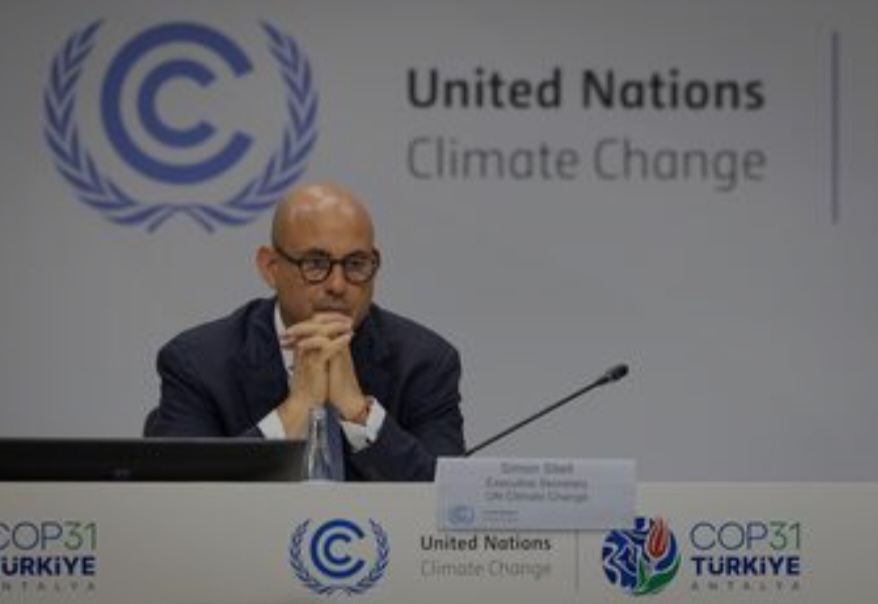
The failure of COP31 to produce a final climate agreement has left governments divided over the future of fossil fuels, raising fresh concerns about the pace of global climate action and the support available to countries facing its most severe consequences.
The United Nations climate conference in Antalya, Türkiye, closed on November 22 after two weeks of negotiations and two additional days of talks ended without consensus on the summit’s main political decisions.
The breakdown exposed a widening divide between countries demanding stronger commitments to reduce dependence on coal, oil and gas and those seeking to protect economies heavily reliant on fossil fuel exports.
UN Secretary-General António Guterres described the outcome as “deeply disappointing”, warning that the failure to agree on a climate pact should not distract governments from the urgency of the crisis.“There may be no consensus in the negotiating room. There is no ambiguity in the science,” he said.
Guterres warned that global temperatures continue to rise, greenhouse gas emissions remain dangerously high and climate-related impacts are intensifying, with the world on course to exceed the internationally agreed 1.5°C warming threshold.
The absence of a final agreement came despite several attempts by the conference co-presidents, Türkiye and Australia, to bridge differences through revised proposals.Disagreements over whether the final text should explicitly reference a transition away from fossil fuels ultimately prevented governments from reaching consensus.
The European Union formally rejected the proposed agreement, arguing that its failure to mention fossil fuels weakened earlier commitments and undermined the credibility of international climate negotiations.The bloc warned that governments could no longer afford to allow the gap between climate promises and actual emissions reductions to widen.
Panama also opposed the draft, saying climate negotiations should deliver meaningful action rather than settle for the lowest level of ambition acceptable to participating countries.The Marshall Islands, representing countries highly vulnerable to rising sea levels, similarly withheld its support, arguing that the outcome failed to protect communities already experiencing the consequences of climate change.
The country maintained that a faster transition away from fossil fuels, backed by stronger financial commitments, remained essential.For developing countries, the breakdown of negotiations raises concerns about whether international climate commitments will translate into the resources needed to protect vulnerable populations.
Guterres called for increased adaptation finance and stronger support for countries facing climate impacts, stressing that those least responsible for global warming should not be left to bear its heaviest costs.He also urged governments to accelerate the transition to cleaner energy, reduce methane emissions, restore forests and deliver climate finance.
The UN chief pointed to the agreement reached at COP28 in Dubai to transition away from fossil fuels, arguing that the priority should now be implementation rather than further delays.“We can’t put out the fire while pouring fuel on it,” he said, warning against efforts to prolong dependence on fossil fuels.
The negotiations also revealed differences over the role of technologies such as carbon capture and storage in addressing global warming.Saudi Arabia, speaking on behalf of the League of Arab States, defended the inclusion of carbon capture and storage in the proposed text, arguing that the technology could contribute to limiting emissions.
The delegation rejected criticism that the approach represented greenwashing and maintained that available climate solutions should remain under consideration.Meanwhile, the African Group acknowledged that the proposed agreement fell short on several priorities, including climate finance, loss and damage, and the just transition.
Ghana, speaking for the group, said the text gave limited attention to the just transition, which seeks to ensure that workers and communities are supported as economies move towards cleaner energy.Despite these shortcomings, the African Group said it would not block consensus, maintaining that the draft reflected the positions of a wide range of countries.
Pakistan also urged governments to preserve cooperation, warning that disagreements should not undermine the broader climate agenda.Although the conference failed to deliver a final climate pact, it recorded progress in other areas.
UN Climate Change Executive Secretary Simon Stiell highlighted an agreement on a just transition and initiatives under the COP31 Action Agenda aimed at accelerating electrification, strengthening resilience and increasing investment.However, he warned that the failure to reach agreement on the summit’s central political decisions should serve as a lesson for future negotiations.“The world cannot afford a repeat of this moment,” Stiell said during the closing plenary.
He urged governments to build on previous achievements rather than weaken existing commitments.The conference’s conclusion also shifted attention to the role of governments in translating international agreements into measurable action.
Guterres said the true measure of climate progress would be whether countries reduce their reliance on fossil fuels, expand clean energy, cut emissions and provide financial support to developing nations.
He called on young people, civil society organisations, Indigenous Peoples, scientists and frontline communities to continue demanding accountability.“The climate crisis will not wait for governments to find common ground. Neither can we,” he said.
The next round of negotiations will take place at COP32 in Addis Ababa, Ethiopia, where governments will face unresolved questions over fossil fuel transition, climate finance and the implementation of existing commitments
.For climate-vulnerable countries, the challenge remains whether future negotiations can deliver the political agreement and financial support needed to turn climate promises into meaningful protection for communities already facing the consequences of global warming.