The Trust Summit: Kenyan Leaders and Global Experts Demand Action at Nairobi Trust Summit
NAIROBI, Kenya, Oct 21 – As Kenya hosts the inaugural Global Trust Summit in Nairobi, national leaders, public officials, and civil society representatives are issuing a unified call for immediate institutional accountability, meaningful public participation, and measurable results.
Running from October 21 to 23, 2026, under the theme “Weaving Trust: Binding Strands for a Stronger Global Order,” the high-level gathering comes at a critical juncture marked by a growing global crisis of confidence in public governance, economic institutions, and international leadership.
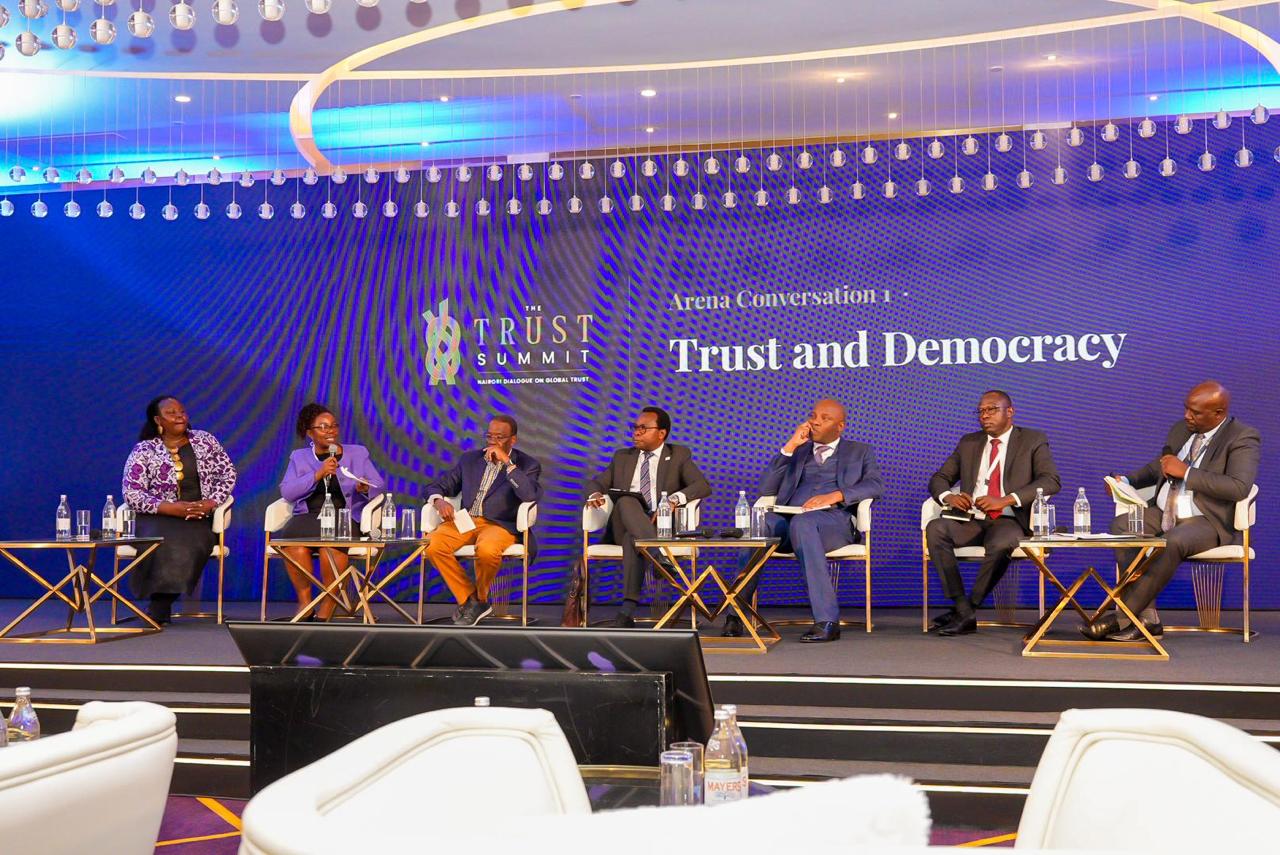
Accountability Must Deliver Real Results, Opening discussions placed institutional transparency and accountability at the center of rebuilding citizen confidence.
Speakers stressed that legal authority and public office alone no longer command automatic trust; credibility must be earned through responsiveness and follow-through.
“This is not a summit of convenience. It’s a summit of necessity.” said Dr. Abraham Korir Sing’Oei, Kenya’s Principal Secretary for Foreign Affairs, Underscoring the urgency of rebuilding trust in a world grappling with inequality, geopolitical tensions and declining confidence in institutions.
Leaders highlighted that transparency is ineffective if audit findings and complaints do not lead to corrective action.
Nancy Gathungu, Kenya’s Auditor-General, emphasized that public trust hinges on credible information that leads to real consequences across the entire governance chain, rather than remaining a mere compliance exercise.
Dr. Priscilla, Director of the Communications Authority of Kenya, cautioned: “Trust does not stop with complaints. It stops when the complaint has been resolved.”
Dorothy Jemator Kimengech, Vice-Chairperson of the Commission on Administrative Justice, noted that citizens must clearly understand institutional structures, responsibilities and project lifecycles to develop genuine confidence.
Esther Ngari, CEO of the Kenya Bureau of Standards (KEBS), pointed out the invisible nature of institutional credibility: “When standards work, no one recognizes, but when they fail, that is when questions arise.”
The Chief of Staff and Head of the Public Service, Felix Koskei urged regulatory bodies to lead by example: “A regulator that demands compliance from others must be an example of compliance.”
Moving Beyond “Attendance”: A Call for Authentic Public EngagementA central theme at the summit’s Democracy Baraza was the constitutional role of public participation.
Civil society leaders and government representatives debated how to ensure public consultations move beyond symbolic gestures to deliver tangible feedback loops.
Sheila Masinde, Executive Director of Transparency International Kenya, said public participation should be recognised as a legitimate democratic right rather than treated as an inconvenience by those in authority.
“When I vote for you, I trust that you will deliver in the mandate you are seeking,” she said.
Clarise Ogangah, chairperson of the Kenya National Commission on Human Rights, said citizens did not surrender all their power when they elected leaders.
“People do not delegate their power fully to their leaders, they exercise it during public participation,” she said.
Extending Trust to the Private Sector and Global Governance, The summit expanded its focus beyond government institutions to examine how integrity impacts trade, investment, and global multilateralism.
Corporate Integrity and Venture Capital Business leaders noted that economic growth relies heavily on whether promises are backed by verifiable evidence.
Clare Akamanzi, CEO of NBA Africa, observed that announcements alone fail to inspire confidence without transparent proof of delivery.
Similarly, venture capitalist Sean Karanja framed market integrity simply: “I want to deploy truthful capital to truthful entrepreneurs.”Africa’s Role in a Changing Global OrderOn the international stage, delegates addressed systemic inequalities within global decision-making bodies.
Despite representing 54 nations and over 1.4 billion people, Africa remains without a permanent seat on the United Nations Security Council.
Dr. Sing’Oei argued that multilateral institutions lose legitimacy when they fail to reflect the populations they serve.
Participants called for stronger regional coordination through the East African Community (EAC) and the African Continental Free Trade Area (AfCFTA) to build African-led solutions and assert greater influence over international finance, climate action and security governance.
From Dialogue to Action: The Nairobi Call to ActionTo ensure the summit results in lasting change rather than fleeting rhetoric, organizers introduced the Nairobi Call to Action on Global Trust.
This framework establishes an evidence-based roadmap for institutions to audit their data, address inaccurate risk assumptions and correct misleading public narratives.
Closing out the opening sessions, leaders set a clear benchmark for success:“Trust is a belief that my legitimate expectations will be met within a reasonable time”Hon. Amason Jeffah Kingi, Speaker of the Senate
Awel Uwihanganye, Chief Executive of The Trust Summit, urged young Africans to take an active role in shaping the continent’s public systems including courts, universities, and financial markets delegates pledged to establish rigorous monitoring mechanisms before the conference concludes on October 23.
Ultimately, the success of the Nairobi summit will be judged by visible improvements in everyday governance, public service delivery, and economic opportunity for the citizens these institutions serve.