Civil Society Organizations unveils Gender Transformation in Africa’s New Agri-Food System Strategy (2026-2035)
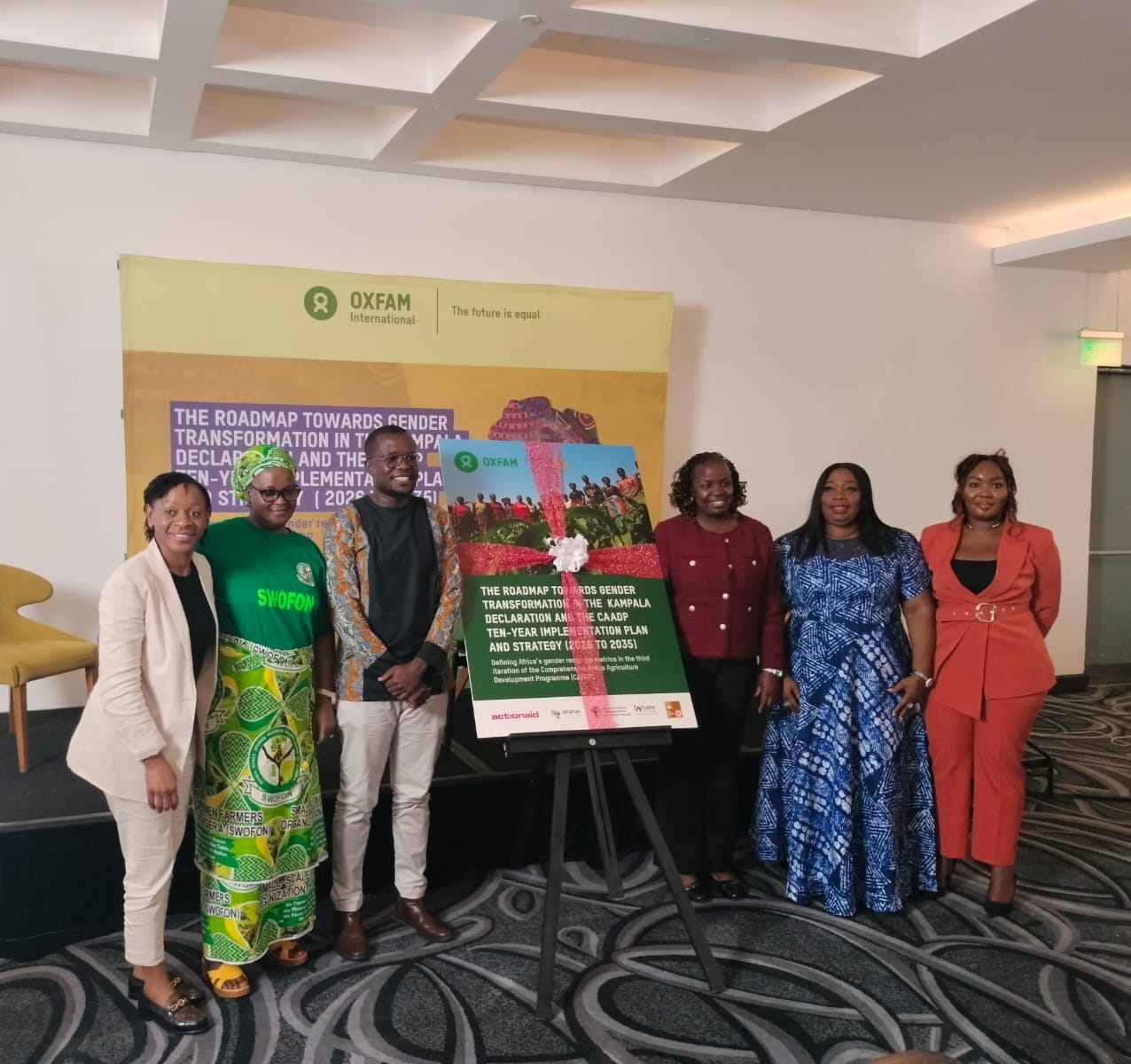
NAIROBI, Kenya, Mar 20…Oxfam, Africa Women’s Development and Communication Network (FEMNET), SDG2 Advocacy Hub, African Kilimanjaro Women Farmers Forum (AKIWOFF) and Actionaid called have unveiled Roadmap towards gender transformation in Africa’s New agrifood system strategy (2026-2035) a framework that primarily proposes Gender-Sensitive measurable indicators and policy steps that ensure women’s full participation.
The group called on African governments to put in place proper mechanisms for measuring effects and impacts of agricultural policies on Women if the continent is ready to reap full benefits of its investment in agriculture.
“The roadmap provides a clear, actionable plan to ensure small holder women farmers and other marginalized groups are at the heart of the continents agricultural transformation”, said Fati Nzi-Hassane, Oxfam Africa’s Director.
Subsequently, the framework seeks to inform the results roadmap of the African Union’s Comprehensive Africa Agricultural Development Programme (CAADP) 2026-2035 adopted by member states.
CAADP advocates for inclusion of measurable gender focused indicators that will allow policymakers access impact of their policies on women’s education, technology access, cultural barriers, decision-making access, access to sources and participation in agricultural activities.
In addition the framework also underscores the need for CAADP to align with the continent’s vision for gender equality also providing recommendation to strengthen CAADP’s alignment with the Maputo protocol, The solemn declaration on gender equality in Africa and the AU strategy on gender equality and women’s empowerment.
“Sustainable agricultural growth is not just about increasing yields, its about emplowering communities, enhancing resilience and ensuring that no one is left behind”, stated Susan Otieno, Executive Director Action Aid Kenya.
Furthermore, they noted that Africa is experiencing a food security crisis occasioned by low investment in agriculture, climate shocks-drought and floods, conflict and unfavourable land policies that disadvantage women smallholder farmers, with some 163 million people across Africa faced acute food insecurity in 2024.
“As Africa sets out to redouble efforts through the new African Union agriculture strategy, governments must tap into the full potential of our citizenry demanding adequate inclusion of African women in Agriculture value Chain”, said Memory Kachambwa, Executive Director, FEMNET.