

KDC teams up with World Bank to drive MSME growth and financial inclusion nationwide
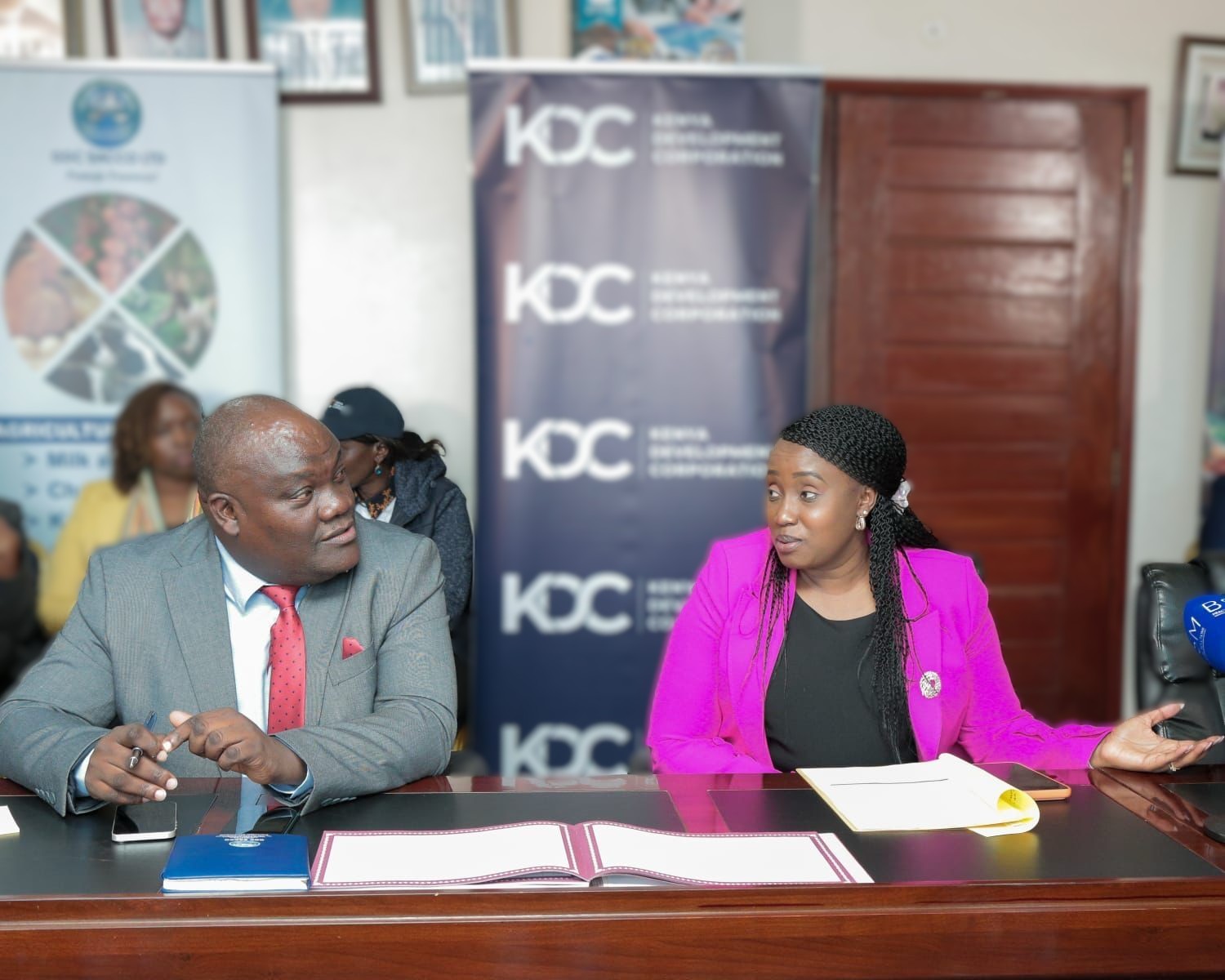
PHOTO: GDC CEO Dr. Charles Kioko in conversation with KDC Director General Norah Ratemo at the WorldBank-KDC visit at GDC Sacco Headquarters
KIAMBU, Kenya, Mar 26 – The Supporting Access to Finance and Enterprise Recovery (SAFER) Programme implemented by Kenya Development Corporation (KDC) in partnership with the World Bank and the National Treasury Project Implementation Unit (PIU) continues to expand access to affordable finance for Micro, Small and Medium Enterprises (MSMEs) across the country.
SAFER Programme was established to support the recovery and resilience of MSMEs following the economic disruptions caused by the COVID-19 pandemic.
The programme to date has supported over 55,000 MSMEs across 38 counties to access financing, sustaining more than 30,000 jobs, 36% of the beneficiaries are women-owned enterprises, while 35% are youth-led businesses underscoring the programme’s critical role in advancing financial inclusion and inclusive economic growth.
Additionally, the programme works through regulated financial intermediaries, including commercial banks, microfinance institutions and SACCOs, to extend affordable credit to MSMEs, particularly those operating in underserved segments of the economy.
MSMEs contribute approximately 40% of Kenya’s Gross Domestic Product (GDP) and account for over 80% of employment, making them a vital pillar in driving inclusive growth and job creation.
The growing adoption of digital lending solutions is further enhancing efficiency by reducing turnaround times and expanding access to credit, enabling entrepreneurs to scale their businesses and improve resilience.
Stakeholders undertook a high-level field visit to Githunguri Dairy Cooperative (GDC) Sacco Society Limited in Githunguri, Kiambu County to witness first-hand the programme’s impact in supporting small businesses, farmers and entrepreneurs through strengthened access to credit.
The visit brought together the World Bank Vice President Ms. Anke D’Angelo, Kenya Operations Manager Ms Anne Bakilana, SAFER Task Team Lead Ms Leah Kiwara, FCI Lead Isfandyar Zaman Khan, Kenya Development Corporation (KDC) Chairman Hon. Dr. Sakwa Bunyasi, KDC Director General Ms. Norah Ratemo and the National Treasury Project Implementation Unit (PIU), alongside the leadership and management of GDC Sacco led by Chief Executive Officer Dr. Charles Kioko.
The engagement provided an opportunity for partners to assess the programme’s impact on enterprise recovery, financial inclusion and livelihood improvement while highlighting the critical role of cooperative financial institutions in delivering development finance to grassroots entrepreneurs.
GDC Sacco Society Limited has emerged as one of the programme’s key financial intermediaries, the Tier I deposit-taking SACCO, fully licensed and regulated by the Sacco Societies.
Regulatory Authority (SASRA), plays a critical role in extending financial services to entrepreneurs, farmers and small businesses within Kiambu County and surrounding regions.
The SACCO headquartered in Githunguri town operates eleven branches across Kiambu Nairobi and Nakuru counties providing convenient access to savings and credit services to thousands of members drawn largely from the dairy, tea and coffee value chains as well as small businesses, institutions and corporate clients.
Subsequently, through the SAFER Programme KDC extended a KES 500 million facility to GDC Sacco to expand lending to MSMEs through the SACCO’s digital and conventional lending platforms.
The SACCO rapidly deployed the facility, enabling over 15,000 MSME members to access financing, many of them for the first time.
Notably, 24% of the beneficiaries are women entrepreneurs while 28% are youth, demonstrating the programme’s deliberate focus on strengthening women and youth participation in enterprise development and economic empowerment.
Further, the strong uptake of this facility by GDC Sacco among other saccos, demonstrates both the demand for affordable financing among MSMEs and the effectiveness of delivering development finance through well-governed local financial institutions.
“At KDC, our focus is to ensure that development finance translates into real impact by supporting entrepreneurs, strengthening key sectors of the economy, reinforcing agricultural value chains and expanding economic opportunities across counties,” said KDC Director General Ms. Norah Ratemo.
GDC Sacco Chief Executive Officer Dr. Charles Kioko highlighted the Sacco’s evolution and its strong roots within the agricultural economy.
“GDC Sacco started 22 years ago in 2003 as a dairy farmers’ Sacco before expanding its membership to the wider community and extending its reach to other counties”, said GDC Sacco CEO Dr. Charles Kioko.
“Today, we serve approximately 79,000 customers and continue to support farmers through innovative financing solutions such as allowing insured dairy cows to be used as collateral”, He added.
Dr. Kioko further noted that the SACCO has invested significantly in digital lending solutions, including Kwamua Digital and Bonyeza loan products, enabling members to access quick, convenient and affordable credit through mobile platforms.
The delegation during the visit toured Githunguri Dairy Cooperative processing facility, gaining insights into the cooperative’s integrated dairy value chain from milk collection, bulking and chilling to processing and packaging and engaged with MSME beneficiaries who shared how improved access to financing has enabled them to expand their businesses, enhance productivity and improve household incomes.
The progress witnessed underscores the strong partnerships between government institutions, development partners and grassroots financial institutions can unlock opportunity, strengthen enterprise resilience and drive inclusive economic growth.
Through initiatives such as SAFER, the Government of Kenya and its partners continue to prioritize financial inclusion, enterprise development and sustainable economic transformation, ensuring that development finance reaches the businesses and communities that drive Kenya’s economy.