
PMA Agile survey findings reveal Intimate Partner Violence (IPV) most prevalent with 28.4% young women reporting physical and Sexual IPV within the past year
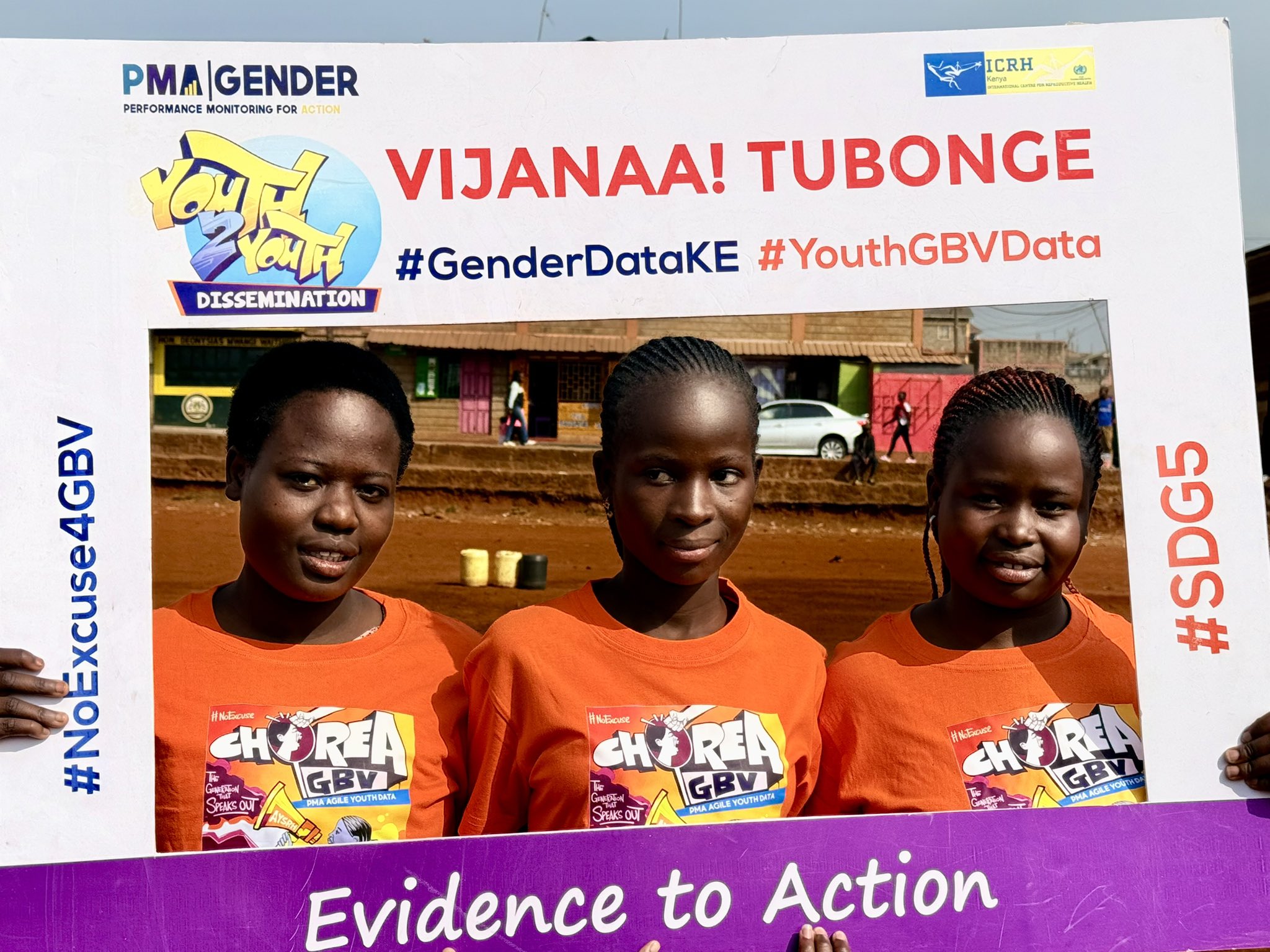
NAIROBI, Kenya, July 28 – The Performance Monitoring for Action (PMA) Agile 2.0 has unveiled Nairobi Youth Cohort 2024 Survey Findings, Spearheaded by International Center for Reproductive Health Kenya ( ICRHK) in collaboration with Kenyatta University, John’s Hopkins University (USA) and National Council of Population (NCPD) and technical support from Kenya National Bureau of Statistics (KNBS).
The study initiated in 2019 to generate data on adolescents and youth aged 15-24 years living in Nairobi with primary goal to uncover insights into their sexual and reproductive behaviours including use of family planning services topics often considered hidden or underexplored in te demographic.
Over the past five years the cohort has been consistently followed annually allowing the study to evolve in response to emerging data needs, most recent data took place between October and December 2024 as the phase focused on pressing issues such as Gender-Based Violence (GBV) , Gender norms, sexual and reproductive health (SRH) and family planning.
The findings reveal that Intimate Partner Violence (IPV) is the most prevalent form of Violence with 28.4% of partnered young women reporting physical and Sexual IPV within the past year.
Non-Partnered Sexual Violence (NPSV) is less common and by no means negligible among broader sample of young women 5.8% reported experiencing NPSV in the past year, the data underscores urgent need for comprehensive, Youth Centered intervention and support systems to address all forms of Gender-Based Violence particularly within Intimate relationships.
Additionally, emergence of newer, insiclious forms of harm with technology facilitated abuse, affecting nearly half of youth with digital access, economic control and reproductive coercion which quietly strip young women of autonomy and opportunity.
Consequently, PMA noted that Menstrual remains alarmingly widespread with over 75% of young women reporting having experienced it an issue that has shown a marginal decrease within 2023 and 2024.
“For our girls in school who lack access to basic Menstrual basic hygiene products, for many this isn’t just an health issue but a barrier to attending school, participating in work and engaging fully in a community life, Menstruation should never be a source of shame or reasons to miss opportunities”, they said.
Furthermore, PMA noted that through the dedicated GBV courts, male engaged forums and youth partnership it should lay down the tracks for a safer and more just Kenya.
They have called for combine efforts to raise awareness and ensure all women are fully empowered, equipped with knowledge confidence and support systems they need to recognize, speak out and report any form of Violence.
To address the issues service providers across entry level of the system have been urged to be fully equipped with the knowledge, tools and resources needed to deliver survivor Centered and life saving interventions.
Invest in youth leadership and gender transformative programing, embed GBV indicators into every national surveillance system and data systems ensuring that no form of Violence goes undetected or unreported.
Close the gaps in help seeking by strengthening survivor-Centered justice, community health networks and digital safety systems and reignite national movement across ministries, sectors, counties and civil society to make Violence prevention a permanent priority agenda.
Over the years PMA findings from the survey have played a crucial role in shaping policies and informing programmatic interventions, the data has significantly contributed to addressing the ‘triple threatre’ facing adolescents and youth by enabling design of targeted evidence-based solutions the survey has provided critical insights for monitoring progress toward Sustainable Development Goals (SDG) Good Health and Well-being and Gender Equility.
“To the duty bearers let’s embrace this findings and use them to allocate resources where it matters let’s think of how best we can design interventions that are driven by evidence, let’s combine our efforts to ensure that we end all this form of Violence”.
They urged policymakers, program designers, advocacy groups, parents, caregivers and all duty bearers to stand united and act boldly using evidence to guide efforts in eradicating all forms of Violence.
“The time for silence is over, The time for action is now. #NoExcuseForGBV”.