

PS Mang’eni Urges Trainees to Leverage KJET BDS Knowledge to Boost Farm Efficiency, Cooperative Competitiveness and Youth Opportunities
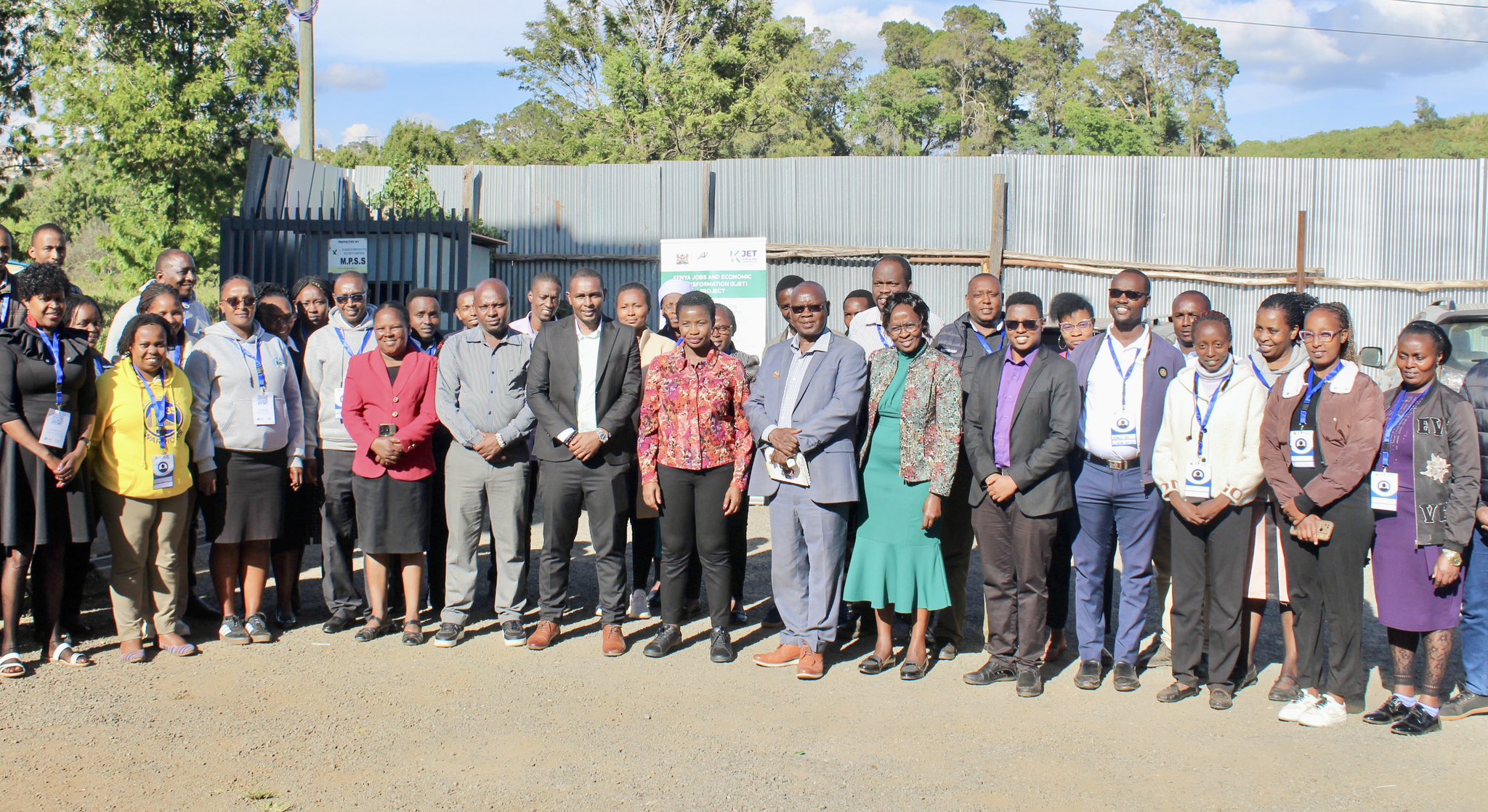
KIAMBU, Kenya, Dec 12 – In a significant move to unlock the potential of Kenya’s Micro, Small, and Medium Enterprises (MSMEs), the Kenya Jobs and Economic Transformation (KJET) Project has reached a key milestone as the nationwide programme concludes the initial phase of its capacity-building efforts.
All beneficiaries of the Cohort 1 Business Development Services (BDS) Classroom Training under Component 2 of the KJET Project of the five-week training exercise have successfully completed the rigorous training, marking a foundational step towards strengthening enterprise competitiveness and sustainable growth across the target clusters.
The intensive Business Development Services (BDS) training sessions, took place in Kiambu where members of the Ndumberi Dairy Cooperative and the Limuru Dairy Cooperative Society in Kiambu County and Preco Concrete Limited in Kajiado County received crucial capacity-building interventions designed to improve governance, enhance financial management and scale up their dairy processing operations for increased competitiveness.
KJET is a five-year project funded by the World Bank, designed to create jobs and improve the productivity of select MSME clusters aligned with priority value chains under the Bottom-Up Economic Transformation Agenda (BETA).
The program, which falls under Component 2 of the KJET Project, is strategically engineered to target and enhance productivity across key MSME clusters It offers targeted co-investment and essential capacity-building interventions to support enterprises and improve operational efficiency and market readiness.
Principal Secretary for MSMEs, Susan Mang’eni, who presided over part of the training, underscored the pivotal role MSMEs play in Kenya’s economic architecture She praised the Business Development Services (BDS) programme as a transformative step to dismantle long-standing barriers hindering enterprise growth, particularly within the crucial “missing middle” segment.
“MSMEs constitute 98% of all businesses in Kenya, yet many remain trapped at the micro level, Countries that have advanced economically such as South Korea built strong enterprise competitiveness early on”, said PS Mang’eni.
The dairy sector remains one of Kenya’s priority value chains under BETA, contributing approximately 4% to country’s national GDP.
Additionally, the training equipped dairy farmers and cooperatives with the skills needed to enhance productivity, strengthen competitiveness and attract increased private sector investment.
With 77% of youth in our country earning a livelihood through the MSME sector, the PS encouraged beneficiaries to apply the knowledge gained to improve the efficiency and competitiveness of their farms and cooperatives and create more opprtunities for youth.
Members of the Ndumberi Dairy Farmers Cooperative expressed gratitude for the government-supported intervention, noting that the training is already sharpening their understanding of governance, financial management, and productivity enhancement.
“We are grateful to the government for bringing this programme to the grassroots, the training is intensive and the consultants are highly qualified this is only the beginning and we expect it to significantly strengthen our processing capacity, improve our operations and help create more jobs”, said a Cooperative representative.
Further, PS Mang’eni highlighted that the KJET Project is deliberately aligned with value chains that possess significant domestic and regional potential, citing the dairy sector as one such area due to its large and expanding market within the East African region.
“By unlocking competitiveness and enabling enterprises to scale, we strengthen the economy’s capacity to absorb youth and stimulate sustainable growth,” she added.
She challenged trainees to look beyond local markets and position themselves to tap into export opportunities across the East African region, home to over 300 million consumers as well as continental markets available through AfCFTA.
With the classroom phase successfully concluded, participating clusters will now transition into a three-month mentorship phase, where they will receive individualized, in-person guidance to apply the lessons learned, improve their operations, and build stronger business systems.
MSEA encourages eligible cooperatives, associations, and cluster-based MSMEs to apply for Cohort 2 of the BDS Training, currently open until 31 December 2025.
Interested clusters are advised to apply early via https://kjet.msea.go.ke to benefit from this support under Component 2 of the KJET Project.