
Government Distributes 11,139 Assistive Devices to Boost Special Needs Education Across 47 Counties
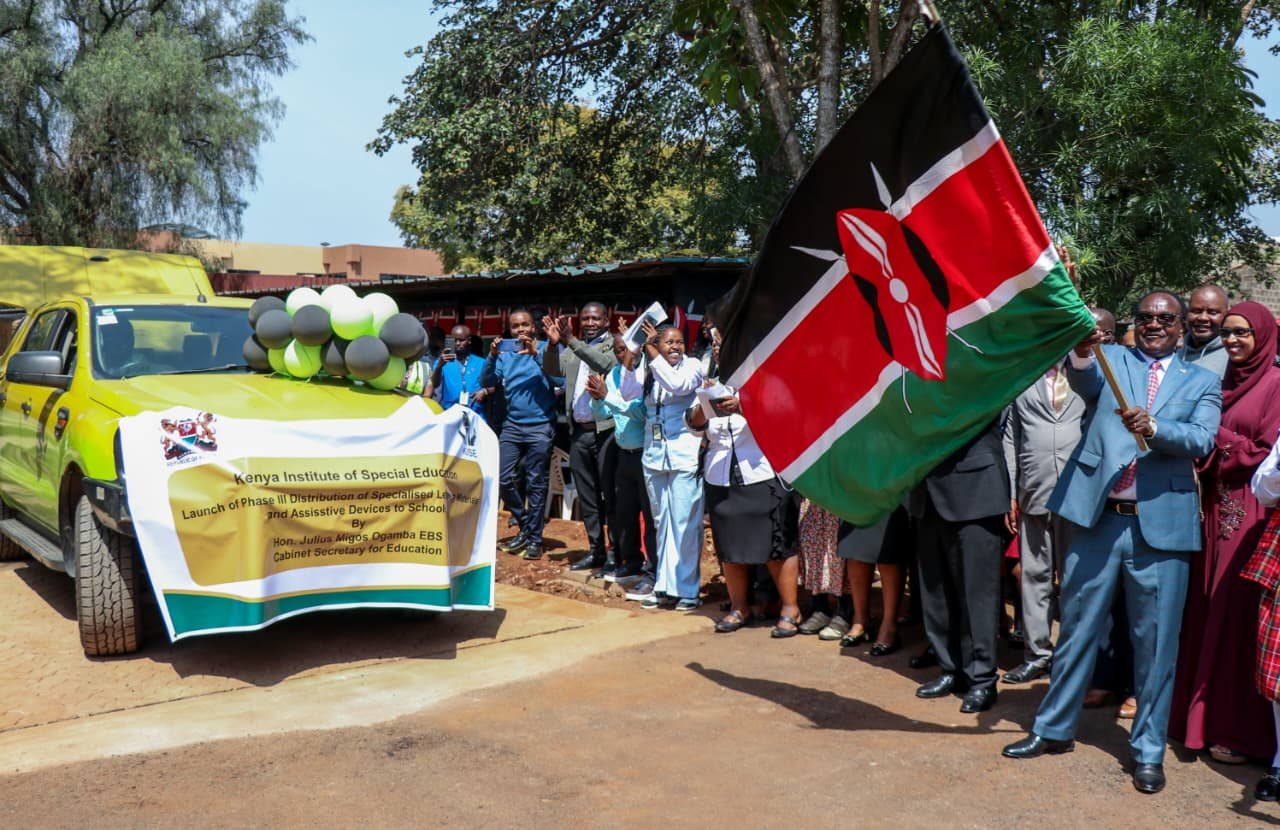
NAIROBI, Kenya, July 16 – The Ministry of Education through Kenya Institute of Special Education (KISE) In a major boost to inclusive learning has launched the third phase of its nationwide special needs intervention, flagging off 11,139 assistive devices destined for learners across all 47 counties.
The specialized equipments are set to benefit 321 inclusive programmes and special schools, targeting learners with physical and visual impairments to ensure equitable access to education.
The milestone initiative highlights Government commitment to foster equitable and accessible learning environments across the country, By systematically distributing tailored assistive tools and digital technologies to students with diverse needs, the program aims to dismantle systemic barriers to education and ensure every learner has the resources required to thrive academically.
Cabinet Secretary for Education, Hon. Migos Ogamba while presiding over the flagging off said the initiative is a reminder of shared responsibility to ensure that every child, regardless of their disability or circumstances, has an equal opportunity to learn, to grow and to dream.
“Every assistive device that leaves KISE today carries with it the promise of inclusion, dignity and hope, Our educational philosophy rests on the conviction that no child must be left behind. Disability is not inability, but a lack of access to the right tools can convert potential into frustration”, said CS Ogamba.
“When a learner with visual impairment receives a modern braille machine or a digital magnifier, when a learner with hearing impairment receives a functional hearing aid, or when a learner with physical impairments receives a wheelchair, the playground changes”.
The devices are the keys to independence as they shift the narrative for these brave learners from one of dependency to one of active, thriving participation.
In the First Phase of the initiative, 375 schools were targeted and 22,323 devices were distributed to special schools for learners with Intellectual and Developmental Disabilities, Visual Impairments, Hearing Impairments and Physical Impairments across the country.
In the Second Phase, 500 Special Units for learners with Intellectual and Developmental Disabilities, Visual Impairments and Hearing Impairments received 29,424 devices, enabling learners to access learning in ways that were previously challenging.
Additionally, the initiative saw remarkable transformations in the schools that received support with Performance improving, retention rates soared, and more importantly, the dignity of our learners was restored.
This initiative directly aligns with ongoing commitment to the Competency-Based Education, which celebrates the unique capabilities of every single learner to ensure that the educational ecosystem is fully adaptive, responsive and supportive of diverse learning needs.
The face of inclusive education in Kenya is changing with increasingly, learners with disabilities are enrolling in regular public schools under our inclusive education programme, many are also progressing to technical institutions, colleges and universities.
Further, KISE is intending to expand the distribution of assistive devices and technologies to reach learners with disabilities in Senior School and Tertiary Institutions, including Universities.
Inclusion should never depend on the type of institution a learner attends, Every learner who requires assistive technology should have access to it so that they can participate fully and succeed in their education.
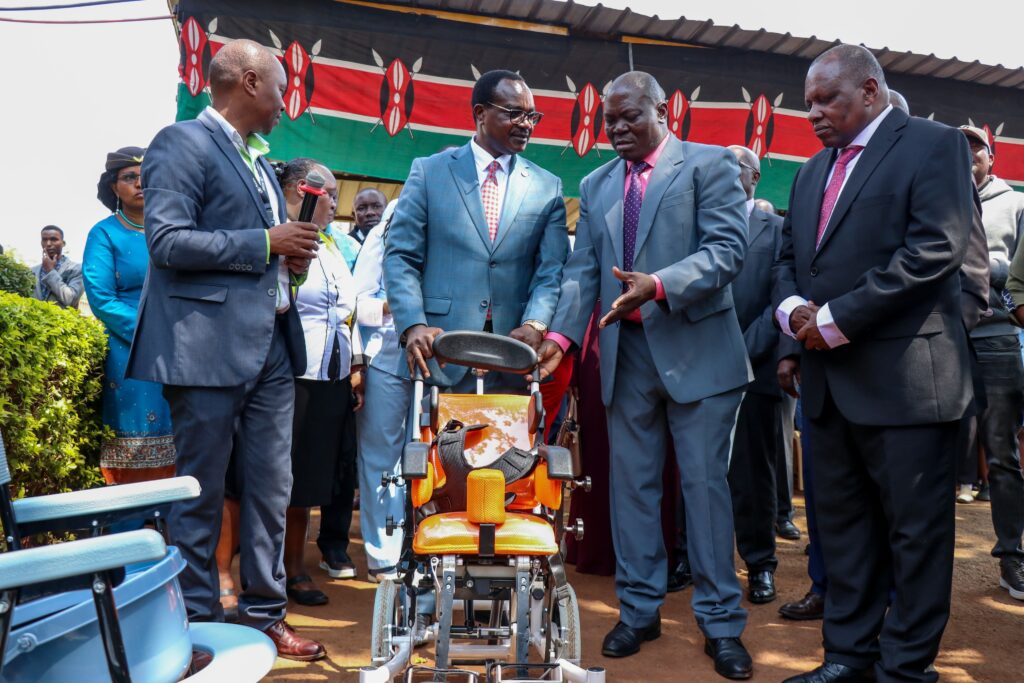
To make the expansion effective and sustainable, KISE is planning to undertake a nationwide special needs assessment, this important exercise will help identify learners requiring assistive devices and technologies in different schools and learning institutions.
Dr. Norman Kiogora, Director, KISE lauded the programme noting that learners are going to benefit from it and the impact of the programme is removing the barriers that prevent learners with special needs from accessing education.
He noted that for learners with visual, hearing, physical, intellectual and developmental special needs, the programme makes education more accessible like any other learner in the country.
“We are very happy that this initiative is supported by the Government of Kenya and, above all, by the directive issued by the Cabinet Secretary this morning.We cannot do this unless we know the needs of every learner. We will take the directive very seriously and conduct a needs assessment for every learner throughout the education sector”, said Dr. Kiogora.
“We have to do it and do it well so that we know where every learner is, what support they currently have, and what gaps remain in meeting their needs”.
Further, He highlighted that they have a geotag in every device where once a learner receives a device, they must know who has it, the value it is providing, and when it may require replacement, so as not to lose track of it.
“After distributing these devices, we are not simply leaving them out there. We must follow them up through geotagging so that every device issued is able to support the learner throughout its intended lifespan”.
The information gathered will enable the Ministry through KISE to plan more effectively, allocate resources equitably and ensure that every learner receives support that is appropriate to their individual needs.
In line with the Presidential Taskforce recommendation on KISE, the CS directed the Institute to work closely with all learning institution of special needs so that every learner is provided with assistive devices in the ratio of 1:1.
“As a Ministry, we fully support this initiative because good policy must be informed by evidence. Reliable data will facilitate strengthening inclusive education across the country”, stated CS Ogamba.
“To our school heads, teachers, and caregivers who are receiving these devices on behalf of the learners: I urge you to handle these resources with the utmost care and responsibility. Ensure they are utilized effectively for their intended purpose”.
“We will continue investing in assistive devices and technology, teacher capacity development, functional assessment services, accessible infrastructure and innovative approaches that make learning possible for all learners”.
CS Ogamba further noted “This work cannot be accomplished by Government alone. It requires strong partnerships. I therefore acknowledge our development partners, county governments, school leaders, teachers, parents and all stakeholders whose collaboration continues to make inclusive education a reality in our country”.
He commended KISE leadership and staff urging them to keep the remarkable work of ensuring the local production of assistive devices and technologies to support special needs education ecosystem.
“The true measure of our nation’s development is not found in the height of our skyscrapers or the expanse of our highways, but in how we treat the most vulnerable members of our society, May these devices and technologies unlock the potential of our learners”.