
Samawati Collective, SemaBOX Debut Public-Interest AI Movement for Agriculture and Health
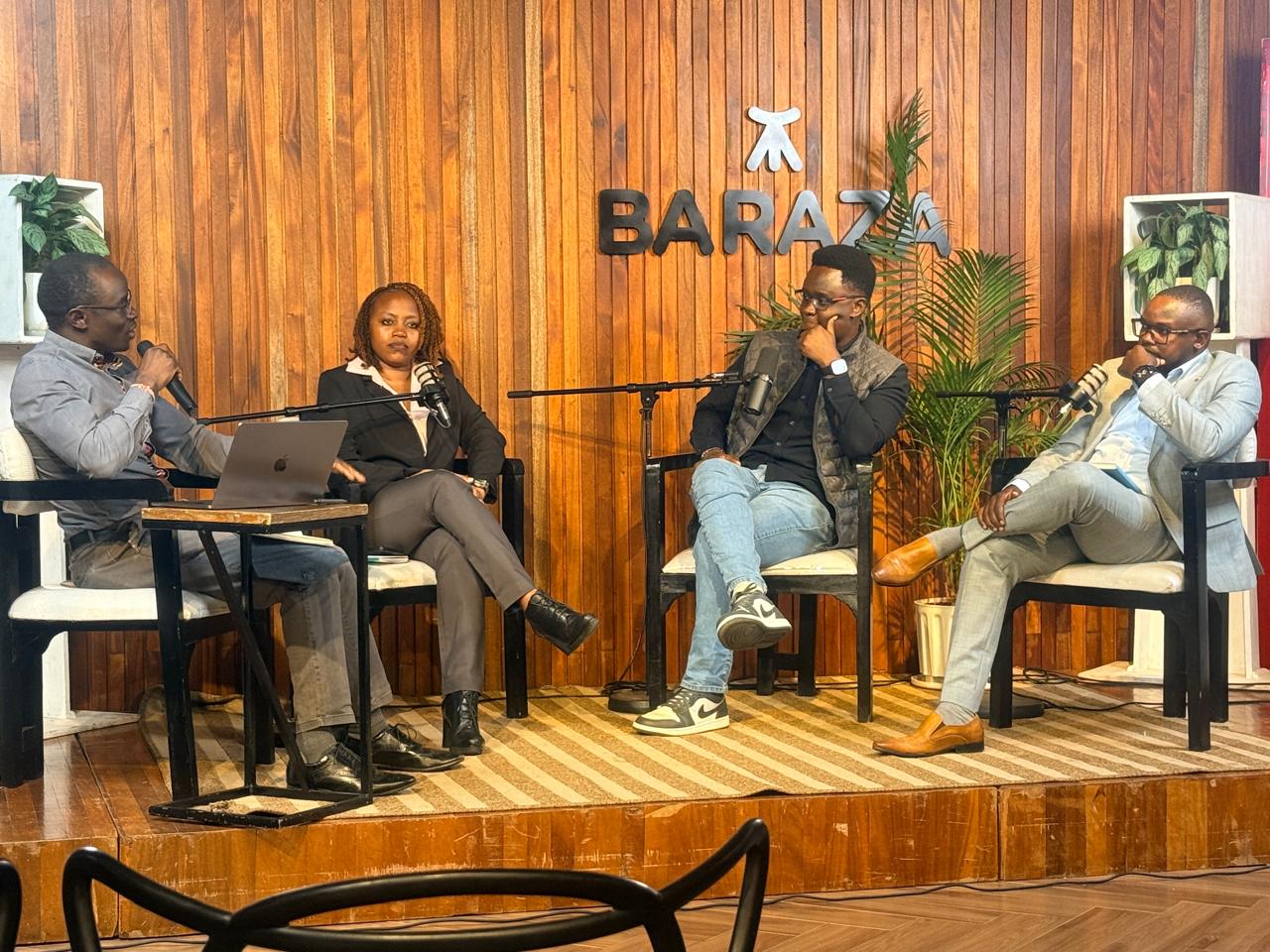
NAIROBI, Kenya, July 6 – As artificial intelligence (AI) begins reshaping Kenya’s clinics and farms, tech pioneers and policymakers are racing to ensure the technology actually sticks, A high-level panel convened by Samawati Collective and SemaBOX at Baraza Media Lab brought together practitioners, government officials, civil society, and funders to confront a critical ultimatum: shape AI to serve the country’s most vulnerable communities now, or let it become just another tech pilot that vanishes the moment the funding runs out.
The stakes are not abstract, Agriculture remains the backbone of Kenya’s economy, contributing roughly a third of GDP. Smallholder farmers produce an estimated 80 percent of the country’s agricultural output often without access to the data, forecasts and advisory services that AI can now deliver at scale.
In health, panelists heard, around 90 percent of maternal and neonatal deaths in Kenya are preventable, with roughly a third linked to gaps in health-seeking behaviour, including mothers not recognising danger signs such as severe headaches or bleeding in time to act.
“AI is already making decisions in Kenya’s clinics and farms. The only question is whether the people those decisions affect have a seat at the table,” said Maurice Otieno, Executive Director of Samawati Collective.
“This convening is our answer. Public-interest AI must be built with communities, such as farmers, mothers, clinicians, citizens not simply deployed on them. We are not here to admire the technology we are here to decide, together, what it must deliver.”
The panel marked the public launch of a partnership between Samawati Collective and SemaBOX to build a movement at the intersection of AI and Health, and AI and Agriculture, not a collection of isolated tools, but a community of builders, ministries, farmers, clinicians and citizens shaping what public-interest AI should actually deliver for Kenya, in step with the ambitions of Kenya’s National AI Strategy 2025–2030.
“Africa’s story about technology is too often told about us rather than by us,” said Dan Aceda, Founder, SemaBOX. “SemaBOX exists to put the microphone in African hands. Through this partnership, the mothers, farmers and clinicians who live with these technologies every day will be the ones shaping the narrative and, ultimately, the tools themselves.”
Discussions spanned AI at national scale in maternal health, geospatial intelligence for food security, the sustainability of donor-funded innovation, and the risk of AI deepening inequality if data costs, literacy and smartphone access are ignored.
On AI’s role in maternal health, Javan Waita, Director of Kenya Programs at Jacaranda Health, described how the PROMPTS platform has grown to reach some 4 million mothers, enrolling 800,000 more each year.
“When we started, our nurses could answer a hundred questions a day. Today, PROMPTS receives around fifteen thousand and AI triages every one of them, identifying the roughly seven percent that signal danger signs, such as severe headaches or bleeding, and escalating them to our clinical nurses”.
“That is what has driven a 27 percent increase in health-seeking behaviour, at a lifetime cost of about two and a half dollars per mother.”
Immanuel Momanyi, Head of Acceleration at Villgro Africa, On sustainability beyond donor funding issued a stark challenge: “At a recent Council of Governors convening in Kisumu, not one of the 47 county governments in the room had a budget line for innovation and yet, if you want true scale, government is the biggest client you will ever have.
“The startups that survive are the ones that build their models into the systems that already exist.”
Additionally, Waita pointed to Jacaranda’s answer, a cost-sharing model under which counties, including Kisumu and Tharaka Nithi, have taken up 100 per cent of enrolment costs and Mombasa has committed to 80 per cent, with PROMPTS embedded in government electronic medical records to cut enrolment costs by more than half.
“If Jacaranda were to shut down tomorrow, the priority is that the solution survives,” he said.
On agriculture, Tina Mkara, Industry Manager for Natural Resources at Esri Eastern Africa, argued that AI’s real value lies beyond prediction: “An experienced farmer often already knows when it will rain. The real value of AI is in the aftermath, linking that farmer to insurance, getting drought-resistant seeds to where they are needed, and turning satellite, drone and weather data into decisions governments can act on.”
Further, She highlighted AI’s potential for public accountability: “If the government invested 100 million shillings in AI to audit health insurance claims, it could save 900 million from fraudulent claims.”
Panelists further cautioned that artificial intelligence threatens to widen the global equity gap, leaving marginalized populations stranded due to data bundle costs, literacy barriers and low smartphone penetration and called for algorithms trained on local knowledge, from village elders’ traditional flood indicators to medicinal trees, rather than textbook science alone.