RCMRD Launches Regional Biodiversity Outlook to Accelerate Conservation Action Across Eastern and Southern Africa
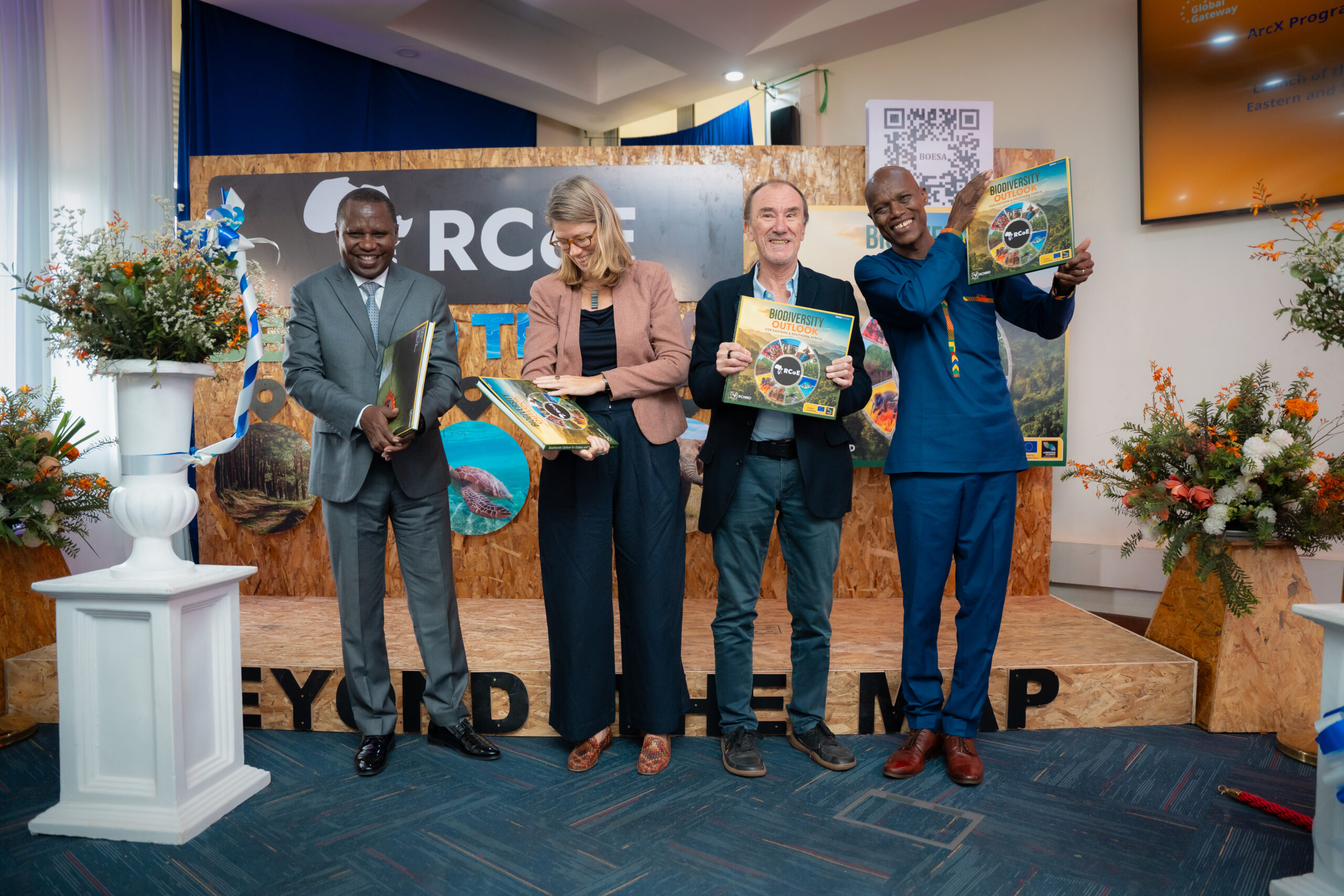
NAIROBI, Kenya, Sep 23 – In a major step toward evidence-based conservation, the Regional Centre for Mapping of Resources for Development (RCMRD) in partnership with the European Union has officially launched the Biodiversity Outlook for Eastern & Southern Africa (BOESA).
The launch took place during the opening day of the Regional Workshop on Integrated Landscape and Seascape Modelling for Climate Resilience Development in East Africa, held in Nairobi from September 22 to 24, 2026.
Designed to bridge the long-standing gap between scientific research and environmental policy, BOESA is structured across seven thematic parts covering institutional frameworks, ecosystem status, conservation effectiveness, governance systems, geospatial data, innovation, and regional actions.
It examines trends in terrestrial and marine protected and conserved areas across all 24 countries and provides a centralized knowledge hub to accelerate nature-positive decision.
For decades, environmental researchers across Africa have generated vital data that failed to translate into tangible legislation or community action.
BOESA addresses this barrier by synthesizing regional perspectives, geospatial information, and practical field experience into accessible formats for youth, researchers and high-level decision-makers.
It also examines policy and governance frameworks, including instruments involving Indigenous Peoples and Local Communities (IPLCs), advances in geospatial data, mapping, and decision-support tools aligned with KM-GBF reporting needs, and capacity-building initiatives and regional programmes linked to the KM-GBF’s 23 targets.
Across the region, more than 5,544 protected and conserved areas, covering approximately 2.62 million km², have been established.
BOESA reports this as equivalent to 17.24 percent of the terrestrial area, demonstrating significant progress while highlighting the substantial gap that remains towards KM-GBF Target 3, which calls for at least 30 percent of terrestrial, inland water, coastal and marine areas to be effectively conserved by 2030.
“We have seen many programmes over the years conduct incredibly valuable research, but we often lack the next step of translating it into policy and therefore into action”,said Sanne Willems, Regional Partnerships, Delegation of the European Union to Kenya.
“Collecting data is not enough,” emphasized Sanne Willems, “This programme is translating that data into very accessible information for young people as well as decision-makers, while also building the capacities of different countries to take action based on the information collected.”
By leveraging RCMRD’s specialized expertise in Earth observation and mapping, the initiative equips countries to track environmental trends, identify critical intervention zones and implement sustainable land and seascape management strategies.
Dr. Emmanuel Nkurunziza, Director General RCMRD said BOESA reflects the importance of bringing together data, knowledge and regional experiences to support informed decisions for biodiversity conservation.
“By making this information more accessible, we aim to support policymakers, conservation practitioners, researchers, development partners, and communities in advancing nature-positive action across the region”, added Dr. Nkurunziza.
The launch arrives at a crucial time for global environmental diplomacy, As nations strive to meet the 2030 targets outlined in the Kunming-Montreal Global Biodiversity Framework (KMGBF), BOESA will serve as a foundational reference for regional progress assessments.
BOESA goes beyond measuring the extent of protected and conserved areas. By bringing together spatial data, mapping, policy analysis, biodiversity trends, conservation effectiveness, governance, and capacity development, the publication identifies conservation gaps, priorities, and opportunities while translating complex information into accessible and actionable insights for decision-makers.
“Achieving the region’s 2030 biodiversity ambitions requires more than expanding conservation areas”.
“Progress must be accompanied by effective management, strong governance, reliable monitoring, accessible biodiversity data, technical capacity, recognition of Indigenous Peoples and Local Communities, adequate financing, and stronger regional cooperation”.
Further, Countries are strengthening their National Biodiversity Strategies and Action Plans, reporting systems, and monitoring frameworks, increasing the need for reliable spatial data, harmonised methodologies, and sustained technical collaboration.
The publication highlights the growing role of geospatial technology, mapping, and decision-support tools in strengthening biodiversity planning, monitoring, and reporting.
It also underscores the importance of partnerships among governments, regional institutions, communities, researchers, development partners, and international organisations.
Such collaboration is essential because ecosystems, species, and many conservation challenges transcend national boundaries.
Ultimately, BOESA 2026 provides both a snapshot of where the region stands and a foundation for where it needs to go next.It demonstrates important conservation progress while highlighting persistent gaps in coverage, management effectiveness, data, capacity, financing, and coordination.
“Addressing these gaps will require stronger institutions, better evidence, meaningful community participation, sustained investment, and coordinated regional action”.
With the 17th Conference of the Parties to the Convention on Biological Diversity (COP17) set to host the first global progress review in Armenia in October 19–30 2026, Eastern and Southern African nations are now better positioned to demonstrate localized progress, highlight gaps, and advocate for targeted resources.
Developed under the Regional Center of Excellence initiative (RCoE-ESA), BOESA sets a unified standard for how spatial intelligence and regional collaboration can transform environmental governance across the continent.
“The future of biodiversity in Eastern and Southern Africa will be shaped by what we choose to protect today, the knowledge we share, and the partnerships we build for tomorrow.”