
From Container Loads to Factory Floors: Kenya’s Industrial Expo Bets on Turning Traders Into Investors
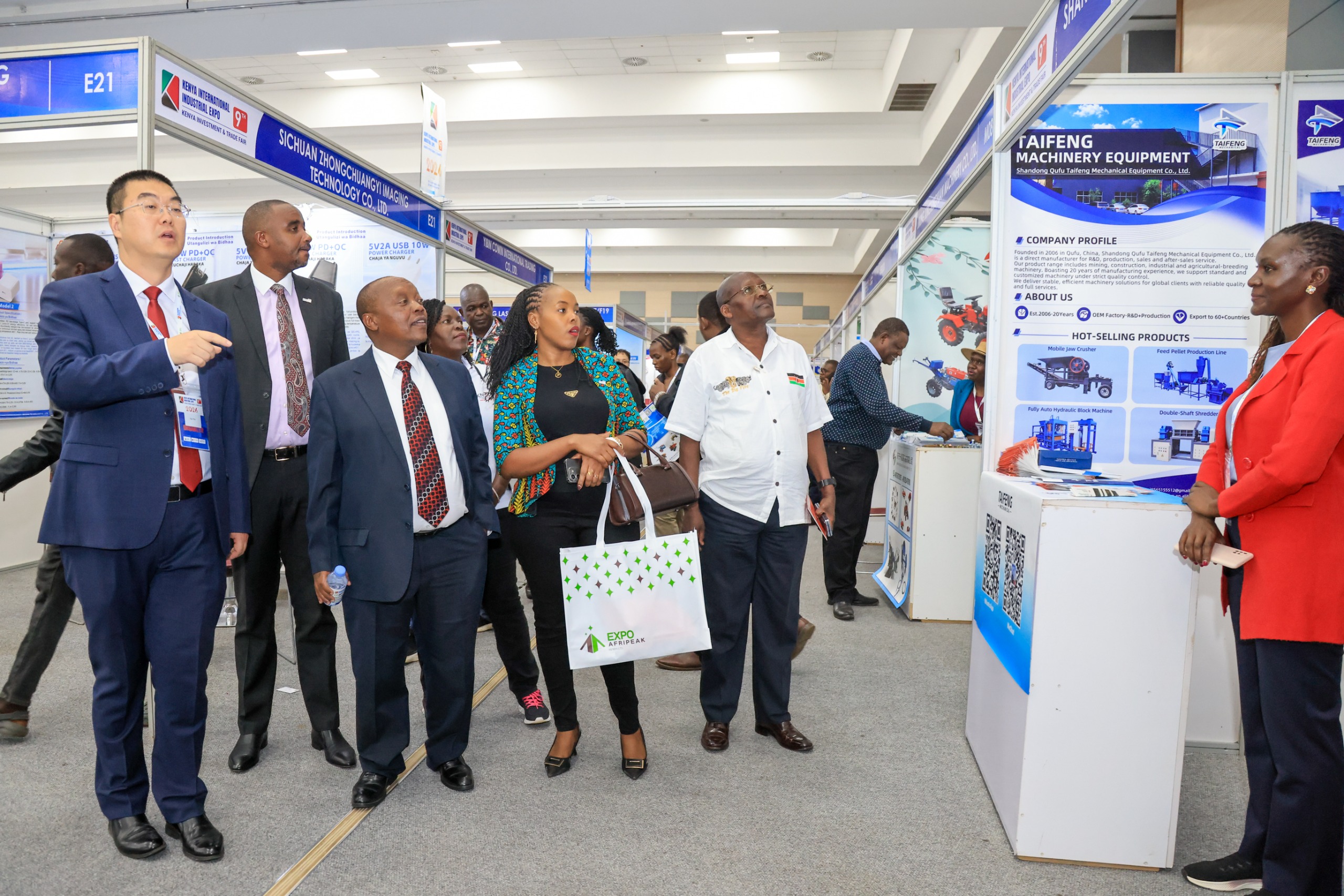
NAIROBI, Kenya, Sep 4 – At the Sarit Expo Centre this week, the opening of the 9th Kenya International Industrial Expo and Kenya Investment & Trade Fair carried the usual trappings of a trade show: rows of exhibition stands, business cards changing hands, ribbon-cutting formality.
But beneath the ceremony, the two opening addresses one from Kenya’s own private-sector establishment, the other from the expo’s Chinese organizers pointed to a more pointed ambition: converting a three-day sales floor into a pipeline for local manufacturing.
A pitch aimed past the sale
Mr. Gao Wei, Managing Director of Afripeak Expo Kenya Ltd, used his welcome remarks to draw a line between two very different kinds of success. “Selling one container of goods is a transaction,” he told the gathered exhibitors, buyers and officials. “Building a partnership, transferring a technology, assembling or producing here, training local technicians and creating jobs that is cooperation, and that is what lasts.”
It’s a notable framing for an event historically built around showcasing products. This year’s edition features, for the first time, an organized business delegation from Guangdong Province one of China’s most active manufacturing and export hubs alongside a significantly expanded presence of firms specializing in laser engraving, laser cutting and industrial processing equipment, technology with applications stretching from metalwork to furniture, packaging and construction.
Gao’s appeal to those exhibitors was explicit: look beyond trade toward investment, local assembly and technology transfer, positioning Kenya’s “strategic location” and “growing consumer market” as reasons to stay rather than simply sell and leave.
KNCCI’s counterweight: the MSME backbone
If Afripeak’s remarks courted the international delegations, the address from Mr. Joseph Mutavi Kithu, National Director of the Kenya National Chamber of Commerce and Industry, was aimed squarely at grounding the expo in Kenya’s own business fabric.
Speaking under this year’s theme, “Investing in Tomorrow, Trading for Prosperity,” Kithu was careful to reframe industrialization as something broader than heavy manufacturing.
“Industrialization is not only about large factories,” he said. “It is also about the thousands of MSMEs, suppliers, distributors, technology providers and service businesses that form the backbone of our economy.”
That framing matters organizationally too: KNCCI highlighted its reach across all 47 counties as the connective tissue meant to link whatever technology and capital arrives at Sarit Expo Centre to markets and enterprises well outside Nairobi.
Among the KNCCI members spotlighted as exhibitors spanning logistics, electric mobility, building materials, packaging, aluminium fabrication, coffee processing and insurance, the message was less about any single sector and more about breadth: a private sector chamber positioning itself as the domestic counterpart to whatever international capital shows interest.
Read side by side, the two addresses reveal the expo’s real wager. Afripeak is selling Kenya to its exhibitors as a production base, not just a market. KNCCI is selling its own membership network to those same exhibitors as the on-ramp for actually doing that the distributors, technicians and local partners needed to move from shipping containers to shared factory floors.
Whether that translates into actual assembly lines or technology transfer agreements, rather than another round of stand visits and card exchanges, is the open question hanging over the fair’s three days.
Both speakers, notably, used near-identical language to frame the stakes: success measured not by exhibitor counts or footfall, but as Kithu put it by “the business connections created, partnerships established, investments mobilized, markets accessed and transactions generated.”
For a sector still emerging from years of talk about “Buy Kenya, Build Kenya” and local value addition, that’s a familiar aspiration. What’s different this year, organizers insist, is the presence of a delegation and a technology category laser processing equipment specifically positioned as tools Kenyan SMEs could adopt directly, rather than finished goods to simply purchase and resell.