Nairobi Hospital Graduates 158 Medics as College Charts Path to University Status and AI-Ready Care
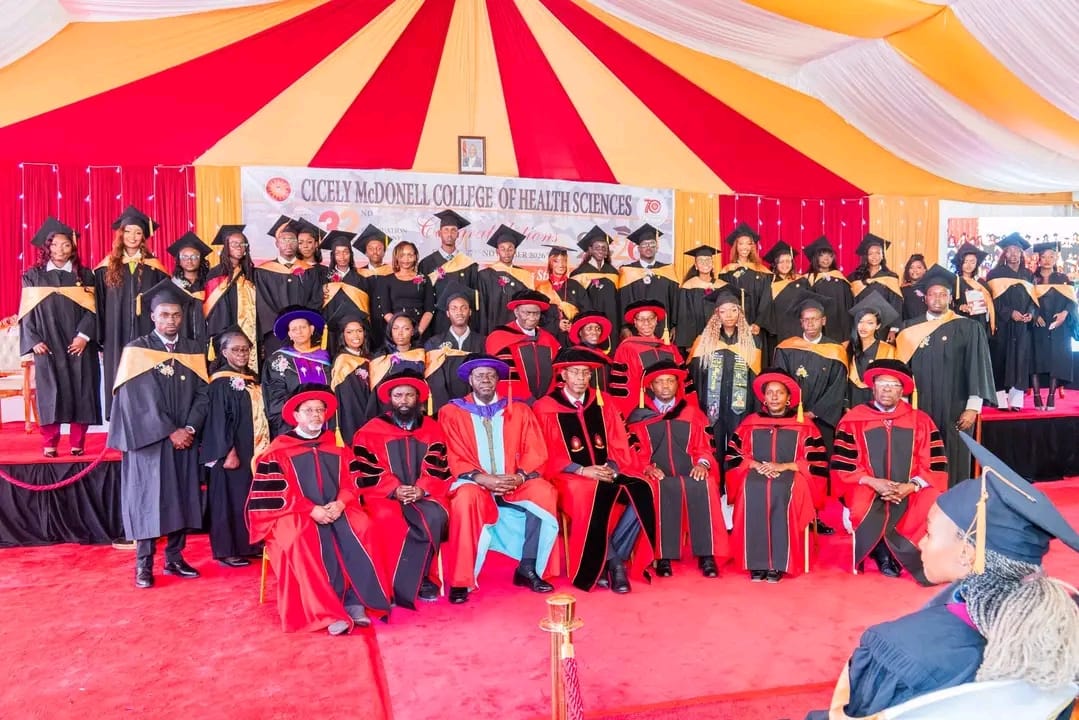
As artificial intelligence rapidly reshapes modern medicine, 158 newly minted healthcare professionals stepped out of The Nairobi Hospital’s Cicely McDonell College of Health Sciences on Friday with a clear mandate: embrace new technology, but never lose the human touch.
During the institution’s 32nd graduation ceremony, the Class of 2026 celebrated the end of grueling clinical rotations and intensive coursework a milestone that comes as the historic nursing school prepares for its biggest transformation yet, including plans to relocate to a dedicated campus and transition into a full-fledged university.
Balancing Algorithms with Empathy
For College Principal Dr. Margaret Sirima, preparing nurses for today’s hospitals means walking a fine line between digital innovation and traditional bedside care.
While the college has actively woven AI tools into its curriculum, Dr. Sirima emphasized that algorithms cannot replace a clinician’s intuition or compassion.
”We cannot run away from technology. AI is here, and it can be put to good use,” Dr. Sirima told the gathering of faculty, families, and health partners.”
“We are already channeling our students toward using AI academically, while ensuring that technology does not replace their critical thinking, clinical judgment, or the human touch they bring to a patient.”
The Nairobi Hospital Acting CEO, Dr. Magdaline Kamande, echoed that sentiment, urging the graduates to view their diplomas not as a finish line, but as the start of lifelong learning. She reminded the cohort to “never lose sight of the person behind every diagnosis or procedure.”
The Human Side of Rigorous Training
Behind the graduation gowns were years of late-night studying and high-pressure hospital shifts.
For Ashley Kiprotich, a top-performing Diploma in Registered Nursing graduate who plans to return to India to launch her medical career, surviving the program required leaning heavily on her lecturers and peers.
“The course is not as easy as one might perceive, so I worked tirelessly, leaned on my mentors and lecturers, and went the extra mile,” Ashley said, reflecting on her journey.She urged her classmates to remember that clinical excellence is only half the job.
“Nursing is more than just the procedures you perform. It is also the small things: offering encouragement, smiling at a patient, and being patient with someone going through a difficult time.”
Addressing Critical Healthcare Gaps
The graduating class enters the workforce at a critical time for Kenya’s healthcare sector, bringing much-needed specialized skills to hospital wards.
The 158 graduates include 74 Kenya Registered Nurses, 34 Healthcare Support Assistants, 20 Critical Care Nurses, 11 Nephrology Nurses, 10 Peri-Operative Nurses, and 9 Neonatal Nurses.
The training was made possible through clinical partnerships spanning major institutions, including Kenyatta National Hospital, Pumwani Maternity Hospital, Mathari National Teaching and Referral Hospital, Nairobi City County clinics, and Daystar University.
Eyes on University Status
Presiding over the ceremony, Ambassador Prof. Peter Ngure, Kenya’s Permanent Delegate to UNESCO, challenged the college to look beyond its current footprint. He lauded the institution’s ambition to evolve into a university, noting that the move would allow it to pioneer medical research and train specialists across broader healthcare disciplines.
“Academic institutions stand tall when they innovate, solve problems, and shape practice through research. This can be achieved by transitioning into a university,” Prof. Ngure said.
Backing the vision, The Chairman of the Kenya Hospital Association Board of Management, Dr. Barcley Onyambu confirmed that the Board is actively mobilizing resources to relocate the college to a standalone, dedicated facility a move designed to give future cohorts the space and modern infrastructure needed to take Kenyan healthcare training to the next level.
Dr. Onyambu noted that the Board remains committed to the college’s long-term growth and sustainability.
”The college is an important part of The Nairobi Hospital, not only because it trains future healthcare professionals, but also because of the role it plays in supporting patient care. We are committed to strengthening its capacity and creating an environment that supports quality learning and professional development,” said Dr. Onyambu.
As the Class of 2026 begins its professional journey, Cicely McDonell College of Health Sciences continues to look ahead strengthening its academic offerings, expanding strategic partnerships, investing in its learning environment and preparing healthcare professionals to contribute meaningfully to the future of medicine in Kenya and beyond.