A 40-Year Legacy: How Christian Mission Aid Empowered a Rescued Girl to Lead Change
At just eight years old, Alice Ilantoi’s future had already been decided for her. Growing up in a traditional Maasai community in Kenya’s Kajiado County, she was set to undergo Female Genital Mutilation (FGM) and be married off to a 60-year-old man.
Today, Alice is a certified Human Resource professional with a university degree and the founder of her own grassroots organization working to ensure no other girl in her village faces the fate she narrowly escaped.
Alice’s journey is the living proof of what happens when long-term community investment meets human resilience.
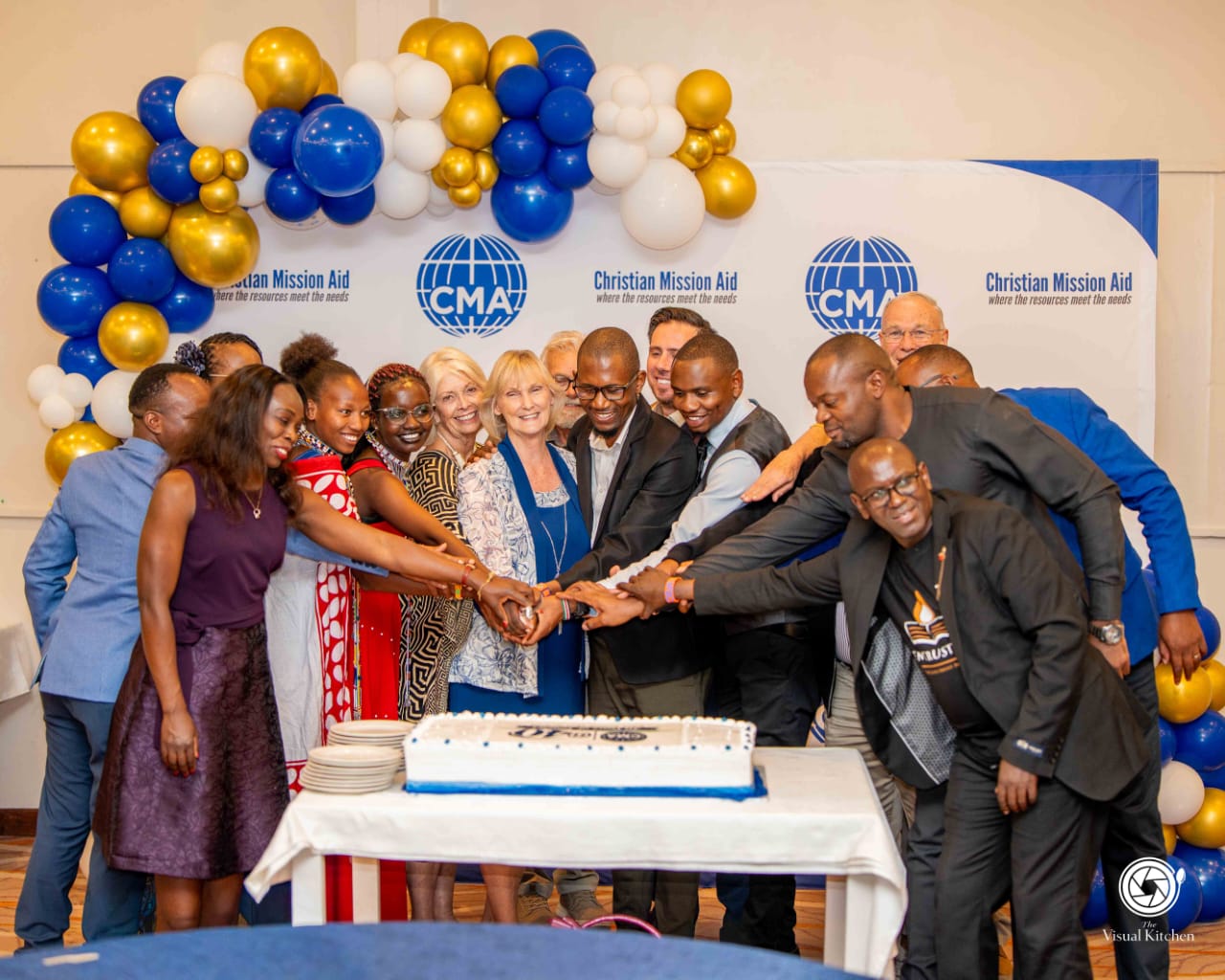
Her turning point came in 2010 when she was taken to the Girls Rescue Centre run by Christian Mission Aid (CMA), a nonprofit celebrating 40 years of humanitarian and development work across East Africa.
A Four-Decade Commitment to the Margins
Founded in 1986, Christian Mission Aid has spent the last four decades working in some of the hardest-to-reach regions of Kenya, Uganda, and South Sudan from the arid stretches of Turkana and Pokot to the slopes of Mount Elgon and the plains of Maasailand.
Co-founder and CEO Debra Kitchel recalls a vastly different landscape when the organization began. At the time, harmful traditional practices were deeply entrenched, poverty was acute, and young girls fleeing FGM and forced early marriage had nowhere to turn.
“Girls were running away from home, and we had no place to put them until we were able to begin a girls’ rescue center in 2008,” Kitchel says. “Since then, we have rescued over 200 girls some running to a pastor, a schoolteacher, or a chief as young as 10 years old.”
At the rescue center, which currently houses 70 girls, safety is only the beginning. CMA supports the girls from primary school all the way through secondary school, college, or vocational training, equipping them to become financially independent adults who can uplift their families without relying on early marriage dowries.
Tackling the Root Causes, Not Just the Symptoms
For Kitchel and her team, rescuing girls is vital, but lasting change requires transforming the environment they come from.
Over 40 years, CMA’s work has evolved into four interconnected pillars: Children and Youth, Community Development, Aid and Relief, and Christian Outreach Ministries.
Understanding that forced early marriages are often driven by severe household poverty where livestock or dowry money represents survival CMA pairs advocacy with practical economic and health solutions:
Clean Water and Health: In Kajiado County, CMA has distributed thousands of imported household water filters that turn murky pond water into safe drinking water. Fewer waterborne illnesses mean children stay in school and families save money otherwise spent on medicine.
Grassroots Advocacy: Rather than imposing outside rules, CMA trains local pastors in remote villages across Kajiado, Pokot, and the Kerio Valley to speak out against FGM and educate communities on constitutional protections for girls.
Livelihoods and Peacebuilding: From adult literacy and agroforestry to mediating peace between rival pastoralist groups like the Pokot and Marakwet, the focus remains on building local capacity.
”We always ask, How can we make someone’s life better?” Kitchel explains. “Communities are still struggling, and we’re not done yet.”
Passing the Torch: The Birth of Oloip
Perhaps the greatest measure of CMA’s 40-year legacy is that those it once sheltered are now becoming shelters for others.
When Alice Ilantoi entered the Girls Rescue Centre in Class 2, she found more than safety; she found an education, a sisterhood, and what she describes as “shade” from the harsh realities of her childhood.
After completing Form 4 and earning her degree in Human Resources, Alice looked back at her home community in Kajiado and realized she held a unique advantage.
While rescue centers catch girls after they flee, Alice wanted to stop the crisis before it started from the inside out.
She founded the Oloip Foundation named after the Maa word for shade. Knowing that FGM often happens under the cover of night and during long school holidays, Alice travels directly to schools across Kajiado to educate students on the dangers of FGM, early marriage, and teen pregnancy.
During school breaks, she sits down with parents to challenge traditions from the perspective of a daughter of the soil.”Through the CMA program, it gave me shade somewhere I could rely on,” Alice says.
“Because I am Maasai and I come from that community, I want to be that shade for the young girls of Kajiado, so they know they can speak out for themselves.”
As Christian Mission Aid steps into its fifth decade, Kitchel hopes a younger generation will carry the mission forward.
In Kajiado, that future is already walking into classrooms, armed with a university degree, a local voice, and a promise to keep the next generation safe.