Kenya’s Climate Battle Begins in the Village: Can Green Africa Villages Turn Survival into Sustainable Livelihoods?
As COP31 negotiators debate how to increase adaptation finance for vulnerable countries, a new partnership between the National Council of Churches of Kenya and Green Africa Foundation is seeking to transform rural livelihoods through agriculture, clean energy, water access and environmental conservation. Its biggest test will be turning ambition into lasting economic resilience.
When rainfall becomes unpredictable, the consequences extend beyond failed harvests. Farmers lose income, livestock become harder to sustain, food insecurity deepens and households become increasingly dependent on natural resources that are already under pressure.
For millions of rural Kenyans, climate change is therefore not simply an environmental concern. It is an economic threat that affects how families produce food, access energy and sustain their livelihoods.
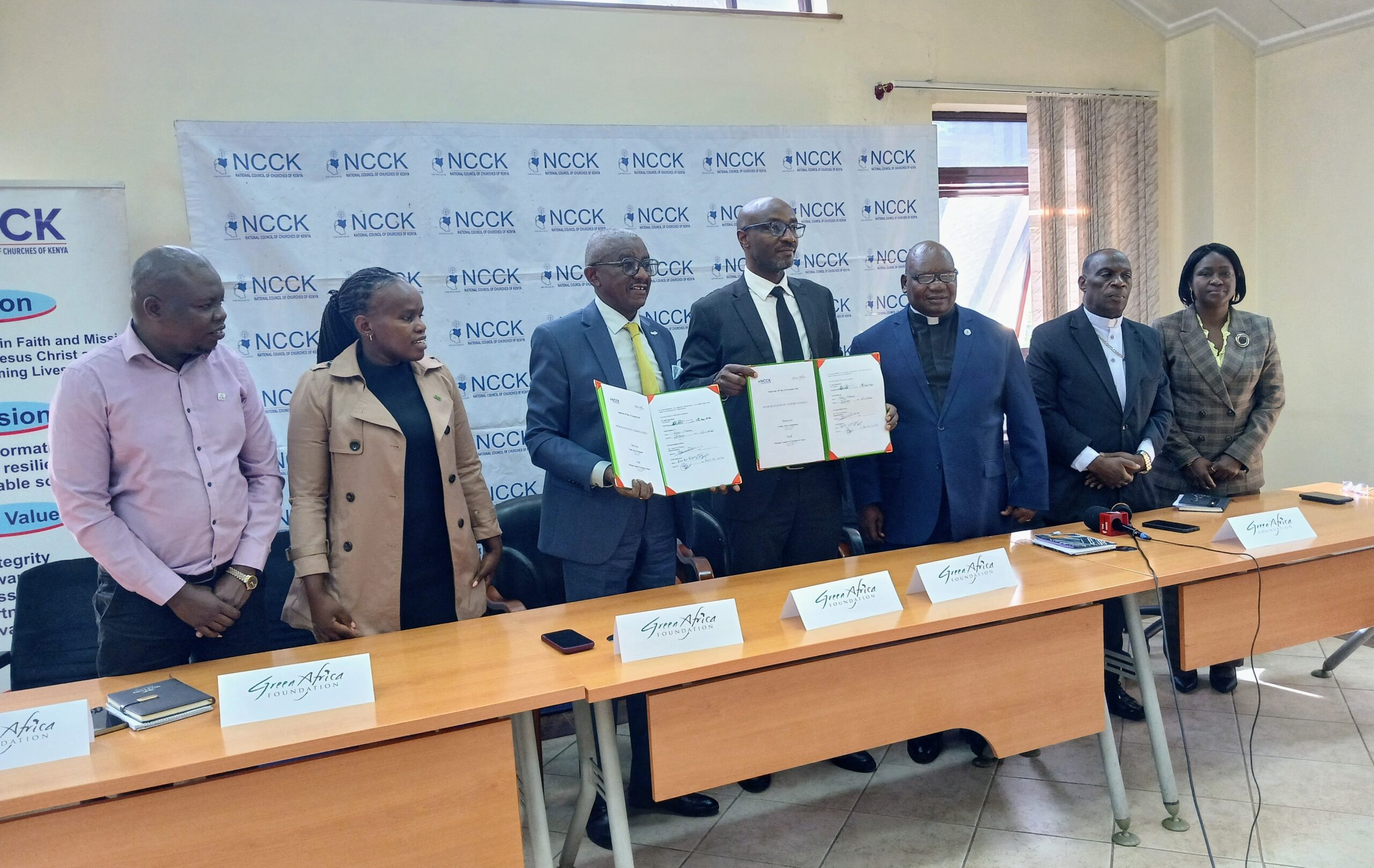
It is against this backdrop that the National Council of Churches of Kenya (NCCK) and Green Africa Foundation (GAF) have entered a 10-year partnership to establish 1,450 Green Africa Villages, with an ambition to make communities more economically independent while protecting the environment.
The initiative proposes a different approach to climate resilience: rather than treating environmental conservation, food production and poverty reduction as separate development concerns, it seeks to bring them together within communities.
At the centre of this model is the belief that communities cannot sustainably protect their environment if their livelihoods depend on activities that contribute to its degradation.
Mercy Wanjiku Kamau, Programme Manager at Green Africa Foundation, says the organisation’s approach is built around three interconnected principles: caring for people, environmental conservation and sustainable livelihoods.
The Foundation, established in 2000, has developed a community-based model that seeks to make environmental responsibility part of everyday economic activity.
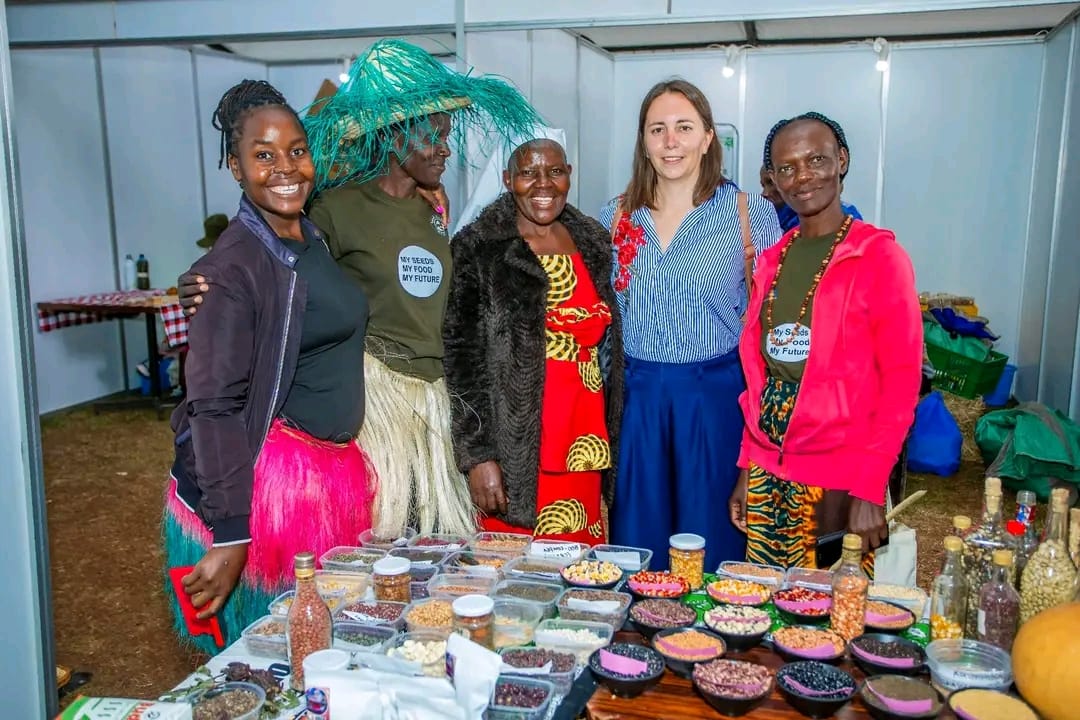
Under the Green Africa Villages initiative, communities will be encouraged to undertake activities including renewable energy adoption, horticulture, tree production, beekeeping, fish farming, animal husbandry, water harvesting and waste management. But the ambition goes beyond introducing communities to new agricultural and environmental practices.
Shedrack Musyindu, an Assistant Project Officer at the Foundation, explains that the model is designed to connect production with value addition and access to markets.
Through its digital marketplace, GAF intends to provide an avenue for communities to sell surplus agricultural produce and cash crops, helping farmers move beyond production to economic empowerment.
This addresses one of the persistent challenges facing smallholder farmers: producing food does not necessarily guarantee reliable income when access to markets and value addition opportunities remains limited.
By supporting communities along the value chain, the Foundation hopes to make environmental conservation economically worthwhile.
The model also recognises that climate resilience begins with basic household needs, particularly energy and water.In many rural households, dependence on firewood and charcoal remains common, placing pressure on forests while exposing families to indoor air pollution.
Kamau says the Foundation is encouraging the adoption of alternatives such as briquettes and improved cookstoves to reduce dependence on traditional biomass fuels.
She notes that women and girls who spend several hours collecting firewood could redirect that time towards education, businesses and other productive activities.Beekeeping offers another example of how environmental protection can support livelihoods.
Through training in modern beekeeping, harvesting and value addition, communities can develop income-generating activities while creating incentives to protect their natural surroundings.
However, the success of these interventions will depend on whether communities can access the resources required to establish and maintain them.
This is where the global climate-finance debate becomes particularly relevant.At COP31 in Antalya, Türkiye, developing countries are pressing for predictable and accessible financing to help vulnerable populations adapt to climate change.
The debate builds on the COP30 commitment to make efforts to at least triple adaptation finance by 2035.
At COP31, an initial draft proposed an annual target of at least US$120 billion by 2035, alongside an implementation pathway and monitoring arrangements.
However, a revised draft published on November 19 dropped the specific US$120 billion figure, retaining the broader call to triple adaptation finance.
The negotiations remained unresolved at the time of publication ahref=”https://www.climatechangenews.com/2026/11/19/cop31-antalya-turkiye-australia-ministers-agremeent-fossil-fuels-electrification For Africa, the question is whether these international commitments will translate into accessible resources for communities experiencing the effects of climate change.
Kamau acknowledges that financing remains a major challenge for the Foundation, which relies largely on donations and development partners to implement its programmes.
She argues that additional climate financing is necessary to expand community-based interventions, noting that even relatively simple sustainable livelihood projects require financial support to become operational.
This exposes a critical tension within the Green Africa Villages ambition.While the partnership seeks to reach 1,450 wards, the announcement did not disclose a complete financing package for the 10-year programme.
NCCK, however, brings existing experience in community-based climate interventions.Its General Secretary, Rev. Canon Chris Kinyanjui, points to work in Turkana, Tharaka Nithi and Kitui, where the organisation has supported water access, solar installations and climate-smart agriculture.
In Tharaka Nithi, conservation agriculture training has helped farmers adopt practices such as mulching and minimising soil disturbance to retain moisture and improve production during periods of unreliable rainfall.
Kinyanjui recalls encountering a farmer who had harvested more than 100 bags of sorghum, alongside maize, despite repeated rainfall failures. The farmer had also secured fodder for livestock.
In Kitui, NCCK says it has invested more than KSh500 million in interventions that include rehabilitating approximately 15 dams, developing sand dams and supporting solar-powered water pumping.
The new partnership intends to build on such experiences by using the church’s extensive grassroots networks to mobilise communities and promote environmental stewardship.
Kinyanjui says NCCK wants churches to incorporate environmental conservation, climate change and food security into their teachings, encouraging congregations to become active participants in building resilience.Yet the real measure of the initiative will not be the number of villages enrolled or environmental activities undertaken.
It will be whether farmers can maintain production when rainfall fails, whether households can access affordable cleaner energy and whether communities can generate sufficient income to sustain their interventions.
As COP31 negotiations expose continuing disagreements over the scale and delivery of adaptation finance, Kenya’s proposed Green Africa Villages offer an opportunity to demonstrate how global climate ambitions can connect with local economic needs.
But for the model to succeed, community participation must be matched by predictable financing, accountable implementation and measurable improvements in livelihoods.Ultimately, a green village should not simply be one with more trees.
It should be a community capable of feeding itself, protecting its natural resources and sustaining its economy even as the climate changes.