
ODPP Launches Guidelines to Strengthen Prosecution of Corruption and Economic Crimes
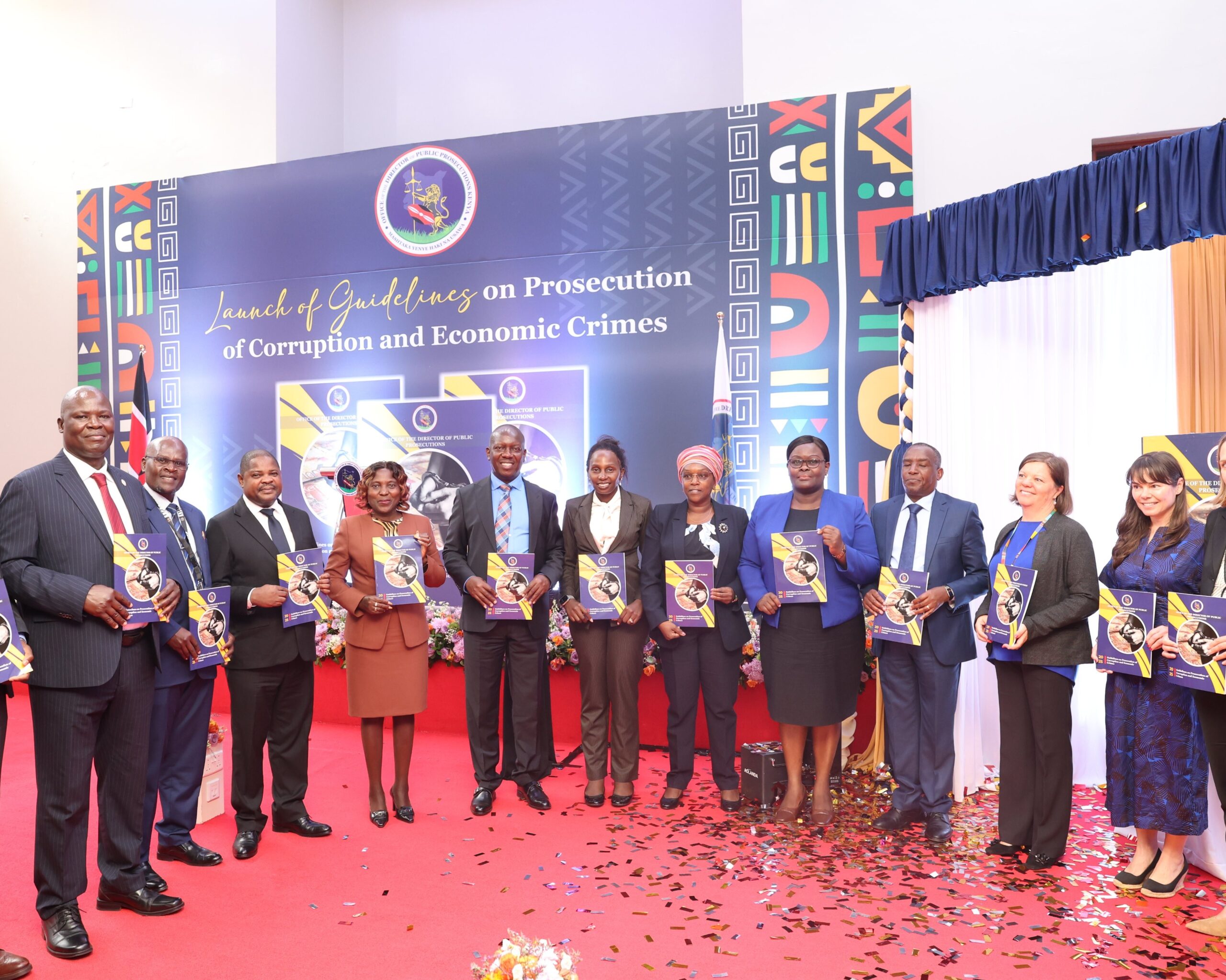
NAIROBI, Kenya, Aug 28- The Office of the Director of Public Prosecutions (ODPP) has unveiled the Guidelines on the Prosecution of Corruption and Economic Crimes, 2025 a landmark step in Kenya’s fight against graft and abuse of public resources.
Director of Public Prosecutions (DPP) Mr. Renson Ingonga while speaking during the ceremony said the guidelines reaffirm the ODPP’s commitment to prosecute corruption cases with firmness, fairness, and fidelity to the Constitution.
“Corruption and economic crimes have for too long undermined our country’s progress, eroded public trust in institutions, denied citizens critical services, and entrenched inequality these guidelines are not just technical documents; they are a framework to guide decision-making in the prosecution of corruption cases across the country”, He said.
The guidelines set out uniform standards and principles for prosecutors, particularly on the critical decision to charge, They also respond to the growing complexity of economic crimes, including the use of technology to conceal illicit activity, and corruption within both national and county governments.
DPP Ingonga stressed the importance of inter-agency collaboration one of the pillars of the ODPP Strategic Plan 2023-2027 emphasizing that effective cooperation across the justice sector must be built on“partnership over prestige and cooperation over competition.”
Additionally, He commended the European Union (EU) and the United Nations Office on Drugs and Crime (UNODC) for their support in developing the document, describing the initiative as “a collective effort that demonstrates our shared resolve to fight corruption together.”
Beyond setting prosecution standards, the guidelines also introduce a structured framework for reporting on anti-corruption cases, enabling the ODPP and stakeholders to track progress, identify gaps and strengthen accountability.
The DPP further highlighted the increasing use of alternatives to prosecution, such as plea bargaining, as innovative ways of handling corruption cases chapter nine of the guidelines underscores the importance of such approaches in enhancing efficiency within the justice system.
“These guidelines are binding standards that must guide our daily work,” he told ODPP staff.
“They remind us that prosecution is a public trust, not a personal pursuit, and that every action must reinforce public confidence in the justice system. No individual, however powerful, is above the law, and no citizen, however ordinary is beneath its protection.”
Representing the Chief Justice, Lady Justice Lucy Njuguna commended the DPP for his leadership, noting that corruption is a global challenge requiring comprehensive solutions.
“As we celebrate this milestone, we must reflect on the broader need to deal with corruption, Justice is only possible if all the institutions in the chain play their role diligently. We must also invest in capacity building to equip agencies with the necessary skills to combat corruption.” She said
Faith Odhiambo, President of the Law Society of Kenya (LSK), hailed the launch as a critical tool in the war against graft She warned that corruption remains one of the gravest threats to the country undermining development and denying citizens essential services.
“Corruption in Kenya is not an abstract vice it is the ghost in every stalled project, the shadow behind every inflated tender, the silent hand that denies a child a classroom and a patient a hospital bed,” she said.
“This launch breathes life into Chapter Six on leadership and integrity, But the ODPP cannot win this fight alone. Investigators must be thorough, courts must be efficient, the defence Bar must be ethical and citizens must remain engaged”, said Ms Odhiambo.