
CS Wandayi Launches Collaborative Free Respiratory Medical Camp, Champions Clean Energy Transition
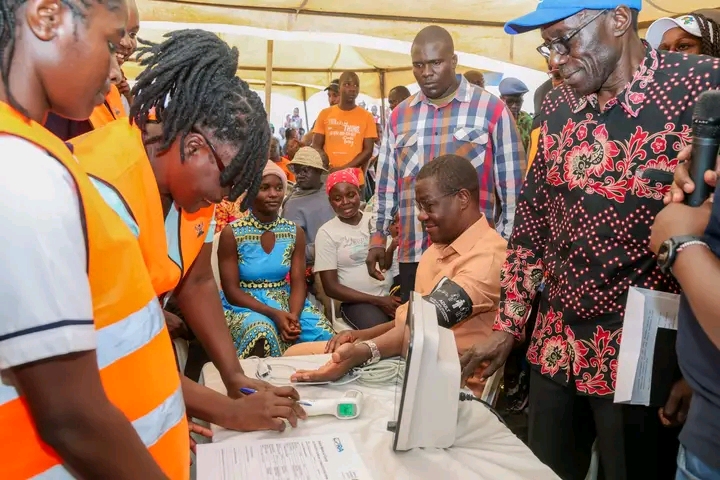
SIAYA, Kenya, June 28 – Siaya County residents are set to benefit from a major healthcare boost following the official launch of a free respiratory medical camp a collaborative initiative on Saturday 27 June 2026.
Formally opened with high commendation for the joint efforts of the Energy and Petroleum Regulatory Authority (EPRA), the County Government of Siaya, KMTC Siaya Campus and The Chronic Diseases Society, the free initiative aims to bring critical health services directly to the local community.
The medical camp demonstrates the power of collaboration in addressing challenges that directly affect communities, It also highlights an important reality: the choices people make about energy can have a significant impact on their health and quality of life.
“When we speak about energy, many people think about electricity, petroleum or infrastructure, However, energy is also about the air we breathe in our homes, the health of our families and the opportunities available to our communities”, said Energy CS Opiyo Wandayi.
CS Wandayi highlighted that many households across Kenya continue to depend on traditional cooking fuels such as firewood and charcoal. Current estimates indicate that approximately 9.1 million households in Kenya including about 1.7 million urban households and 7.4 million rural households continue to rely on traditional cooking fuels as their primary source of cooking energy.
This means that millions of women, children and elderly people are exposed daily to smoke that can contribute to respiratory illnesses, eye problems and other health complications.
“The Government of Kenya has taken a bold step by setting a target of achieving universal access to clean cooking by the year 2028, To guide this journey, the Government developed the Kenya National Cooking Transition Strategy for 2024 to 2028”, stated Wandayi.
The strategy provides a clear roadmap for accelerating the adoption of clean cooking solutions across the country. Additionally, it brings together existing initiatives and fuel-specific strategies, including the Bioenergy Strategy, the Bioethanol Masterplan, the LPG Growth Strategy and the Electric Cooking Strategy into one coordinated framework.
The objective is to create an enabling environment where different clean cooking solutions can thrive, allowing households to choose the options that best meet their needs and circumstances.
The strategy recognises that there is no one-size-fits-all solution, What works in one community may not necessarily work in another with a focus on ensuring that Kenyan households have access to a range of safe, affordable and sustainable cooking options.
The strategy outlines several key actions that the Ministry is implementing to accelerate the transition to clean cooking.
“We are working to bridge the supply gap by expanding the availability and accessibility of clean cooking technologies and fuels”.
It also aims to address affordability challenges to ensure that more households can adopt cleaner solutions without placing additional pressure on household incomes and promoting local manufacturing of clean cooking technologies and supporting local fuel production.
He added that it will not only improve access but also create jobs, stimulate enterprise development and strengthen Kenya’s economy while investing in public awareness and education because many households still lack information on the health, economic and environmental benefits of clean cooking and this pillar is part of why we are here today.
“The Ministry is equally committed to ensuring that this transition reaches every part of the country. This is why the Integrated National Energy Plan (INEP) 2023–2043 places clean cooking at the centre of both national and county energy planning”.
The INEP represents a major shift in how we think about energy access in Kenya. Rather than planning only from the national level, the framework recognises the critical role of counties in identifying local energy needs and developing solutions that respond to those realities.
Through the INEP, clean cooking is no longer treated as a standalone programme. It is integrated into county energy development, investment planning and service delivery.
This approach effectively devolves energy planning and gives counties an opportunity to shape solutions that work for their communities, Counties across the country have been urged to take full advantage of this framework as they understand their communities best.
“They understand local cooking practices, available resources, economic realities and cultural preferences”.
Through innovation, partnerships and investment, they can develop practical solutions that accelerate access to clean cooking while supporting local economic development.
Whether through LPG distribution networks, electric cooking programmes, bioethanol initiatives, biogas projects or improved cookstove adoption, counties have an important role to play in delivering Kenya’s clean cooking ambitions.
The CS encouraged all to take advantage of the free screening and health services available during this two-day medical camp noting that early diagnosis and prevention remain among the most effective ways of protecting our health and that of our loved ones.
“Let us continue working together to build a future where every Kenyan has access to clean cooking solutions, cleaner air and better health”.