
Congolese Community Calls on Kenya to Investigate Alleged M23 Recruitment in Nairobi
NAIROBI, Kenya, Aug 1- Members of Kenya’s Congolese community are pressing the government to investigate claims that individuals linked to the Alliance Fleuve Congo (AFC)/M23 movement have been recruiting, mobilizing and raising funds in Nairobi in support of the ongoing conflict in eastern Democratic Republic of Congo.
Ganza Daniel, President of the Mutualite Banyamulenge Community in Katanga, DRC, said Kenya’s standing as a regional peace broker made it especially important that the country’s soil not become a staging ground for activities tied to armed groups.
“Kenya has built a strong reputation as a country that believes in democracy, peace and the rule of law,” Daniel said. “We are appealing to the Kenyan authorities to ensure that these democratic freedoms are not exploited to recruit, mobilise or raise funds for an armed conflict taking place in the DRC.”
According to the community, individuals associated with AFC/M23 have travelled to Nairobi to mobilise Congolese residents and drum up support for the movement. More troublingly, it alleges that young people including minors may have been targeted for recruitment, with fundraising activity allegedly taking place in some community spaces, including churches.
In a video statement circulated to media in both Kenya and the DRC, Daniel called for the claims to be formally investigated rather than dismissed as rumour.
“We are not asking the Kenyan government to act on rumours or political accusations,” he said. “We are asking for a professional, independent and impartial investigation so that the truth can be established and appropriate action taken if wrongdoing is found.”
The community also flagged concerns about individuals who it says have benefited from refugee protection in Kenya while allegedly engaging in political mobilisation or logistical support for the armed movement a distinction Daniel was careful to draw.
“Refugee protection is meant to protect people fleeing conflict and persecution,” he said. “It should never become a platform for recruiting young people, mobilising communities or financing an armed movement.”
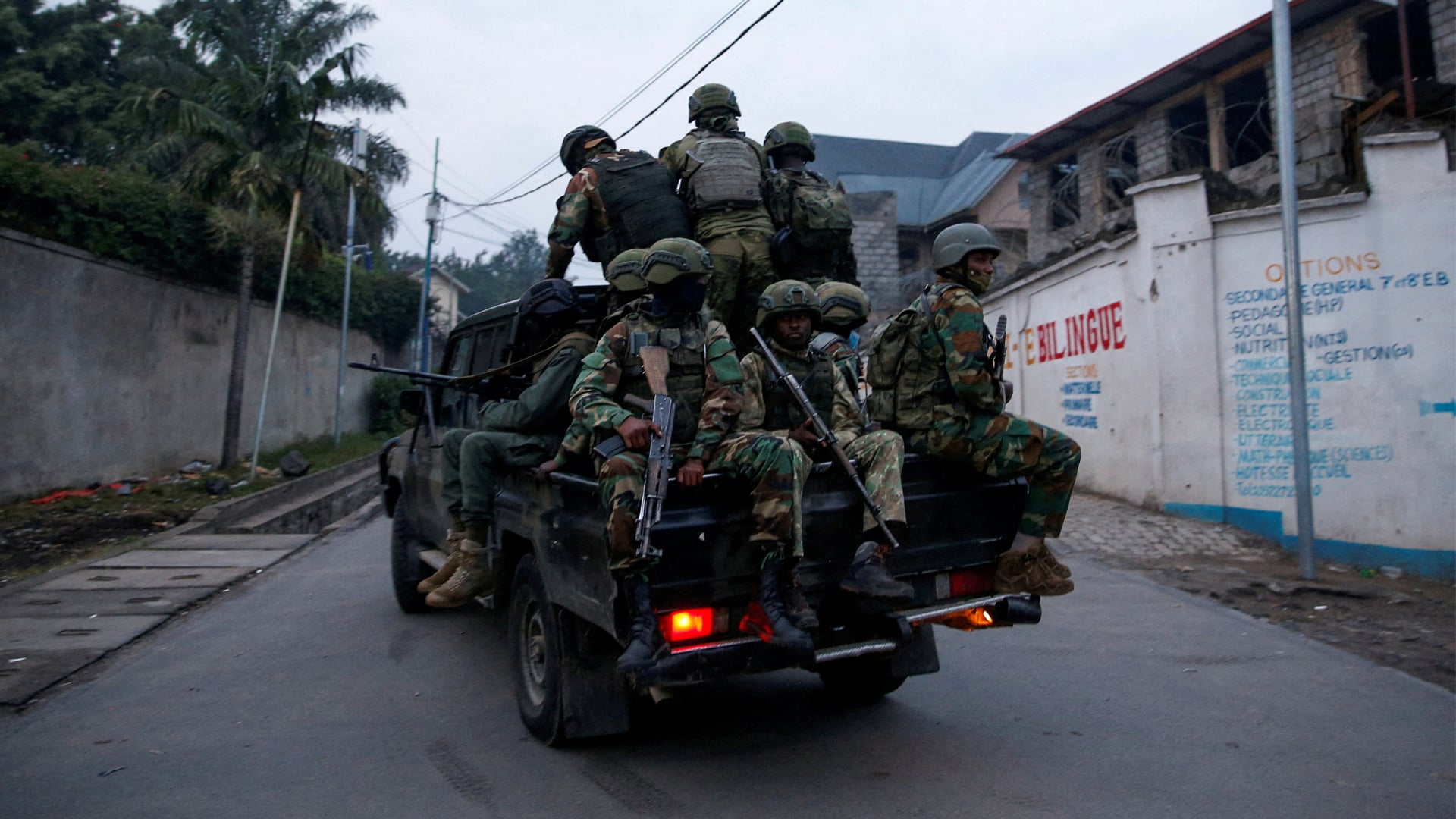
The allegations surface against a backdrop of intensifying conflict in eastern DRC, where M23 has captured significant territory, including the provincial capitals of Goma and Bukavu.
In February 2025, the UN Security Council unanimously adopted Resolution 2773, condemning M23’s offensive and demanding the group withdraw from areas under its control. The resolution also called on the Rwanda Defence Force to end its alleged support for M23 and pull back from Congolese territory a claim Rwanda has consistently denied.
Washington has separately imposed sanctions tied to the conflict. In July 2024, the US Treasury designated AFC coordinator Corneille Nangaa, describing the coalition as a political-military effort seeking to unseat the DRC government in coordination with M23.
In April 2026, the Treasury went further, sanctioning former DRC President Joseph Kabila over alleged support for the two groups. Kabila has denied wrongdoing, and the political circumstances around his alleged involvement remain disputed.
Kenya has long positioned itself as a mediator in the Great Lakes region, having hosted the Nairobi Process aimed at bringing together stakeholders in the eastern DRC conflict. The UN Security Council has repeatedly pointed to both the Nairobi and Luanda processes as central to efforts toward a lasting settlement.
Daniel said this history is precisely why the allegations matter and why he believes Kenya has an opportunity, not just an obligation, to respond.
“Kenya has an opportunity to demonstrate that democracy and peace can reinforce each other,” he said. “We want Kenya to remain a neutral and trusted partner in the search for peace in the Great Lakes region.”
The community says it has raised these concerns with Kenyan authorities before but remains unsatisfied with the level of preventive action taken so far.
Daniel was emphatic that the appeal should not be read as an attack on Kenya’s institutions or its Congolese diaspora.
“Our appeal is not against Kenya, and it is not against the Congolese people living here,” he said. “Our concern is specifically about activities that may support armed violence. Kenya should remain a place where Congolese refugees and migrants can live safely, not a place where a conflict from eastern Congo is organised or financed.”
He added that freedom of expression and assembly, rights the community says it values should be protected even as authorities scrutinise their potential misuse.
“Freedom of expression and assembly are fundamental rights, and we respect them,” he said. “But those rights must not be manipulated to facilitate armed violence. Our message is simple: protect democracy, protect refugees and protect peace.”
In its appeal, the Congolese community has called on Kenya to:
- Launch an independent and impartial investigation into alleged recruitment and fundraising activity linked to AFC/M23 in Nairobi
- Ensure Kenyan territory is not used as a logistical or political base for the conflict in eastern DRC
- Increase scrutiny of any activity involving the recruitment of minors
- Strengthen cooperation with regional and international efforts, including the Nairobi and Luanda processes, toward a political resolution of the conflict
“A child or young person should be in school and thinking about their future, not being recruited into a conflict that has already destroyed thousands of Congolese families,” Daniel said.
He closed with a direct appeal to Kenyan authorities to use their diplomatic weight to help end the conflict rather than risk becoming entangled in it.
“The people of the Democratic Republic of Congo deserve peace,” he said. “We are asking Kenya to use its influence to help end the suffering of Congolese people rather than allowing its territory to become part of the problem.