KEMSA Hands Over Refurbished Medicine Store at Port Reitz Hospital to Boost Medicine Safety and Quality in Mombasa
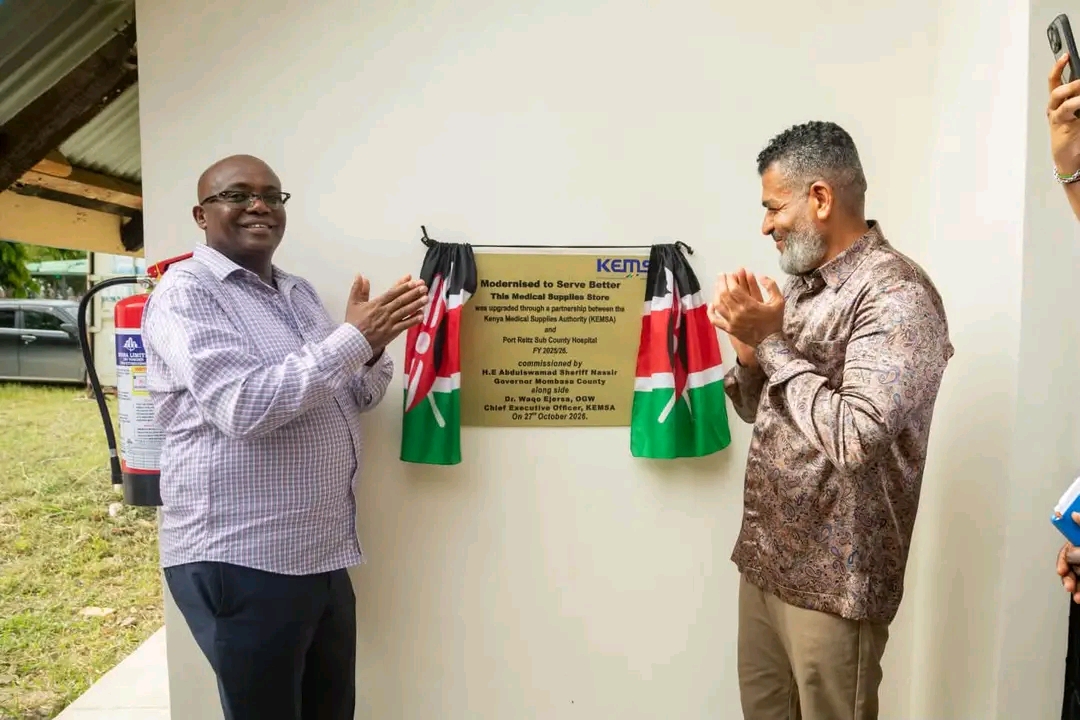
MOMBASA, Kenya, Oct 28 – The Kenya Medical Supplies Authority (KEMSA) has officially handed over a newly refurbished medicine store at Port Reitz Sub-County Hospital in Mombasa County. The milestone initiative is designed to strengthen Good Storage Practices (GSP), safeguard the quality and efficacy of essential drugs, and elevate overall medical commodity management at the health facility level.
The handover ceremony was presided over by Mombasa Governor Abdulswamad Sheriff Nassir alongside KEMSA Chief Executive Officer Dr. Waqo Ejersa.
The event highlights a growing, strategic partnership between the national medical supply agency and county governments aimed at improving healthcare infrastructure so that Health Products and Technologies (HPT) remain in optimal condition before reaching patients.
The upgraded facility directly supports improved storage capacity and inventory management for essential medical supplies, benefiting a catchment population of more than 300,000 residents across Changamwe, Jomvu, and neighboring communities.
Implemented under KEMSA’s Corporate Social Responsibility (CSR) program for the 2025/2026 financial year, the targeted project directly addresses critical structural deficits that previously hampered the hospital’s ability to maintain optimal storage environments for sensitive pharmaceutical products.
Speaking during the ceremony, KEMSA CEO Dr. Waqo Ejersa underscored that preserving drug safety requires continuous quality control throughout the supply chain including the critical period after products arrive at local health centers.
“Protecting the quality of medicines does not end with procurement or delivery. Appropriate storage conditions are equally important in preserving product integrity before medicines reach patients”, said Waqo Ejersa, CEO, Kenya Medical Supplies Authority.
“By improving storage infrastructure at Port Reitz Sub-County Hospital, KEMSA is strengthening commodity management, minimising the risk of avoidable product deterioration and losses, and ultimately supporting safer and more effective patient care”.
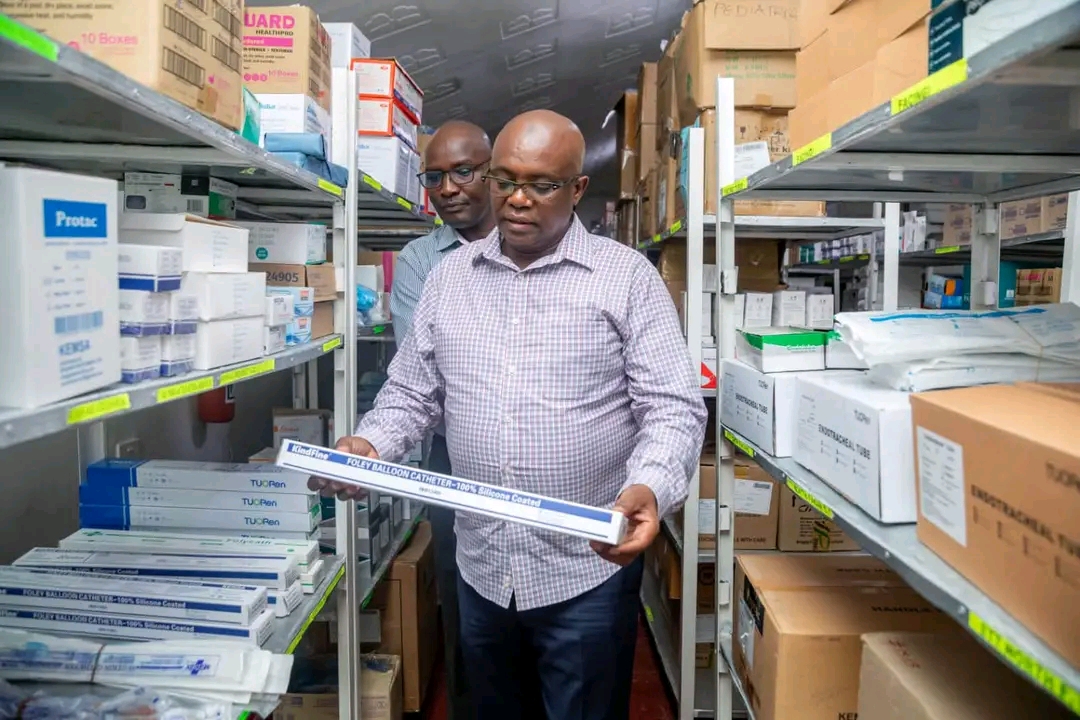
The rehabilitation followed a joint needs assessment conducted in April 2025 by KEMSA, the Mombasa County Department of Health, and Port Reitz Sub-County Hospital management.
The survey uncovered deteriorated infrastructure, insufficient physical storage space, and climate control issues that compromised commodity preservation.
To establish a secure, climate-controlled, and well-organized storage environment, key structural improvements were executed:
Climate and Temperature Control: Installation of ceiling insulation and a high-capacity air-conditioning system to meet temperature guidelines set by the Pharmacy and Poisons Board (PPB) and World Health Organization (WHO).
Facility Repairs: Floor resurfacing, reinforcement of cracked walls, and repair of stock storage racks to maintain organized, off-the-ground shelving.
Security and Ventilation: Fitting of reinforced doors and security-grilled windows to guarantee physical safety while maintaining airflow.
Pest and Water Damage Prevention: Construction of surrounding concrete pavements to deter pests, accompanied by gutters for effective rainwater harvesting and drainage control.
Staff Amenities: Integrated washroom facilities and administrative office spaces to streamline inventory monitoring and daily logistics.
Dr. Ejersa commended the County Government of Mombasa for its collaborative stance, particularly its commitment to ring-fencing resources for health commodities and ensuring timely settlement of payments.
“Reliable access to essential medicines depends on strong partnerships, predictable financing, and effective supply-chain management,” Dr. Ejersa noted.
He added that prompt settlement of county financial obligations feeds directly into KEMSA’s revolving fund model, ensuring the continuous procurement and nationwide distribution of critical pharmaceuticals.
Governor Abdulswamad Sheriff Nassir welcomed the facility, praising it as a practical template for national-county intergovernmental cooperation in health service delivery.
“Strong healthcare systems are built through effective collaboration between national and county governments and institutions such as KEMSA. This investment at Port Reitz Sub-County Hospital demonstrates how targeted interventions can strengthen health facility infrastructure, improve the management of essential medical supplies, and contribute to better healthcare outcomes for our people,” Stated Hon. Abdulswamad Sheriff Nassir, Governor, Mombasa County.
“We appreciate KEMSA’s continued partnership with Mombasa County and remain committed to strengthening our collaboration to ensure that our health facilities have reliable access to quality, affordable medicines and other essential medical supplies”, He added.
Further, He observed that investments in facility-level storage infrastructure complement broader efforts to strengthen healthcare supply chains by ensuring that medicines remain appropriately managed after delivery.
The Port Reitz project forms part of KEMSA’s broader CSR mandate focused on filling critical service-delivery gaps across Kenya’s decentralized health system.
Similar infrastructure interventions successfully completed by KEMSA include: medicine store improvements at Mtwapa Sub-County Hospital in Kilifi County and Msambweni County Referral Hospital in Kwale County, as well as a laboratory project at Nyonjoro Health Centre in Nakuru County.
During the current financial year, the Authority is also finalising a laboratory project at Dakabaricha Dispensary in Marsabit County.
“These initiatives demonstrate KEMSA’s commitment to supporting county health systems through strategic investments that address identified service delivery gaps and contribute to improved healthcare outcomes”.
With completion checks verified and sign-offs finalized, the newly transformed Port Reitz store is fully operational, establishing a higher standard for health commodity management, stock visibility, and patient safety across coastal Kenya.