
Kenya Eyes Menstrual Economy to Drive Industrial Growth
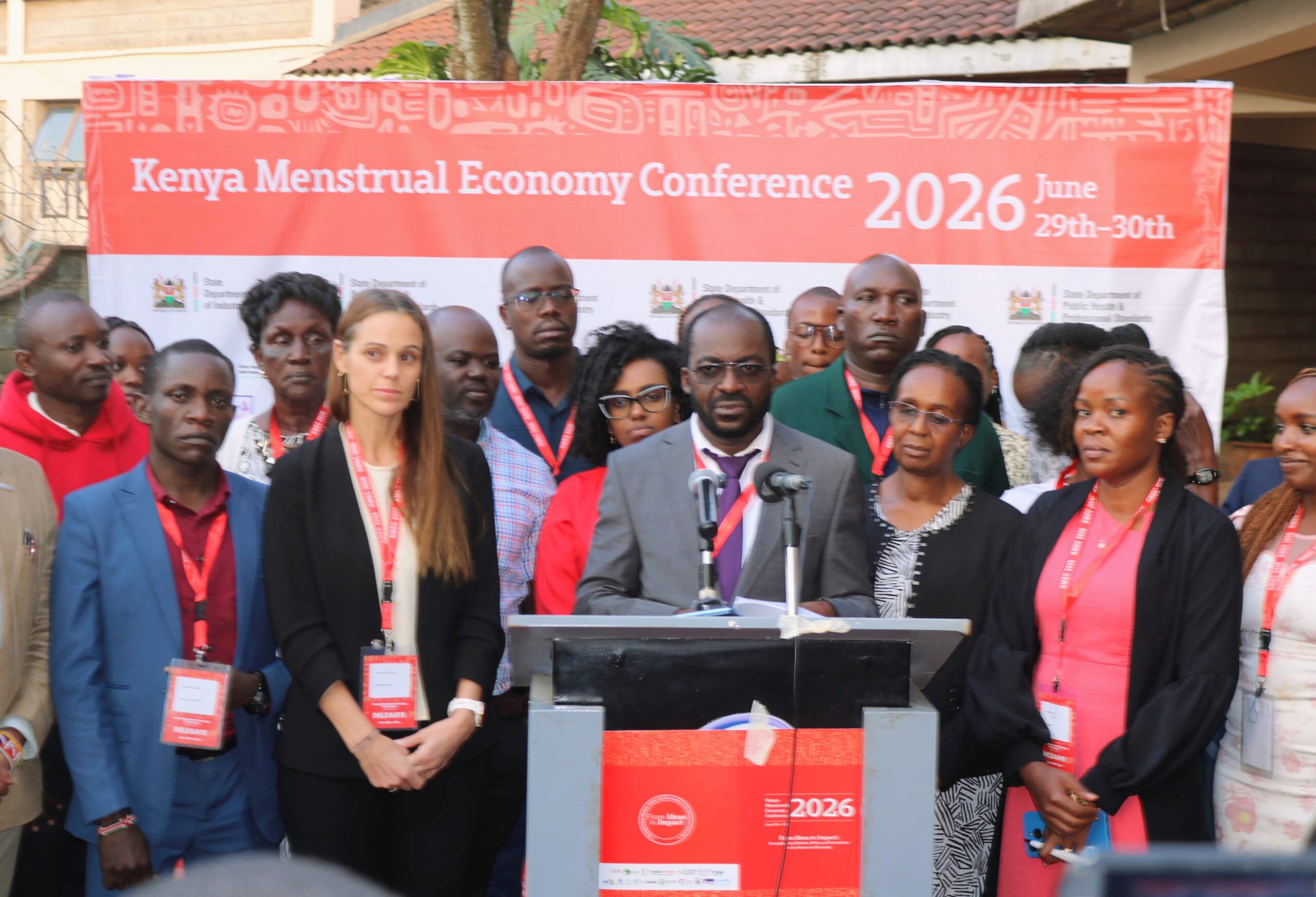
NAIROBI, Kenya, July 2 – The Kenya Menstrual Economy Conference 2026 marked an important milestone as Kenya adopted a new declaration to position menstrual health as a strategic national growth sector, marking a shift from viewing menstruation primarily as a public health concern to recognising it as an emerging economic opportunity.
The declaration was adopted at the inaugural Kenya Menstrual Economy Conference (KMEC) held in Nairobi on June 29–30, 2026, under the theme “Ideas to Impact: Strengthening Markets, Policy and Innovation in Kenya’s Menstrual Economy.”
The conference brought together Ministry of Investments, Trade and Industry, County Governments, development partners, investors, financial institutions, menstrual health entrepreneurs and innovators, manufacturers, researchers, academia and civil society organisations to explore strategies for expanding the menstrual economy through local manufacturing, policy reforms and strategic partnerships that promote women’s health, industrialisation and inclusive economic growth.
State Department for Industry Principal Secretary (PS) Dr. Juma Mukhwana, while officially opening the two-day Kenya Menstrual Economy Conference in Nairobi, said the country must move beyond viewing menstruation solely as a health issue and recognize it as an economic opportunity that cuts across agriculture, textiles, manufacturing, research, innovation, logistics, waste management and financial services.
“We must move beyond seeing menstruation as simply a biological function and prioritise initiatives that build a vibrant menstrual economy, which creates jobs, expands manufacturing, supports innovation and ensures that every woman has access to affordable, safe and quality menstrual health products,” he said.
The PS noted that the government remains committed to creating an enabling environment for local manufacturers through industrial policies, enterprise development programmes and protection of innovations to strengthen the production of menstrual health products.
Principal Secretary for Gender and Affirmative Action, Ms Anne Wang’ombe on her part said menstrual health is a matter of dignity, gender equality and human rights, urging manufacturers to make sanitary towels more affordable to reduce period poverty.
“Every month, millions of women and girls require safe, affordable and quality menstrual products. Let us make sanitary towels affordable and of good quality so that we can significantly reduce period poverty,” she said.
Wang’ombe added that the government has continued to invest in the National Government Sanitary Towels Programme, spending about Sh940 million annually to support vulnerable school-going girls.
However, she noted that demand continues to exceed available resources, calling on government agencies, development partners, civil society and the private sector to work together.
“These girls are ours and these women are ours. If we join hands, we can ensure every girl and every woman enjoys the dignity they deserve,” she said.
The Conference recognised that unlocking this potential will require a deliberate shift from fragmented interventions towards a coherent market development approach anchored in sound policy, coordinated institutions, robust evidence, private sector participation and sustainable investment.
“Achieving this transformation will depend upon strengthening the enabling environment across the entire menstrual economy value chain-from research, product development and manufacturing to financing, market access, distribution, consumer awareness and environmentally sustainable waste management”.
Accordingly, the declaration sets out the shared vision and collective commitments of Government and its partners to strengthen governance, improve the policy and regulatory environment, promote innovation and local manufacturing, mobilise investment, build a robust national evidence base, and establish effective mechanisms for implementation and accountability.
It reflects the common resolve of all participants to position Kenya as a regional leader in developing a resilient, competitive and investment-ready menstrual economy that advances the health, dignity and economic empowerment of women and girls while contributing meaningfully to the country’s industrial and economic transformation.
According to the declaration Kenya’s menstrual economy is a strategic and emerging sector worth about 100 million US dollars of investment with installed capacity of over 2 billion pads annually and current production below 50% with significant potential to contribute to industrialization, enterprise development, innovation, employment creation, women’s economic empowerment and inclusive economic growth.
Stakeholders resolve to formally recognise and position the menstrual economy as an integral component of Kenya’s industrialisation, investment promotion and inclusive economic development agenda, in line with the Bottom-Up Economic Transformation Agenda (BETA), Vision 2030 and other national development priorities.
Promote a coordinated whole-of-government, development partners and other stakeholders approach that integrates menstrual economy considerations into national policy, industrial planning, investment promotion, trade development, enterprise support and market development initiatives.
Support the development and promotion of competitive local manufacturing, resilient value chains and sustainable markets capable of meeting domestic and regional demand for quality menstrual health products Promote research, innovation, technology development and value addition across the menstrual economy value chain.
Expand opportunities for women-led enterprises, youth innovators and Micro, Small and Medium Enterprises (MSMEs) to participate meaningfully in the growth of the sector.
Position Kenya as a regional leader in the manufacture, innovation and distribution of quality menstrual health products while advancing the health, dignity and economic participation of women and girls.
Stakeholders further committed to undertaking Kenya’s first nationally coordinated Menstrual Health Economy Market Assessment to generate data on the size, competitiveness and investment potential of the sector.
The findings are expected to guide future policy, regulation, taxation, certification, procurement, and investment reforms.
The declaration also proposes measures to improve access to finance, promote research and innovation, encourage public-private partnerships and strengthen market access for locally manufactured menstrual health products.
Environmental sustainability also featured prominently in the commitments, with stakeholders backing implementation of menstrual waste management guidelines, promotion of circular economy practices and environmentally responsible production systems.
To ensure follow-through, participants agreed to establish an implementation and accountability framework, publish periodic progress reports, and present annual updates during future Kenya Menstrual Economy Conferences.
The declaration positions Kenya as seeking to become a regional leader in menstrual health manufacturing and innovation while expanding access, creating jobs and improving the health and dignity of women and girls.
Recognising that the development of Kenya’s menstrual economy requires coordinated leadership, effective institutional collaboration and strong partnerships across Government, the private sector, development partners, research institutions and civil society.
They resolve to establish a Multi-Agency Action Plan on the Menstrual Economy, under the leadership of the Ministry of Investments, Trade and Industry, bringing together National Government, County Governments, State Agencies, development partners, manufacturers, financial institutions, research institutions, civil society organisations and other relevant stakeholders to coordinate implementation of this declaration.
Strengthen policy coherence and institutional coordination across Government in the planning, implementation and monitoring of menstrual economy interventions.
Promote structured Public-Private Partnerships, including participation of certified local manufacturers in appropriate public procurement programmes, to expand access, strengthen local manufacturing and stimulate innovation and investment.
Mobilise strategic partnerships with development partners, financial institutions, academia, research organisations and civil society to support research, enterprise development, investment mobilisation, technology transfer, capacity building and knowledge sharing across the menstrual economy value chain.
Further, noting that effective implementation of the declaration will require sustained leadership, coordinated institutional action and transparent accountability mechanisms.
They commit to establishing an implementation and accountability framework, including an Inter-Ministerial and Industry Technical Working Group, to coordinate, monitor and support implementation of this Declaration;
Publish the KMEC 2026 Declaration together with its accompanying Implementation Action Plan and Implementation Tracker and undertake regular reviews of progress against the cornmitments contained herein;
Strengthen collaboration between Government, development partners, research institutions, academia and other stakeholders in implementing, monitoring and continuously improving the initiatives arising from this Declaration;
Prepare and publish periodic progress reports on the implementation of the KМЕС 2026 Declaration andpresent an annual implementation report as a principal agenda item of subsequent Kenya Menstrual Economy Conferences, beginning with KMEC 2027, to assess progress, share lessons and identify emerging priorities and preferably hosted in rural areas.
Through the declaration, stakeholders collectively affirm determination to position Kenya as a regional leader in developing a resilient, innovative and investment-ready menstrual economy that improves the health and dignity of women and girls while creating new opportunities for manufacturing, enterprise development, investment and decent work.
“We call upon all public institutions, development partners, the private sector, research institutions and civil society to work in partnership towards the full implementation of the commitments contained in this”.