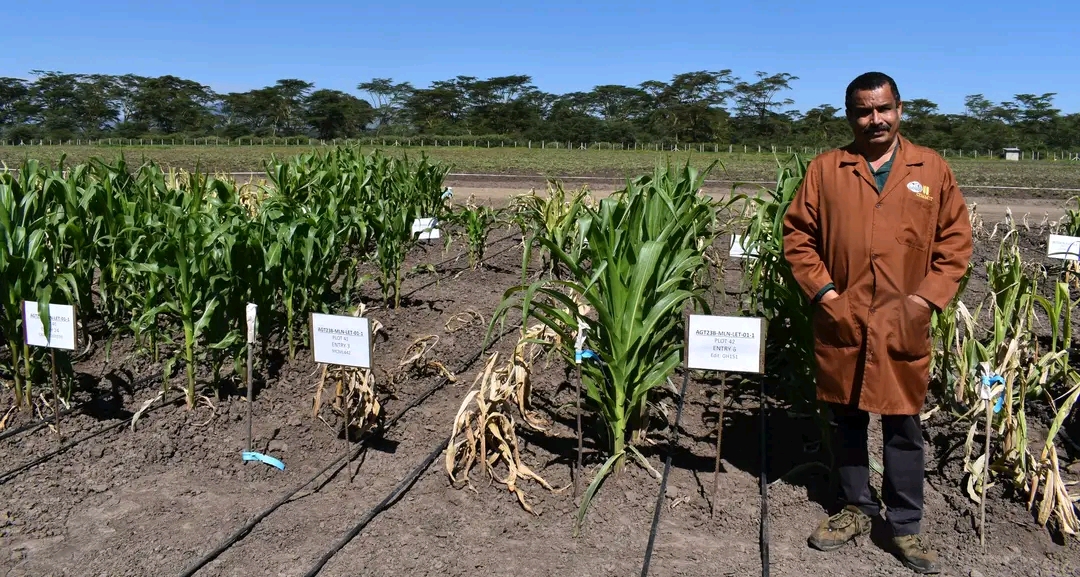

PCPB, CropLife Kenya Reaffirm Rigorous Safety Standards for Registered Pesticides
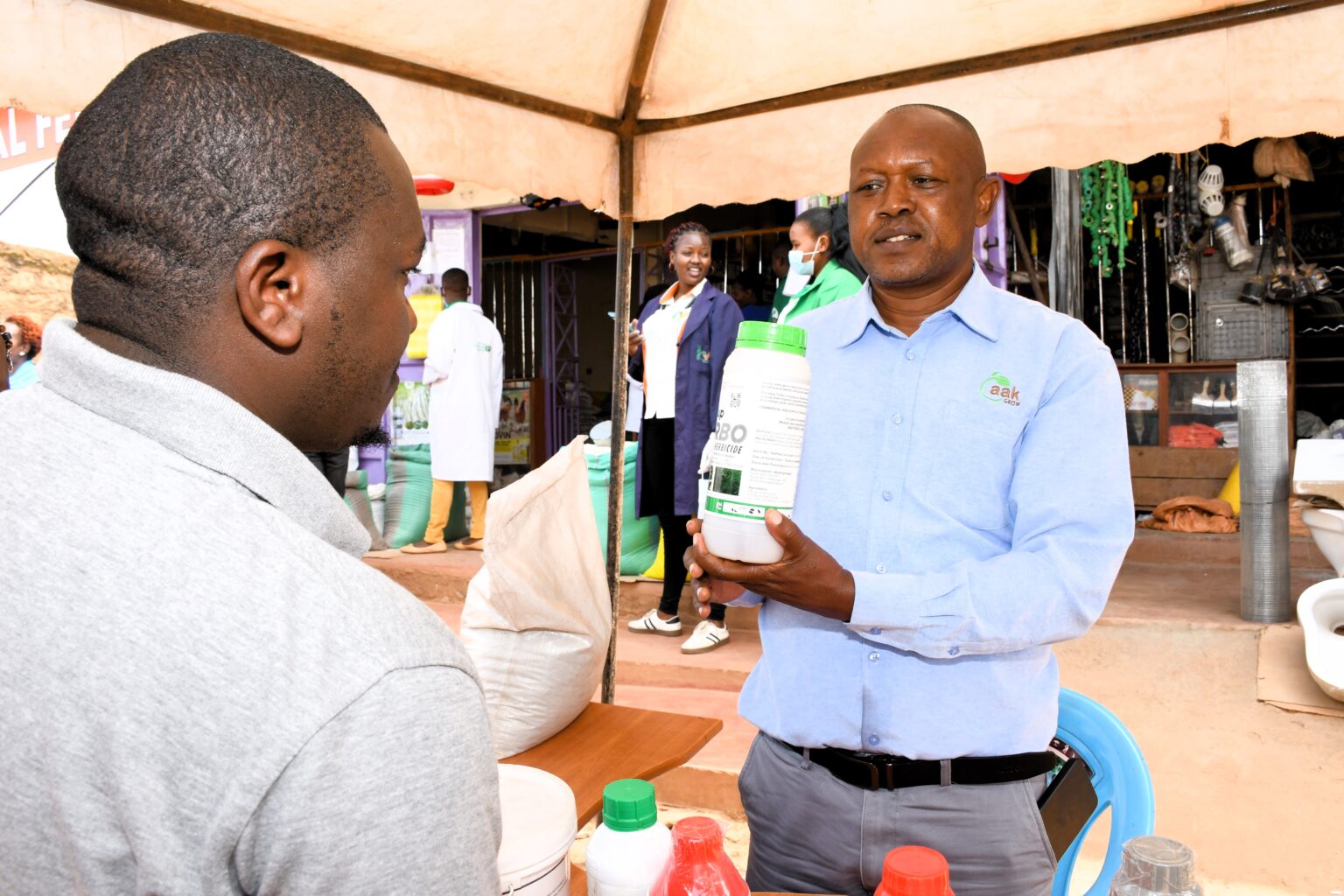
aak-GROW, Chief Executive Officer, Joel Mutai explains to a farmer how to identify a genuine product outside an agrovet in Mwea. Photo by Kimuri Mwangi
NAIROBI, Kenya, July 27 – The Pest Control Products Board (PCPB) and aak-GROW/CropLife Kenya have reaffirmed that all pesticides registered for use in Kenya undergo rigorous scientific evaluation and continuous monitoring to safeguard public health, the environment and food security.
The organizations said every pest control product is assessed for quality, safety and efficacy before registration by the PCPB and remains subject to inspections, laboratory testing, market surveillance and regulatory oversight throughout its lifecycle to ensure compliance with national and international safety standards.
Speaking during a two-day media tour aimed at promoting accurate, science-based reporting on agriculture and food safety, aak-GROW/CropLife Kenya Chief Executive Officer Joel Mutai said responsible pesticide management requires collaboration among regulators, manufacturers, distributors, farmers, researchers and consumers.
“A responsible industry is built on accountability, science and product stewardship. By working together, we can strengthen food security, protect human health, preserve the environment and build public confidence in agricultural systems,” said Mutai.
He urged farmers to buy only PCPB-registered products, follow label instructions and observe the recommended pre-harvest intervals to ensure food safety and protect consumers from unnecessary exposure to harmful pesticide levels.
Mutai noted that the presence of pesticide residues in food does not automatically pose a health risk, explaining that safety is determined by whether residue levels remain within internationally recognized Maximum Residue Limits (MRLs).
“The issue is not whether residues are detectable, but whether they exceed scientifically established maximum residue limits designed to protect consumers,” he said.
He said responsible management extends beyond product registration through stewardship programmes that promote safe distribution, transportation, storage, handling and disposal of pesticides throughout the agricultural value chain.
The initiatives include farmer training, promotion of personal protective equipment, poison information services, container collection programmes and efforts to eliminate counterfeit and illegal pesticide products from the market.
Mutai said responsible pesticide use also contributes to increased agricultural productivity by enabling farmers to effectively manage pests while minimizing risks to human health, beneficial insects and the environment.
On environmental protection, he said the industry’s pesticide container collection programme is being aligned with the government’s Extended Producer Responsibility (EPR) regulations through the Asbestos Producer Responsibility Organization of Kenya (APROK), which will oversee the collection, transportation, recycling and environmentally sound disposal of pesticide waste.
However, he said implementation has slowed due to ongoing discussions on waste management charges, warning that high fees could increase the cost of doing business if not harmonized across the sector.
Mutai also warned against counterfeit and illegal pesticides, saying they pose a far greater threat because they have not undergone scientific evaluation and may contain banned, substandard or unknown substances that endanger farmers, consumers and the environment.
PCPB General Manager for Compliance and Enforcement Lawrence Kalawa said the board has intensified surveillance, inspections and border controls to curb the entry of illegal pesticides, significantly reducing unauthorized products in the market.
“We have strengthened border monitoring, enhanced intelligence sharing with partner agencies and increased farmer awareness to safeguard the country’s agricultural sector,” he said.