East Africa Urged to Focus on Measurable Learning Outcomes Amid AI Workplace Shift
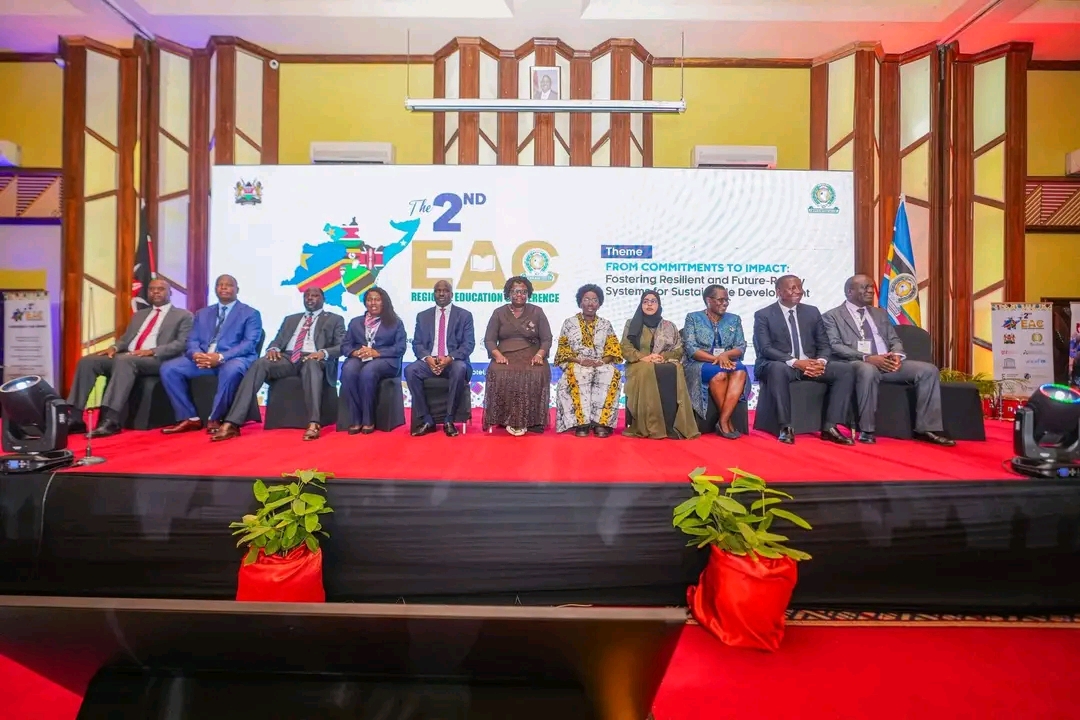
NAIROBI, Kenya, Aug 26 – East African governments must move beyond policy documents and commitments to deliver measurable improvements in student learning, practical skills acquisition and economic productivity.
Speaking at the opening of the four-day 2nd EAC Regional Education Conference in Nairobi, Bringing together governments, development partners, researchers, educators, civil society organizations, and young people from across the region, Cabinet Secretary for East African Community Affairs and Regional Development Beatrice Askul stressed that regional education systems must be judged by tangible outcomes rather than the elegance of their paperwork.
“Education policy must be judged not by the elegance of our policy documents, but by what learners can know, do, and access,” CS Askul stated during the event, which runs from August 25 to 28 themed “Transforming Education in East Africa: From Commitments to Impact, Fostering Resilience and Future-Ready Systems for Sustainable Development.”
While acknowledging that East Africa has made substantial progress in expanding school access over recent decades, leaders at the conference warned that learning outcomes have critically failed to keep pace.
Further, the region faces an expanding mismatch between traditional schooling models and the demands of a modernizing economy driven heavily by artificial intelligence.
With an aggregate population exceeding 300 million featuring one of the youngest demographic profiles globally CS Askul noted that regional nations face a critical window to convert their youth bulge into sustainable human capital, high productivity, and broad prosperity.
Achieving this transformation requires governments to successfully scale up localized educational innovations beyond isolated schools and individual districts into systemic reforms.
These concerns were strongly reinforced by Association for the Development of Education in Africa (ADEA) Executive Secretary Albert Nsengiyumva, who challenged stakeholders to move past rhetoric and define concrete actions.
“Being the second conference shows that we are committed to change and we have a great potential that we need to tap into,” Nsengiyumva said, urging participants to critically evaluate their post-conference strategies.
The high-level conference addresses several deep-seated vulnerabilities plaguing regional learning structures:
● Persistent inequalities across rural and urban access and quality
● Weak transition rates between primary, secondary, and tertiary levels
Persistent skills mismatches in the modern labor market
• Limited integration between Technical and Vocational Education and Training (TVET) institutions and industry demands
Uwezo Uganda Executive Director and Regional Education Learning Initiative Africa Board Chair, Mary Goretti, emphasized that achieving equitable, high-quality education demands resilient institutional frameworks and genuine public-private partnerships capable of translating high-level policy commitments into quantifiable learning metrics.
Echoing the necessity of a unified regional approach, EAC Deputy Secretary-General Andrea Aguer Ariik Malueth noted that skills development remains a foundational pillar for regional integration, backed directly by the foundational mandates of the EAC Treaty.
Uganda’s Minister of State for Education and Sports, Phyllis Chemutai, added that governments must maintain honest internal assessments, rigorously identifying what strategies are failing, what initiatives are succeeding, and what must change immediately to secure future-ready systems.