
AU Deputy Chairperson Calls for Trust as ‘Essential Infrastructure’ at Nairobi Summit
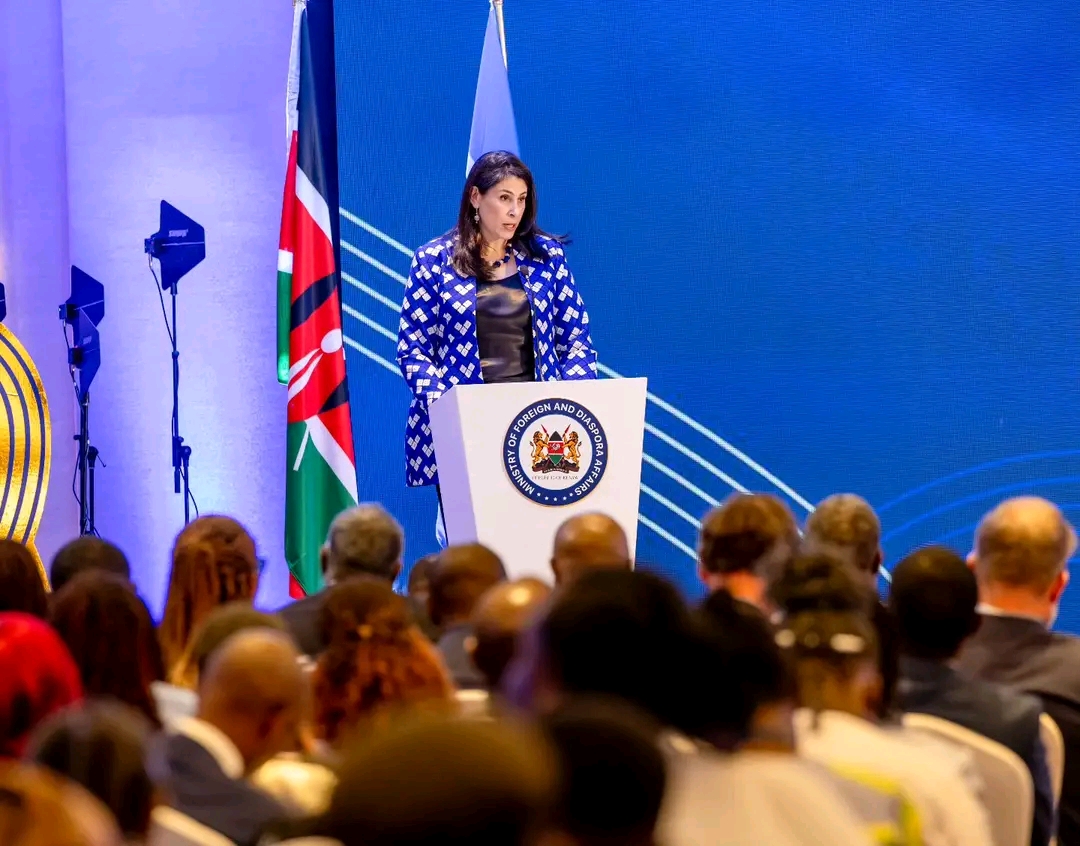
NAIROBI, Kenya, Oct 22 – Emerging global crises and fragile international relations demand a fundamental shift in how nations cooperate, the Deputy Chairperson of the African Union Commission, H.E. Selma Malika Haddadi, told leaders gathered in Nairobi today.
Opening The Trust Summit on Thursday, October 22, 2026, Ms. Haddadi called on governments, institutions, businesses and civil society to recognize trust not merely as a moral ideal, but as an essential form of infrastructure as vital to Africa’s continental integration and global stability as roads, railways, energy grids, and digital networks.
Addressing Heads of Delegation and international dignitaries, Ms. Haddadi highlighted what she called one of the defining paradoxes of modern times: a world that is undeniably interdependent, yet increasingly defined by fragile confidence between nations and institutions.
“We have never needed one another more, while finding it increasingly difficult to trust one another,” Ms. Haddadi remarked, pointing to rising conflicts, climate change, economic volatility, and rapid technological transformation.
While international agreements, treaties, and formal structures remain vital, she argued they are insufficient on their own.
Behind every successful alliance lies a less visible foundation the infrastructure of trust which gives nations the confidence that commitments made today will be honored tomorrow.
“Trust is therefore not simply a moral aspiration. It is an essential condition of our collective capacity to act,” she stressed.
Reflecting on Africa’s institutional journey from the founding of the Organisation of African Unity (OAU) to the African Union (AU), the Abuja Treaty, Agenda 2063, and the African Continental Free Trade Area (AfCFTA) the Deputy Chairperson emphasized that the next phase of African integration depends on converting formal declarations into enduring relationships of shared responsibility.
She noted that the African Union must continuously earn the confidence of its Member States through accountability, effectiveness, and tangible delivery.
In turn, Member States, financial institutions, and the private sector must demonstrate their commitment through predictable, sustainable financing.
Ms. Haddadi praised President William Ruto, the AU Champion for Institutional Reform, for his leadership in advancing a more accountable and financially autonomous Union.
She described predictable continental financing as an “expression of shared ownership” essential to fulfilling Aspiration 7 of Agenda 2063 positioning Africa as a strong united and resilient global player.
Addressing security challenges across the continent, Ms. Haddadi referenced Article 4(h) of the AU Constitutive Act and the Peace and Security Council Protocol as historic acts of collective confidence.
”Trust is not merely an outcome of peace. It is also one of the conditions that makes peace possible,” she said, stressing that mediation efforts and collective security actions rely heavily on both institutional trust and adequate funding.
Turning to the international stage, Ms. Haddadi made a strong case for defending and reforming global multilateralism at a time when international law faces severe strain.
Welcoming the focus of the UN General Assembly’s 81st session theme “Restoring Trust, Managing Transformation: A United Nations That Delivers for All” she recalled UN Secretary-General António Guterres’s assertion that the United Nations “has never been perfect, but it is irreplaceable.”
She emphasized that meaningful UN reform, particularly under the UN@80 initiative, must address fair representation and the consistent application of international law to maintain African confidence in the global order.
The Summit brought together prominent regional and continental leaders, including:Hon. Musalia Mudavadi, Prime Cabinet Secretary and Cabinet Secretary for Foreign and Diaspora Affairs (Kenya), H.E. Moussa Mara, Former Prime Minister of Mali, Hon. James Ole Millya, Deputy Minister of Foreign Affairs and East Africa Cooperation (Tanzania) and Dr. Abraham Korir Sing’Oei, Principal Secretary for Foreign Affairs (Kenya).
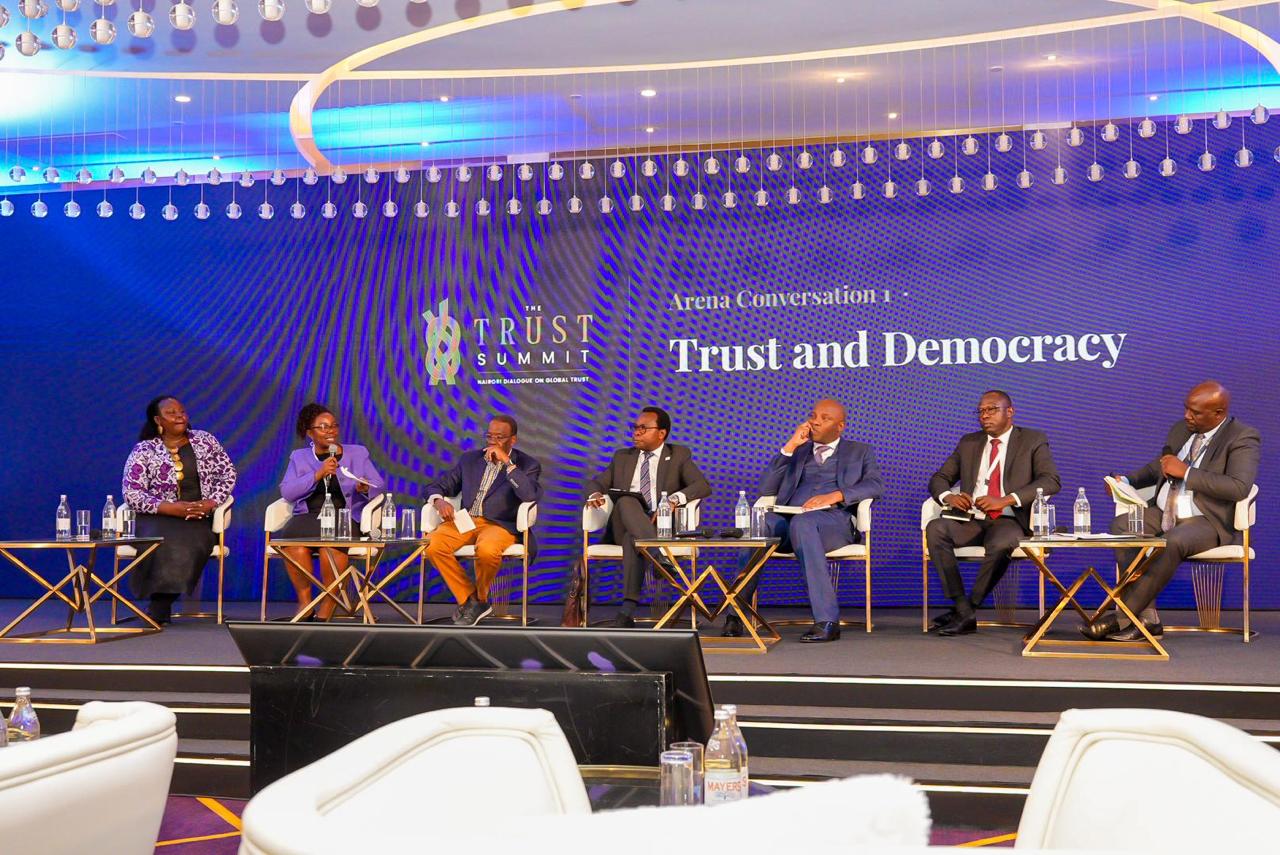
The Summit’s broad agenda covers key pillars of development, including democracy and citizen participation, trade and investment, public health, climate action, peace, and artificial intelligence.
Commending host nation Kenya for its commitment to dialogue and continental leadership, Ms. Haddadi expressed support for the proposed Nairobi Call to Action, noting that its success will be judged by how seriously implementation commitments are honored.
“Trust cannot be proclaimed into existence. It must be earned through the way we govern, the way we cooperate, and the commitments we honour,” Ms. Haddadi concluded.”
Let Nairobi be remembered not only as a place where we reflected on the importance of trust, but as a place where we strengthened our collective determination to earn it.”