Faith Leaders Demand Just Climate Action and Debt-Free Financing Ahead of COP31
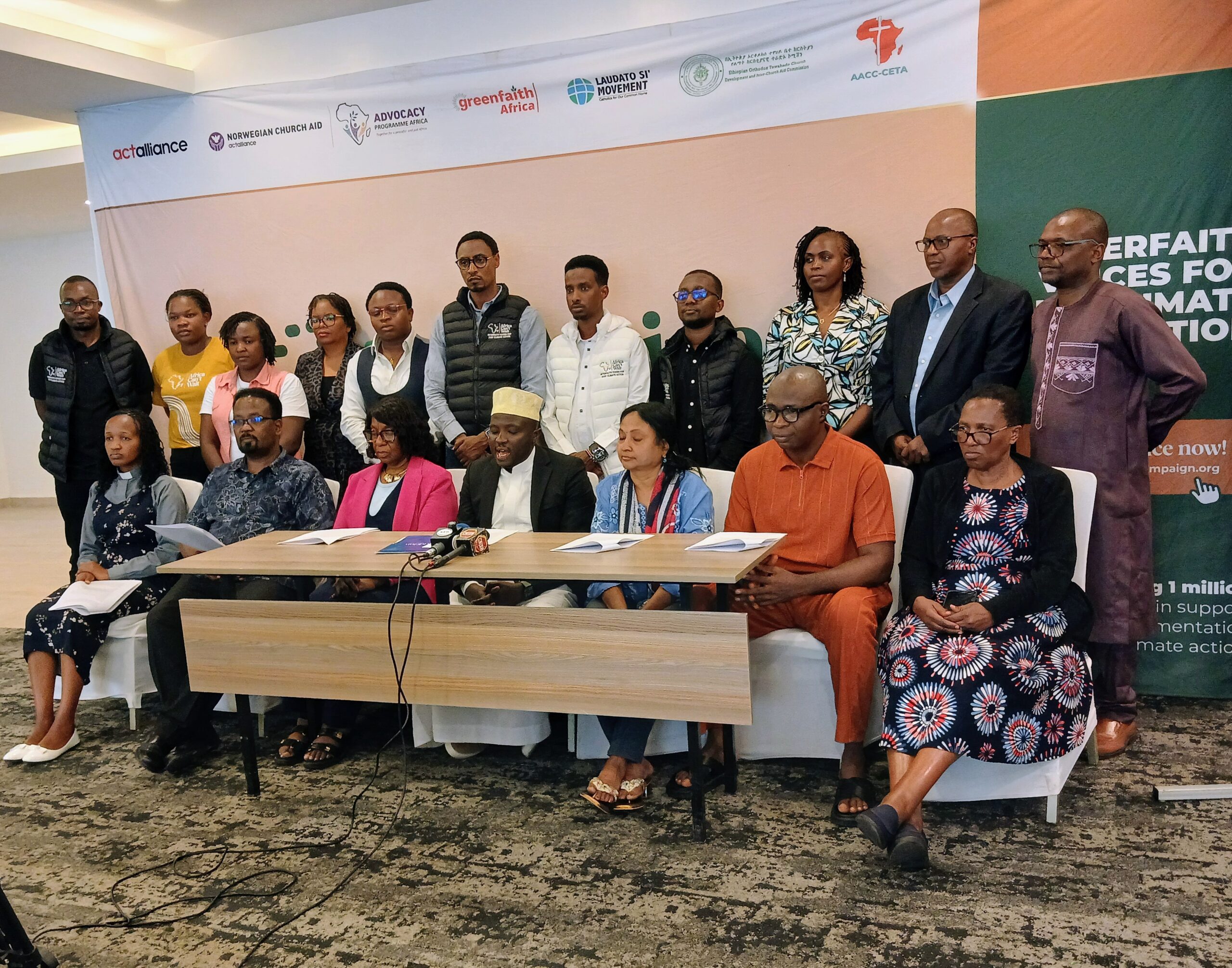
NAIROBI, Kenya, Oct 24 – Ahead of the upcoming United Nations Climate Change Conference (COP31), faith leaders and community representatives from across Africa have issued a unified, passionate call for just climate implementation, demanding an immediate shift from unfulfilled pledges to tangible, grant-based financing and frontline action.
The declaration emerged following an intensive, day-and-a-half convening in Nairobi under the auspices of the Africa Can’t Wait Campaign, Bringing together diverse religious traditions, faith-based organizations, women, youth and grassroots networks.
The convening assessed the deepening climate impacts facing African nations and charted an advocacy roadmap extending through COP31 in Turkey and onward to COP32.
“Africa cannot afford another cycle of promises without implementation,” the interfaith coalition declared, emphasizing that the crisis is fundamentally a moral and structural failure as much as an environmental one.
“The true legacy of COP31 will be whether it delivers real change for vulnerable communities, strengthens resilience, and advances climate justice for Africa and the world.”
Highlighting the central priority for Africa, Rev. Phyllis stressed that adaptation strategies must move beyond abstract global frameworks and deliver concrete resilience on the ground.
“COP 31 in Turkey should deliver a workable system for measuring adaptation progress, a credible pathway to adequate and accessible adaptation finance and a clear implementation process that puts vulnerable communities at the centre,” stated Rev. Phyllis.
The leaders called for locally led adaptation interventions specifically designed to protect frontline groups, including women, youth, and people living with disabilities.
Addressing the severe consequences of missing the 1.5°C temperature goal, Rev. Beatrice Ruara expressed deep concern over major emitters failing to curb emissions, which continues to trigger destructive climate impacts across Africa.
While welcoming the establishment of the UN Loss and Damage Fund, the faith community condemned the low levels of actual capital delivered relative to original promises.
Financial Accountability: Developed nations must redeem their outstanding pledges and significantly boost funding allocations.
Non-Economic Loss: Climate policy must account for non-economic damage, including the loss of social, cultural, and community identity caused by climate displacement.
Hindu Council of Kenya Chairperson, Sujata underscored the moral mandate to safeguard both creation and humanity by shifting away from extractive, emission-heavy practices toward low-carbon resilience.
She stressed that Africa’s transition to renewable energy and green industrial development must not deepen existing inequalities such as those seen in the aggressive pursuit of critical minerals.
“The transition to low-carbon development must create opportunities for communities rather than deepen existing inequalities It must not leave anyone behind,” Sujata urged.
Taking a firm stand against predatory financing, Bishop Teshome Amenu denounced climate aid models that increase the national debt of struggling African countries.
Key demands for climate finance include: Grant-Based Financing: Fully funded grants rather than loans for adaptation, loss and damage, and just transition efforts.
Fair Implementation: A clear execution of the New Collective Quantified Goal (NCQG) that prevents financial burdens from falling on African states.
Clarification on Pledges: Urgent clarification regarding the tripling of adaptation finance commitments previously agreed upon in Brazil.
Transparency and Access: Streamlined access procedures to ensure climate funds reach vulnerable local communities efficiently and without administrative delays.
Additionally, Rev. Okpara Joshua highlighted the spiritual mandate to care for creation, calling for the protection and restoration of critical ecosystems such as forests, wetlands, and mangroves through rights-based, locally led approaches.
Further, The interfaith collective affirmed that conservation strategies must strictly uphold community land rights, respect Indigenous knowledge, and reject destructive extractive practices.
Closing the convening, Sheikh Kinyua Hassan outlined core moral boundaries established by the interfaith movement, setting a clear standard for global leaders as climate negotiations draw near:
“In expression of our faith traditions and convictions, we commit to enhancing faith advocacy for a just implementation of climate action, insisting that there is”.
“No extraction without African value, No adaptation without finance, No transition without justice, No climate action when increasing Africa’s debt, No global climate governance without African agency and No more pledges without delivery”
As global climate diplomacy gears up for COP31, Africa’s faith leaders have made it clear that religious institutions will actively mobilize their grassroots networks urging world leaders to make COP31 a turning point defined by real change, accountability and climate justice for Africa and the global South.