Why Africa’s Women Farmers and Indigenous Seeds Are Key to Fighting Hunger and Climate Change
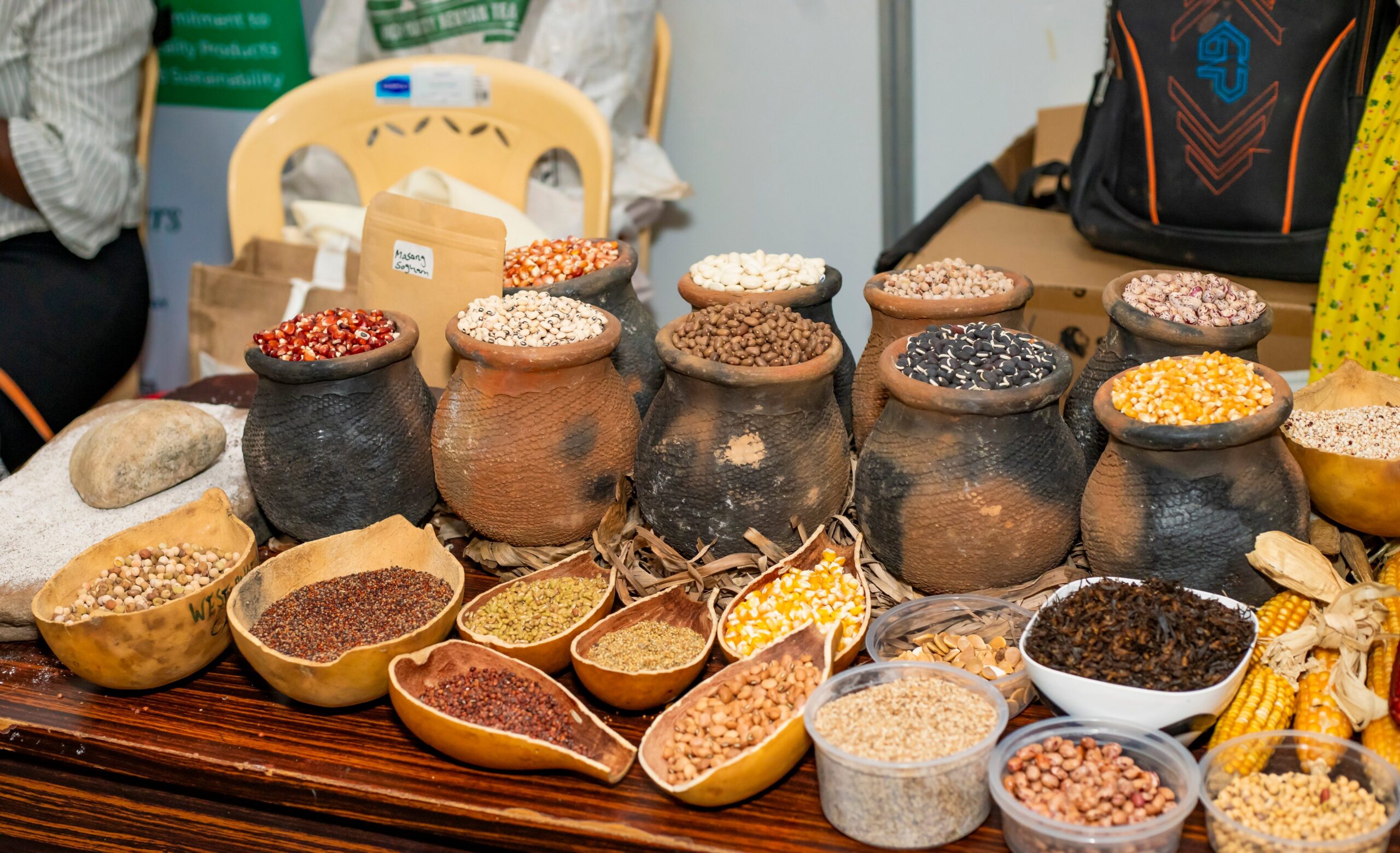
For Beatrice Wangui, a clay pot or a woven gourd isn’t just a storage container it is a living bank vault. Like millions of rural women across Africa, Wangui has spent years carefully saving, replanting, and sharing indigenous seeds passed down from her grandparents.
“Our parents and grandparents preserved them not because they had no alternatives, but because they understood their value,” Wangui said at the conference.
“Today, we are being pushed towards commercial seeds, yet we must not lose the freedom to save, replant, and share the seeds that have sustained our communities for generations.”
For decades, agricultural policymakers have treated these traditional crops like millet, cowpea, and Bambara groundnut as outdated relics of subsistence farming, favoring commercial hybrids and chemical fertilizers instead.
At the 1st Eastern Africa Indigenous Seeds Conference in Nairobi, farmers, researchers, policymakers, and civil society organisations from across Eastern Africa called for greater recognition and protection of farmer-managed seed systems against agricultural practices they say threaten traditional farming systems and biodiversity.
The message from farmers, scientists, and lawmakers is clear: Africa’s indigenous seeds are not only climate-resilient nutritional powerhouses, they are urgently in need of legal protection.
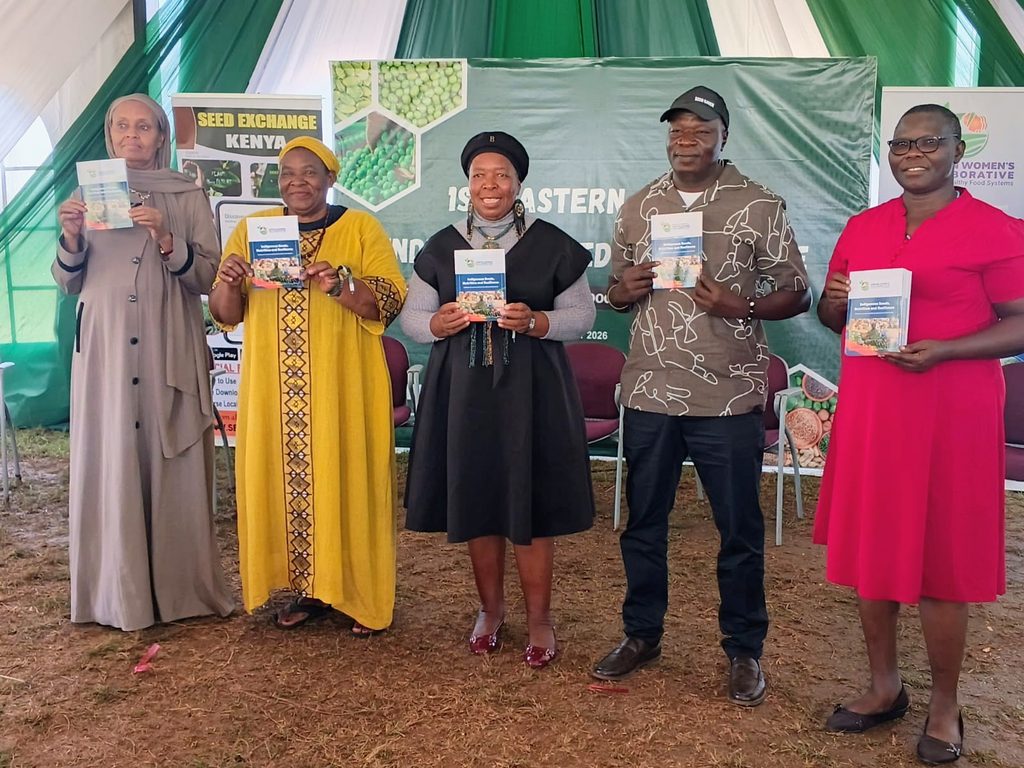
During the four-day conference convened by the Seed Savers Network under the theme “Realising the Right to Food through Seed Sovereignty” the African Women’s Collaborative for Healthy Food Systems (AWCHFS) unveiled two groundbreaking farmer-led studies.
The first, the Empirical Study on Nutritional African Foods, stepped directly into the fields and kitchens of rural women across Burkina Faso, Senegal, Uganda, Zambia, and Zimbabwe to document how they manage land and safeguard seed biodiversity.
The second, the Nutritional Assessment of Ten Climate-Resilient Food Crops, analyzed the exact nutritional makeup of ten staple indigenous foods: millet, rice, sweet potato, Bambara groundnut, cowpea, amaranthus, pumpkin, banana, okra, and mango.
The lab results validated what rural mothers and grandmothers have known all along: Dense Nutrition: These drought-tolerant crops pack concentrated levels of protein, fiber, vitamins, and essential minerals.
Targeted Health Solutions: Millet samples from Burkina Faso showed remarkably high iron levels a vital tool in a continent battling widespread maternal anemia while Bambara groundnuts from Zambia stood out for their rich protein and mineral profiles.
“We are sharing evidence that speaks to something fundamental to our lives and communities,” said Elizabeth Mpofu, Founder and Director of AWCHFS.”
The ability to produce and eat healthy and nutritious food plants using indigenous seeds, and combining inherited knowledge, women’s leadership, and agroecological science.”
The Looming Legal Battle Over Seed Sovereignty
Yet, just as science is proving the unmatched value of these crops, the systems that keep them alive are under threat.
According to Dr. Daniel Wanjama, Director of the Seed Savers Network, smallholder farmers produce roughly 80% of the food consumed across the region.
Despite this, a lack of supportive policies has caused Kenya alone to lose 30% of its indigenous seed and plant varieties over the past two decades.
The timing of the Nairobi gathering is critical
The East African Legislative Assembly (EALA) is preparing to debate the East African Community Seed and Plant Varieties Bill, 2025.
While the bill aims to harmonize seed registration and plant breeders’ rights across the region, civil society groups warn that poorly tailored regulations could criminalize or undermine traditional seed-sharing practices.
EALA MP David Ole Sankok emphasized that regional lawmakers must protect local varieties rather than leaving East Africa dependent on foreign imports.
Pointing out that just four multinational companies control nearly half of the global seed market, Sankok warned that over-reliance on exotic seeds has turned the continent into a net food importer and left it dangerously vulnerable.
Katrin Voss-Rosa, Director of the Luxemburg Foundation East Africa, echoed the call to shift donor funding away from industrial agriculture which relies heavily on pest-prone seeds and soil-degrading fertilizers and toward organic, farmer-managed systems.
“We cannot be food secure and sovereign when we keep the indigenous farmer out of the equation,” she said.
Protecting the Custodians of the Harvest
Bridging the gap between nutrition science and food sovereignty comes down to supporting the people holding the seeds: rural women.
Despite serving as the primary custodians of Africa’s biodiversity, female farmers remain routinely sidelined by insecure land rights, limited access to financing, and weak institutional backing.
When a woman lacks secure tenure over the land she farms, both her family’s livelihood and the rare seed varieties in her care hang in the balance.
To move indigenous crops from the margins to the center of Africa’s food future, stakeholders in Nairobi laid out a clear path forward:
Enact Farmer-Friendly Laws: Ensure regional legislation protects community seed banks and farmers’ rights to freely save, exchange, and sell indigenous seeds.
Secure Women’s Land Rights: Give female farmers the legal security they need to invest in long-term soil health and biodiversity.
Invest in Local Processing and Policy: Fund local food processing to make indigenous grains easier to market in growing cities, and integrate country-specific nutritional data directly into national anti-malnutrition programs.
As climate shocks continue to test industrial farming models across the continent, the message from Nairobi is both urgent and hopeful: the solutions to Africa’s food and nutrition crises may already be sitting in the seed banks of its women farmers.
Both full reports “Empirical Study on Nutritional African Foods” and “Nutritional Assessment of Ten Climate-Resilient Food Crops” are now available to the public via the African Women’s Collaborative for Healthy Food Systems website. www.africanfoodsystems.org