
DP Kindiki Opens 4th Correctional Service Week, Urges Adoption of AI and Clean Energy in Prisons
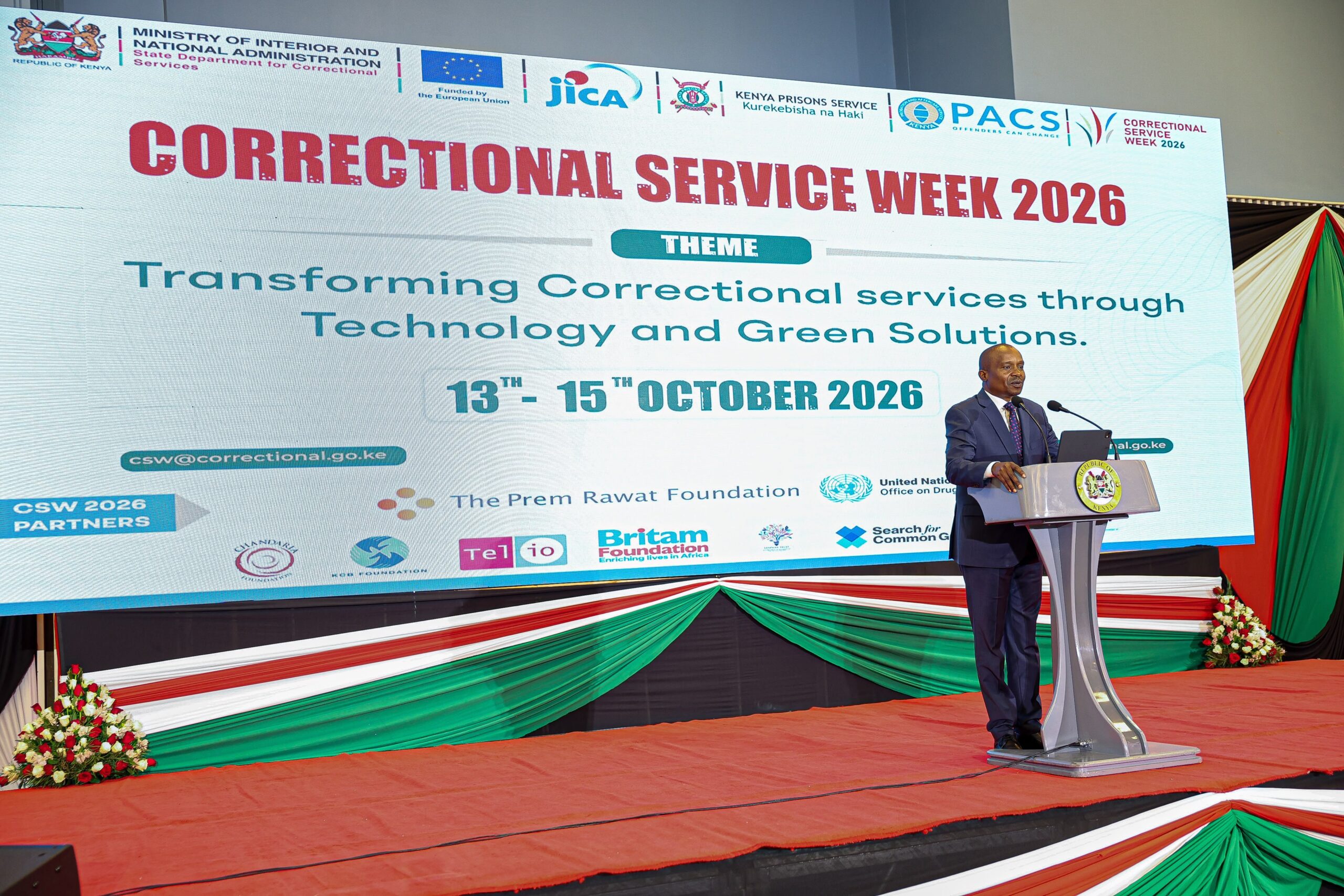
NAIROBI, Kenya, Oct 13 – The 4th Correctional Service Week 2026, hosted by the State Department for Correctional Services, has officially kicked off in Nairobi convening justice sector leaders, policymakers, and international partners to map out a tech-driven and eco-friendly future for the nation’s penal system.
The three-day national conference, running from October 13 to 15, 2026 serves as a collaborative showcase for innovations, strengthen partnerships and advance sustainable, technology-driven approaches to justice, rehabilitation and reintegration.
Held under the theme “Transforming Correctional Services through Technology and Green Solutions,” this year’s forum underscores Kenya’s commitment to converting traditional penal institutions into modern centers of excellence powered by renewable energy, modern agriculture, and digital infrastructure.
Deputy President Prof. Kithure Kindiki while officially opening the fourth edition of Correctional Service Week 2026 said the government recognises technology as a key driver of economic growth, institutional efficiency, innovation and improved public service delivery.
He noted that this year’s theme, “Transforming Correctional Services through Technology and Green Solutions,” aligns with the national development agenda and underscores the urgent need to modernise public institutions, strengthen service delivery and pursue sustainable solutions to the challenges facing the country.
“Our national development priorities, anchored in the five pillars of agricultural transformation, support for micro, small and medium enterprises, universal health coverage, affordable housing, and the digital superhighway and creative economy, demonstrate our commitment to building a modern, inclusive and productive economy,” said the Deputy President.
He urged institutions to adopt secure, integrated and data-driven systems, leveraging artificial intelligence and data analytics to enhance operational efficiency and improve rehabilitation programmes.
He further emphasised the importance of upholding human dignity, protecting personal data and strengthening cybersecurity to safeguard critical infrastructure.
Highlighting the primary objectives of the conference, Dr. Salome Beacco, Principal Secretary for the State Department for Correctional Services, emphasized the urgency of modernizing penal administration to align with global environmental and technological standards.
”Our goal is to eliminate systemic barriers in service delivery while embedding long-term environmental sustainability into the everyday administration of our correctional facilities”, stated Dr. Salome Beacco, Principal Secretary for Correctional Services.
She reaffirmed the department’s commitment to transforming correctional institutions, restoring dignity, rehabilitating offenders, facilitating their successful reintegration into society and enhancing lasting public safety.
“Achieving these objectives requires cooperation, coordination and multisectoral collaboration among government institutions and other stakeholders”, She said.
“At the core of our mandate is the responsibility to promote a just and secure society through effective offender management and the administration of justice, guided by our pursuit of excellence in correctional services”.
Throughout the conference, key panel discussions and technical sessions focus on five core transformation pillars:
Service Digitization: Automating core institutional processes and administrative operations to streamline record-keeping and case management.
Clean and Sustainable Energy: Accelerating the transition toward solar power and alternative clean energy sources to drastically reduce the ecological footprint of prison facilities.
Climate-Smart Agriculture: Scaling up sustainable farming practices, rainwater harvesting systems, and institutional reforestation efforts on prison land.
Operational Efficiency: Deploying modern management technologies to optimize resource allocation and enhance facility security and administration.
Rehabilitation and Skills Development: Expanding vocational training, psychosocial support, restorative justice models, and community-based alternatives to incarceration.
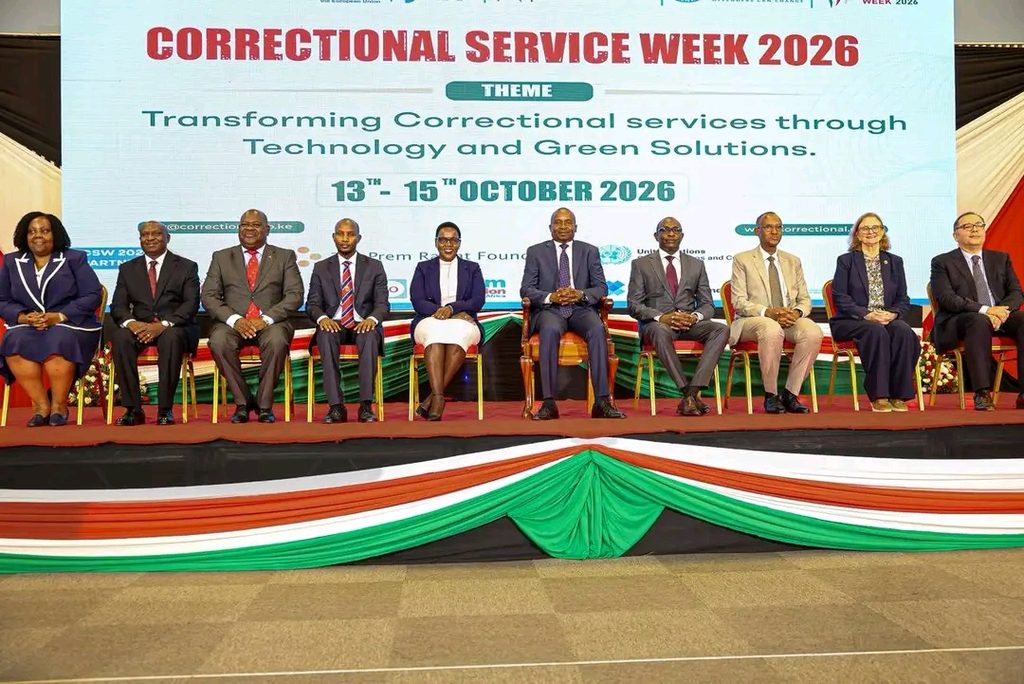
Further, DP Kindiki issued a strong reminder that technological adoption must be balanced with strict ethical considerations and respect for basic rights.
“These technologies must be adopted responsibly. Innovation within correctional institutions must uphold human dignity, protect personal information, guard against discrimination and preserve the rights and welfare of people under correctional supervision”, said Prof. Kithure Kindiki, Deputy President of Kenya.
He urged the department to align all ongoing and future digital transformations with national policy frameworks, including: National Digital Master Plan 2022–2032, the National E-Commerce Strategy 2023 and the National Artificial Intelligence Strategy 2025–2030, alongside applicable cybersecurity and data-protection frameworks.
While commending the State Department for its efforts to reform the country’s correctional system, he underscored the importance of these reforms to national security, the administration of justice and the realisation of a safer, more just and prosperous Kenya.
Addressing environmental sustainability, Kindiki called for a comprehensive approach to eco-friendly facility management, urging correctional facilities to leverage their land and workforce for sustainable production.
“I urge you to develop productive farms, strengthen irrigation and agricultural mechanization, promote appropriate waste-recycling initiatives, and expand the use of clean energy,” Kindiki noted.
“Our correctional institutions must become not only centres of rehabilitation, but also platforms for skills development, innovation, and sustainable production.”
The 2026 Correctional Service Week will conclude on October 15 with an official Awards Gala Dinner. The ceremony will honor outstanding correctional practitioners, innovative officers, and top-performing penal facilities for exceptional leadership, service delivery, and contributions toward sector-wide transformation.