
Lukenya Schools Commissions 40 kW Solar Project to Cut Energy Costs and End Power Outages
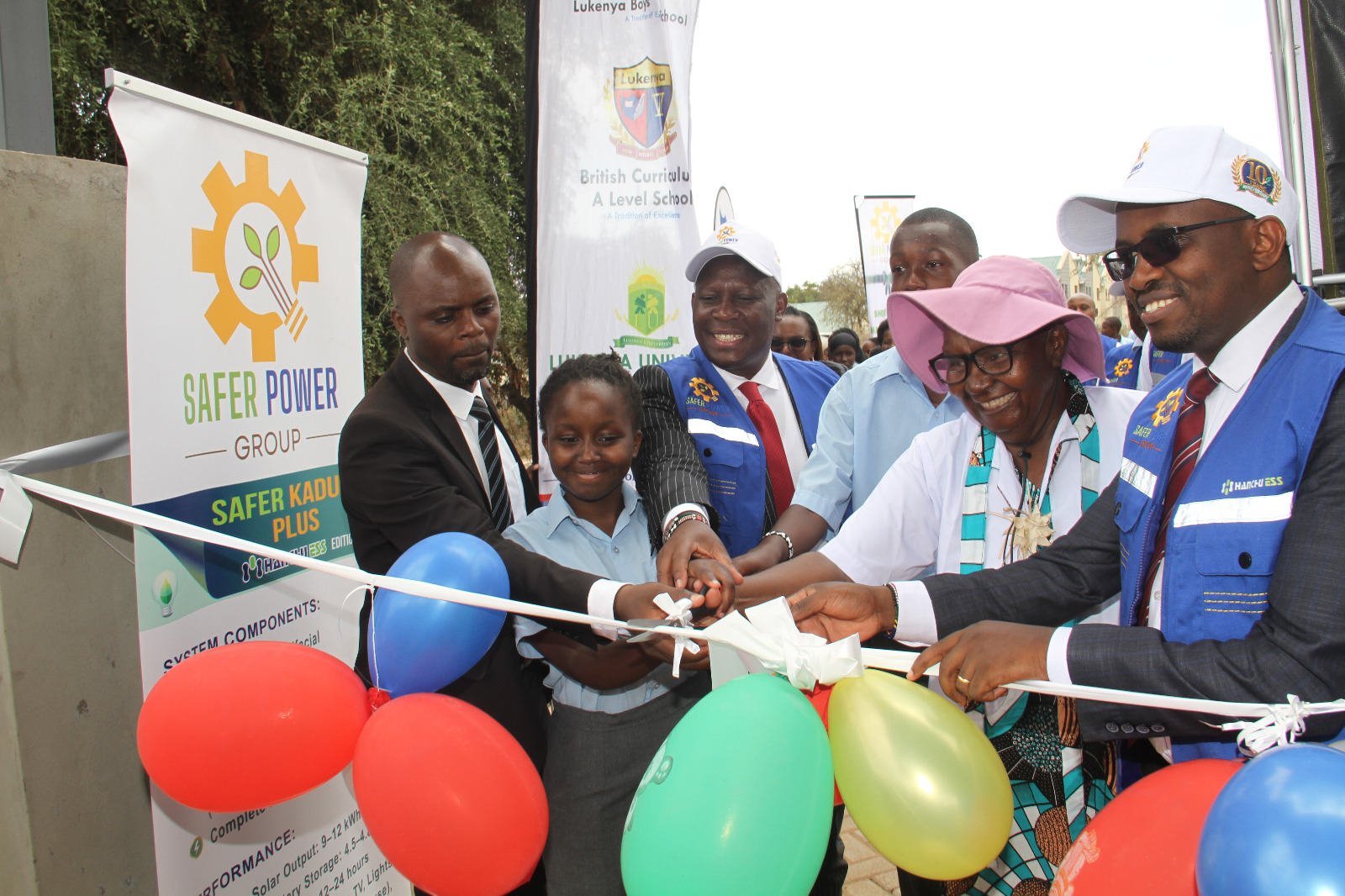
PHOTO: From L-R Lukenya Academy Primary and Junior School Principal Alfred Ngayai and two grade 8 learners Nicole Nyawira and Henry Musyoki join former school’s parent Patrick Musau (3rd left), Lukenya Schools Founder Mrs Kasanga Mulwa (2nd right) and Safer Power Group CEO Eng. Dalmus Mbai (right) in cutting a tape to commission a 40.92 kilowatt solar photovoltaic system.
MACHAKOS, Kenya, Oct 13 – In a major move toward energy self-sufficiency, Lukenya Schools in Athi River has officially commissioned a new state-of-the-art solar power project aimed at ending its reliance on the national electricity grid, lowering operating costs and guaranteeing uninterrupted power for classroom and boarding operations.
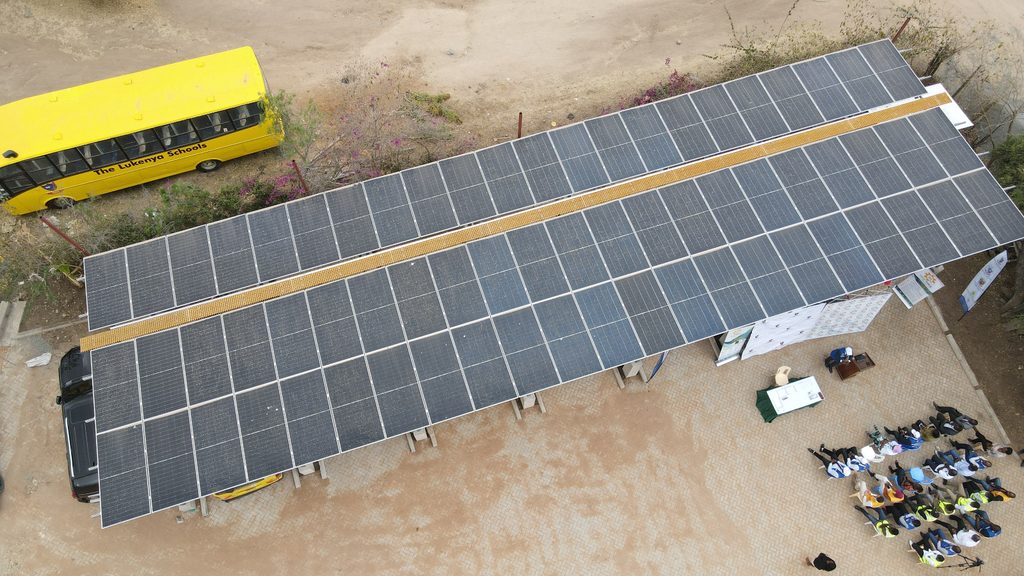
Installed by Safer Power Limited, the renewable energy installation features: 40.92 kWp solar photovoltaic (PV) array, 40 kW AC hybrid inverter system, 80 kWh Energy Storage System (ESS) battery unit.
The system will offset the bulk of the school’s daytime electricity usage while providing robust battery-backed power during national grid blackouts.
Speaking during the commissioning ceremony, Lukenya Schools Director Mutheu Kasanga shared that the institution plans to eventually go fully off-grid.
“Today we have commissioned a solar plant and hope to move completely out of the grid. Some of the challenges we have had with the grid being a rural school are quite significant. It takes a lot to resolve some of the issues, and we have had to invest in the past in a backup system when we have grid failure”, said Mutheu Kasanga, Director, Lukenya Schools.
As a full-time boarding institution, Lukenya Schools requires 24/7 power for learning, security, and facilities. Kasanga noted that frequent power disruptions often caused by grid failures and the vandalism of power lines and transformers previously forced the school to rely heavily on costly diesel generators.
The power reliability issues extended well beyond classroom lighting. Prolonged outages regularly impacted food storage and cooling systems.”Our institution has so many processes that rely on electricity, from cooling machines to storage machines for food,” Kasanga explained.
She recalled that during past extended blackouts, the school occasionally had to adjust meal schedules and serve freezer items early to keep food from spoiling.
With national national examinations approaching alongside the rainy season a period traditionally marked by frequent power supply interruptions the new solar plant ensures stable electricity for freezers, study halls, and dormitories.
In addition to operational reliability, the solar project provides long-term financial predictability at a time when Kenya’s operational and living costs continue to rise.
Kasanga emphasized that unpredictable grid tariffs made annual budgeting difficult. The guaranteed savings from solar power will be directly reinvested into the school’s learning infrastructure.
”In Kenya today, the cost of living has gone up, and for us to have one thing that is stable and reliable is a saving in itself,” Kasanga said.
“Children are the greatest beneficiaries. We will improve their learning spaces. For us, the investment will pay off”.
Unlocking Africa’s Solar Potential Dalmus Mbai, CEO of Safer Power Group, stated that the Lukenya project is an example of how African institutions can solve persistent energy access challenges.
“When we are commissioning some of these projects, I focus on the excellence and potential of Africa. If you look at the problems facing Africa, 90 per cent of those are related to power whether in healthcare, manufacturing, or food storage”, said Dalmus Mbai, CEO, Safer Power Group
“Africa has the highest number of sun hours from January to December. Why are we not able to tap into that potential? It has to start somewhere”.
Mbai encouraged Lukenya students to see the installation as a practical demonstration of how renewable energy can transform the continent’s development landscape.
A 34-Year Milestone in Infrastructure Evolution, For Lukenya Schools founder Kasanga Mulwea, the transition to solar represents a deeply personal milestone.
Reflecting on the school’s origins 34 years ago, Mulwea recalled the steep financial hurdles of bringing initial power lines to the rural site.
“Thirty-four years ago, the troubles we had I had to pay commercial rates to get power from the road to here. I paid many millions more than what I have paid today for Safer Power,” she noted.
With a 15-year battery guarantee and custom storage capacity now fully operational, Lukenya Schools enters a new era of energy self-reliance ensuring stable budgeting and uninterrupted learning for years to come.