
Kenya’s 2027 Election: Religious and Civil Leaders Warn of Rising Tension, ‘Goonism’ and Institutional Capture
NAIROBI, Kenya, Sep 5 – Eleven months out from Kenya’s 14th General Election, a coalition of religious, civic, and professional leaders has issued a stark warning regarding escalating political tensions, rising voter intimidation, and the systematic monetization of the country’s democratic process.
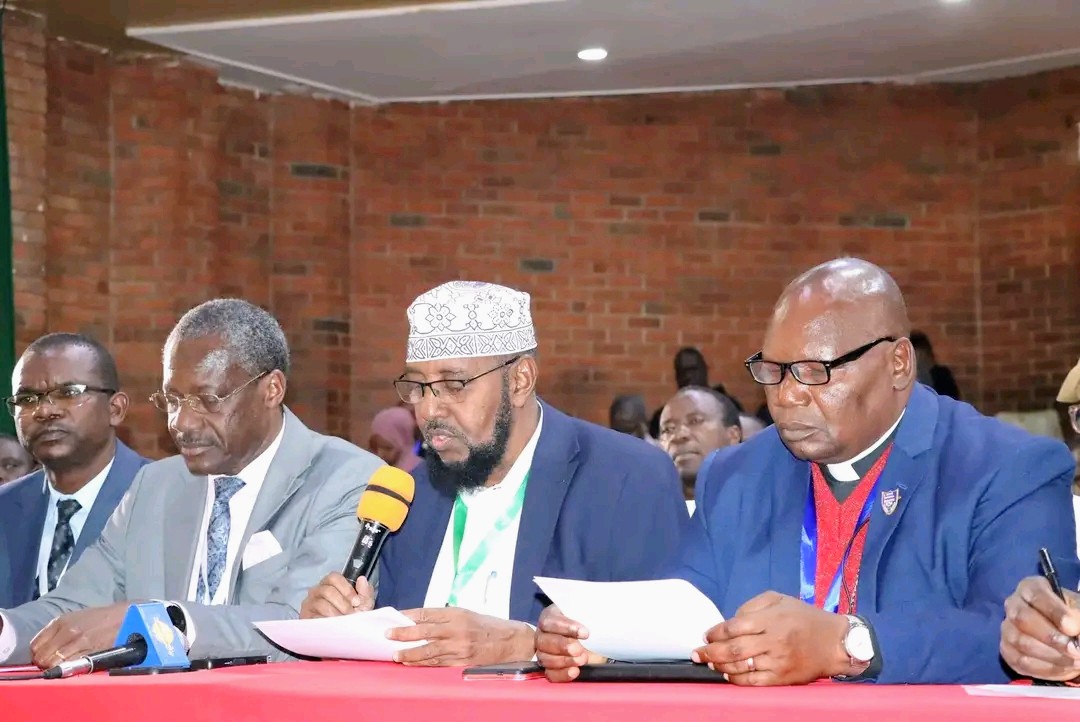
The joint declaration followed the two-day National Stakeholders Convention on Democratic, Credible, and Peaceful 2027 Elections, held at Ufungamano House in Nairobi.
Convened under the auspices of the Kenya Religious Leaders Forum which includes the Kenya Conference of Catholic Bishops (KCCB), the National Council of Churches of Kenya (NCCK), the Evangelical Alliance of Kenya (EAK), and the Supreme Council of Kenya Muslims (SUPKEM) the event brought together delegates from 6 umbrella religious institutions, 7 constitutional agencies, 5 professional bodies, and 21 civil society organizations.
Delegates expressed alarm that anxiety is mounting across the country as the nation approaches an incumbency-driven election cycle.
Citing the historic bloodshed and destruction that marred the 1997, 2007, and 2017 elections, leaders warned that similar structural dynamics are beginning to surface once again they cautioned against ignoring warning signs and allowing the country to walk blindly into political collapse.
The convention outlined five central threats to the stability and credibility of the upcoming polls: The delegates condemned the normalization of political violence and state-sponsored goonism.
Additionally, they asserted that the primary driver of organized political violence is not youth unemployment, but rather selective policing that blurs the lines between law enforcement and illegal armed gangs.
Highlighting recent fatalities and severe violence such as incidents in Homa Bay County where excessive casualties overwhelmed local morgue facilities the convention condemned the apparent state protection enjoyed by political goons.
Religious leaders pledged to campaign publicly for the arrest and prosecution of anyone paying citizens to commit violence, demanding that authorities “cut the roots of the tree” rather than prosecuting low-level actors.
“The tragic normalization of violence and state-sponsored goonism is a danger only comparable to the man who feeds a baby lion never realizing that when it grows up it will eat him”,they said.
The convention raised serious concerns over the perceived capture of the Police, Judiciary, Parliament, and constitutional oversight bodies.
Furthermore, leaders flagged targeted efforts by politicians to make large monetary donations to places of worship as an attempt to corrupt and silence society’s moral voice.
In response, religious umbrella bodies resolved to: Deny political actors access to church pulpits and mosque podiums for political gain.
Drive a nationwide campaign for anonymized giving in places of worship to eliminate influence-peddling.
Refuse to allow faith institutions to be used as public relations tools to legitimize candidates.
The delegates warned that Kenya is shifting from a functioning constitutional democracy into a plutocracy a government run by and for the wealthy at the expense of the poor.
Unregulated campaign spending now dictates candidate selection, voter choices, and subsequent governance decisions.
Speakers noted that political actors who dish out millions during campaigns often fund their efforts through shadow financiers who later demand kickbacks via inflated, manipulated government contracts.
To combat this, religious institutions committed to conducting extensive civic and voter education through their congregations.
Political actors were called out for intentionally engineering “us-versus-them” narratives, political zoning, and disinformation campaigns to divide communities along ethnic and regional lines.
Religious leaders committed to establishing fact-checking frameworks and deploying unifying narratives to neutralize hate speech ahead of the voting period.
Despite representing the overwhelming majority of the demographic landscape, vulnerable and marginalized groups remain structurally excluded from political leadership.
Statistics show the gravity of the exclusion: The under 35s, who are 75% of the population, held 4% of elected positions in Parliament.
On their part, women are 50% of the population, but hold only 23% of the seats in the National Assembly. Persons with disabilities, who constitute 2.2% of the population, hold an elective share of 1%.
This is way below the constitutional stipulations for women and PWDs and unconscionably low for the youth.
Religious organizations committed to reviewing their internal leadership frameworks to accord youth, women, and PWDs equal access, while advocating for broader national policy reforms.
The conference concluded with a call to the Kenyan electorate, urging citizens not to succumb to voter apathy or intimidation tactics such as abductions, extra-judicial threats, or financial hand-outs which are engineered to suppress turnout.
Delegates challenged citizens to reject political bribery, asking why voters fiercely condemn street thieves while celebrating political figures who loot public resources meant for job creation and essential public service delivery.
With eleven months remaining before the 2027 General Elections, the convention called on every Kenyan to take personal responsibility in safeguarding the nation’s democratic future.