

AUCCW 2026 Opens at Kenyatta University, Targets Solutions for Planetary Health and Climate Resilience
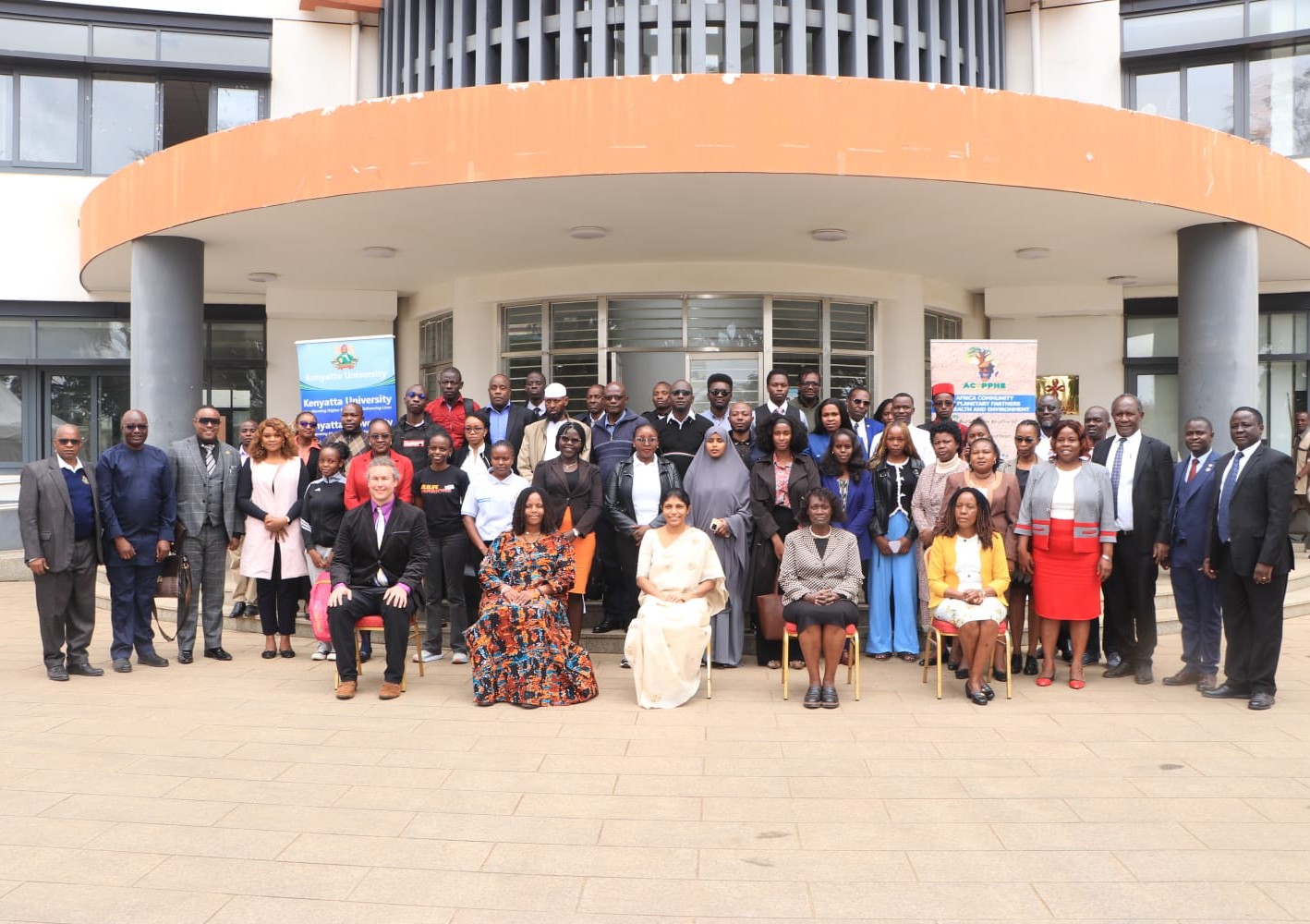
NAIROBI, Kenya, Aug 10 – The inaugural African Universities and Communities Climate Week (AUCCW) 2026 has officially opened at Kenyatta University, running from August 9 to 15, 2026 brings together a diverse coalition of climate scientists, policymakers, academic researchers, students, local community leaders and youth innovators.
The Seven-day Summit Hosted under the theme “One Health for One Planet: Leveraging Local and Indigenous Innovations to Unite Urban and Rural Communities for Sustainable Development and Climate Action,” features dynamic panel sessions, scientific exhibitions, cultural exchanges and youth-led innovation showcases focused on Africa’s climate future.
Delivering the official opening address on behalf of Vice Chancellor Prof. John Okumu, Prof. Caroline Thoruwa, Deputy Vice Chancellor for Research, Innovation, and Outreach (DVC RIO), emphasized that AUCCW serves as a crucial continental space designed to align academic research directly with social and environmental needs.
“Knowledge must serve humanity, protect the environment, and deliver measurable impact across the region,” Prof. Thoruwa stated, urging institutions to translate academic research into actionable policy and transform high-level dialogue into tangible results.
Reinforcing this interdisciplinary approach, Dr. Mwende Ngie, representing Prof. Maina Mwangi (Executive Dean of the School of Agriculture and Environmental Sciences), noted that climate change affects every academic discipline and practical sector.
Dr. Ngie reaffirmed the university’s commitment to building practical resilience alongside local communities.
The Acting Sri Lanka High Commissioner to Kenya H.E. Ruvini De Silva commended the University’s initiative during the proceedings, reminding delegates that climate change is a direct public issue driven by severe droughts and floods.
She highlighted that global food security inherently depends on healthy ecosystems, calling on universities to act as purpose-driven centers of discovery.
Throughout the opening proceedings, key presentations highlighted the intersection of biodiversity, climate finance, and public health:
● Biodiversity and Landscape Restoration: Dr. Caroline Wahome of Kenyatta University presented on the critical role of preserving diverse ecosystems to boost climate resilience, demonstrating how university research can guide local communities in balancing nature conservation with economic livelihoods.
● Climate Action and Transformative Education: Dr. Edwin Ochieng Okul from the Climate Crisis Consortium outlined strategies to unlock accessible, equitable climate finance while integrating sustainability literacy into education systems to train future African leaders.
● Climate as a Public Health Issue: Presenting on behalf of Dr. Elizabeth Kimani from the African Population and Health Research Center (APHRC), representatives Cindy and Pallavi shared insights into how shifting climate patterns impact air quality, food systems, and mental health particularly for women and children.
They stressed the importance of co-generating research directly with local communities and placing youth at the center of solutions.
● Translating Research into Solutions: The Health and Environment in Africa: Research Translations and Solutions for Climate (HEARTS4C) initiative brought panelists and participants together for an interactive dialogue aimed at translating academic health and environmental data into scalable real-world applications.
A central focus of AUCCW 2026 is unifying grassroots perspectives with academic leadership. Dr. Nathaniel Uchtmann, Executive Director of the African Community for Planetary Health and Environment (ACCOPHE) and Co-Chair of the University Organizing Committee (UOC), highlighted the conference’s commitment to ensuring local languages, cultural values, and grassroots leaders remain central to climate action.
He noted that the gathering will feature a dedicated focus on youth leadership, timed to celebrate International Youth Day during the week.
Dr. Ezekiel Ndunda, Chair of the Department of Environmental Science and Education and UOC Co-Chair, detailed the core objectives driving the event:
● Elevating Indigenous Knowledge: Positioning traditional and indigenous systems as co-pillars alongside modern scientific adaptation strategies.
● Bridging the Urban-Rural Divide: Connecting urban centers and rural areas in joint climate resilience projects.
● Fostering Green Jobs: Unlocking sustainable economic pathways and green careers for young people across the continent.
● Prioritizing Action: Moving beyond theoretical debate to build measurable, long-term multi-sectoral partnerships.
Participants were challenged to look beyond presentations, exhibitions and academic discussions and focus instead on the partnerships and actions that emerge from the gathering.
They argued that success of the conference should ultimately be measured by the collaborations it generates, the policies it influences and the communities whose lives are improved as a result.
Prof. Thoruwa similarly expressed hope that African Universities Climate Week 2026 would become a milestone in Africa’s pursuit of resilience, climate justice and sustainable development.
“The conference’s broader vision is to establish universities as centres of partnership where scientific knowledge, community experience, policy and innovation converge to address Africa’s most pressing challenges”.
As AUCCW 2026 continues through August 15 across Kenyatta University and the Greater Nairobi area, participants will engage in workshops, policy roundtables, and collaborative sessions designed to launch practical initiatives for planetary health and climate resilience across Africa.