

Nairobi’s Empty Offices Hold the Key to Unlocking Kenya’s Creative Economy
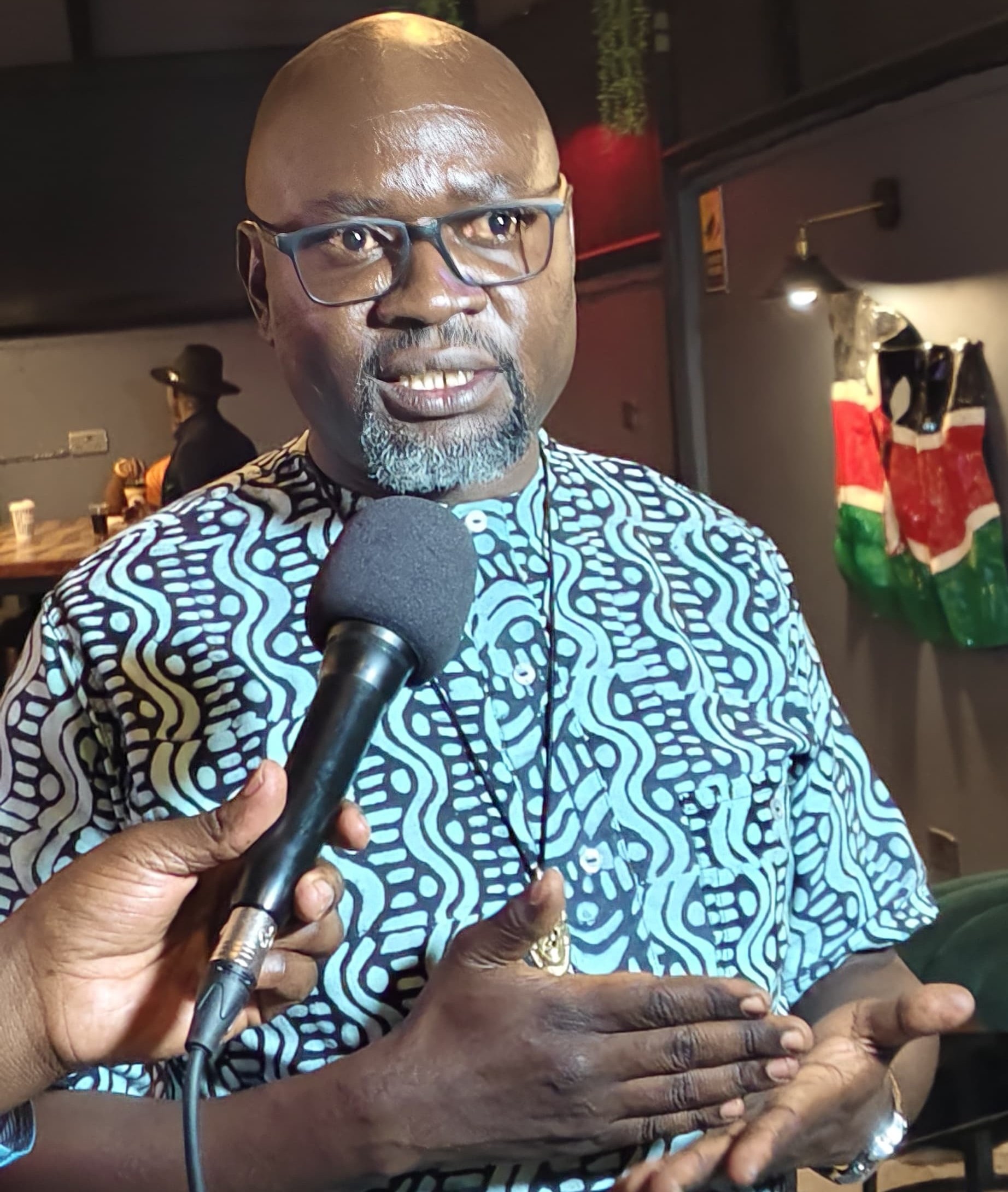
PHOTO: Eric manya, Trust for Indigenous Culture and Health (TICAH) Representative.
NAIROBI, Kenya, Aug 21 – As Kenya positions its creative economy as a central pillar of national economic growth, new research presented today reveals a glaring paradox in the capital: Nairobi’s cultural practitioners are not facing a physical shortage of space, but are systematically locked out of the millions of square feet of commercial real estate already standing empty.
The comprehensive study, commissioned by the Trust for Indigenous Culture and Health (TICAH) and conducted by researcher Maurice Otieno, surveyed 86 cultural practitioners alongside focus groups and in-depth interviews with venue operators, property market actors, and commercial landlords.
The findings were unveiled on, Thursday, August 20, 2026, at a public forum titled “A Space for Culture” at Mageuzi Hub in Nairobi.“There’s a persistent assumption that Nairobi’s cultural practitioners can’t find space because there isn’t enough of it,” a TICAH spokesperson said ahead of the release.
“Our research tells a different story. The commercial property sector has significant unused capacity. What’s missing is a working relationship between that capacity and the people who most need it.”
The research highlights a dramatic structural disconnect between Nairobi’s real estate market and its creative sector.
According to commercial property data reviewed in the study, Nairobi’s office market was burdened with an estimated 5.7 million square feet of oversupply in 2024, which slightly adjusted to 3.4 million square feet in 2025.
In parts of the Central Business District (CBD), upper floors of commercial buildings report vacancy rates as high as 70%, while peripheral shopping malls hold vast expanses of dark retail units.
Yet, on the other side of the divide, local artists, performers, and creative enterprises are scrambling for basic workspace:
● 47% of surveyed practitioners work primarily from home.
● 35% consider their current workspace wholly inadequate.
● 78% cite exorbitant rent as their primary constraint.
● 69% report that traditional lease terms are too rigid for project-based cultural work.
● 65% state available commercial layouts are physically unsuited for creative production.
● 62% lack clear information about what space is even available on the market.
The report frames the crisis not as a lack of square footage, but as a pricing, leasing, and operational mismatch between traditional commercial property models and the realities of artistic production.
The study reveals that creative practitioners absorb massive, hidden operational costs that never appear on standard lease agreements..
Event organisers and visual artists reported spending up to 80% of their event budgets on temporary adaptations including flooring, acoustic soundproofing, modular staging, lighting, and electrical overhauls just to convert bare offices, retail units, or empty warehouses into functional public venues.
Once the booking ends, they are forced to strip everything back down. In practice, creatives pay twice: first to rent the space, and again to make it usable.Compounding the problem is a severe deficit of trust.
Only 11% to 12% of practitioners surveyed believe landlords understand their operational needs or trust them as viable tenants.Landlords, conversely, cite fears of fluctuating income, physical property damage, noise complaints, and regulatory hassles as reasons to leave properties vacant rather than rent to artists.
This dynamic has created a self-reinforcing cycle: creatives remain locked out because landlords view them as risky, while artists are never given the chance to prove their financial and operational viability.
Five Key Barriers Facing Nairobi’s Creatives:
Affordability: Fluctuation in creative income cycles cannot comfortably sustain conventional, rigid commercial rent models.
Rigid Leases: Standard multi-year commercial commitments conflict with short-term, project-based cultural work.
Poor Physical Fit: Generic white-box offices lack the acoustic, structural, and visual qualities required for music, dance, film, or visual art.
Regulatory Hurdles: Complex licensing, zoning laws, and compliance mechanisms (such as NEMA and county permits) drive up costs unpredictably.
Trust and Information Gaps: Lack of dynamic market transparency leaves both sides defaulting to caution over opportunity.
Rather than advocating for capital-intensive new construction, the research urges city planners, property owners, and policymakers to convert Nairobi’s existing commercial overhang into working cultural infrastructure.
The report maps out immediate conversion opportunities across the capital, including upper floors of underperforming CBD buildings, pension-fund-owned properties where institutional backing can mitigate risk, underutilized suburban malls, industrial warehouses in areas like Ngara, Ruaraka, and South B, and underused private residential compounds.
The study proposes three priority zones for cultural-space development: Westlands/Upper Hill for established cultural hubs, the CBD and Mombasa Road corridor for affordable space, and Ngara, Ruaraka and Eastlands for production, rehearsal and maker space.
To bridge the gap between individual artists and large property owners, TICAH’s research advocates for intermediary-led models.
Instead of solo artists negotiating with commercial landlords, trusted creative management entities would step in to aggregate demand, sign master leases, manage sub-tenancies, streamline county and NEMA licensing, and establish long-term cultural land trusts that insulate artistic space from speculative market swings.
By transforming empty real estate into vibrant creative hubs, Nairobi has a near-term opportunity to unlock its cultural economy without laying a single new brick.