
World Health Expo 2026 Concludes in Nairobi with Record Deals and Regional Healthcare Reforms Focus
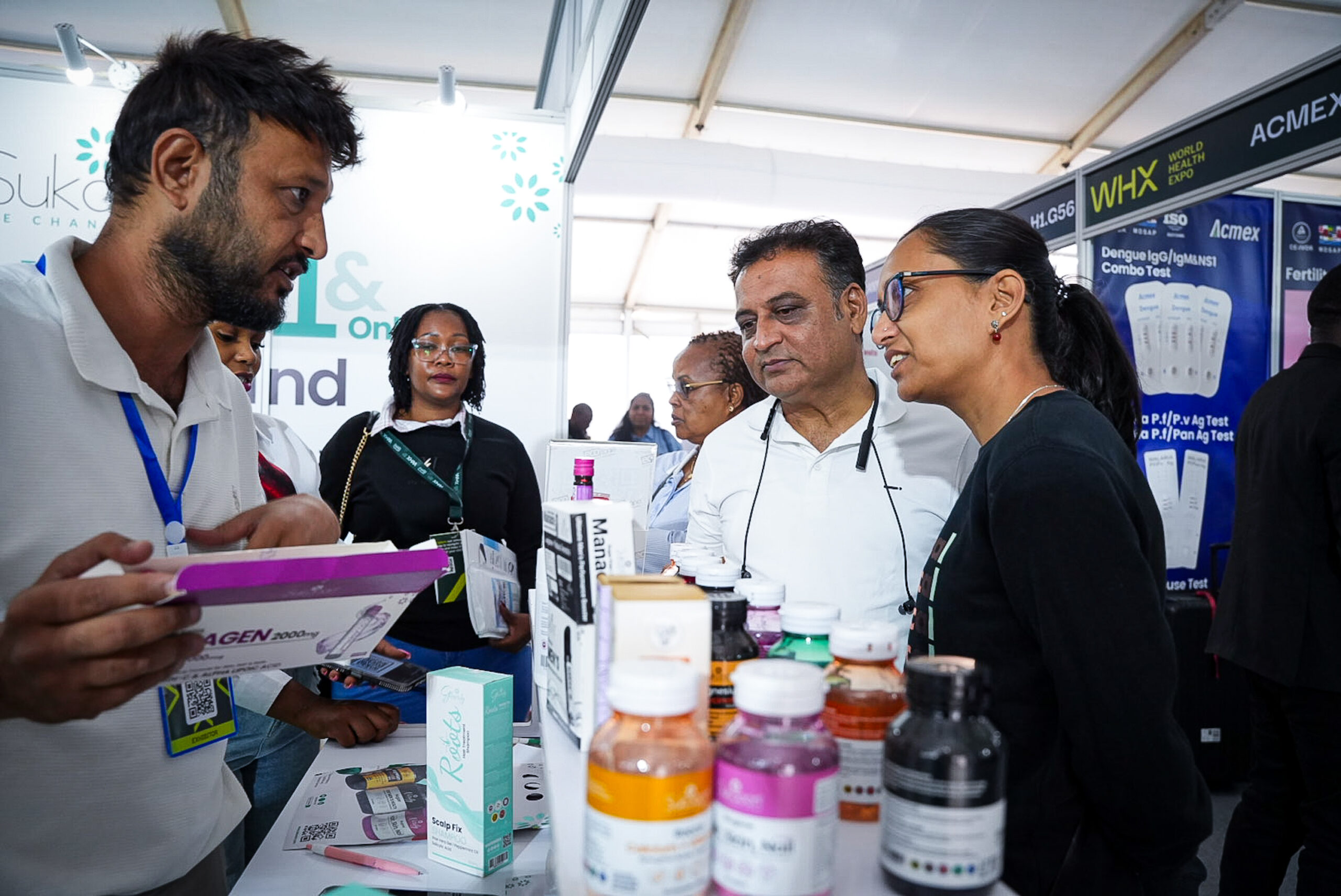
NAIROBI, Kenya, Sep 24 – The 10th edition of the World Health Expo (WHX) concluded this week at the Kenyatta International Convention Centre (KICC) in Nairobi, marking its most successful gathering to date.
Positioned as East Africa’s premier commercial healthcare showcase, the three-day event which ran from September 16 to 18, 2026 recorded unprecedented attendance, cross-border deal-making, and high-level regional participation.
Held under the patronage of Kenya’s Ministry of Health and supported by the Kenya Healthcare Federation (KHF), WHX 2026 drew over 8,500 professional visits, including buyers, regional distributors, and key healthcare decision-makers.
The exhibition featured more than 250 international companies representing 30 countries, highlighting products spanning medical devices, laboratory equipment, hospital IT, diagnostics, pharmaceuticals, nutraceuticals, orthopedics, and digital health technologies.
The official ribbon-cutting ceremony brought together key government officials, diplomats, and industry executives.
Among the dignitaries present were Dr. Joe Lenai, Director for Primary Healthcare, Preventive and Promotive Health at the Ministry of Health Kenya; Witjaksono Adji, Indonesian Ambassador to Kenya; Tom Coleman, Portfolio Director – Healthcare at inD (the event organizer)
Ms. Mary Mary Muthoni, Principal Secretary for Public Health and Professional Standards; Dr. Mazyanga Lucy Liwewe Mazaba, Regional Director for the Africa CDC’s Eastern Africa Regional Coordinating Centre; and Alex Oketch, General Manager East Africa at GE.
Delivering remarks on behalf of the Ministry of Health, Dr. Joe Lenai issued a clear directive to international manufacturers and distributors, calling for a shift away from isolated hardware sales toward long-term operational support.
“Africa must no longer be an equipment graveyard. For too long, expensive medical equipment has gone out of use due to unavailable spare parts, inadequate maintenance and insufficient technical skills. We must change this approach,” Dr. Lenai stated.
“I therefore call upon all manufacturers, aggregators and vendors at WHX to provide more than hardware. We need comprehensive service-level agreements that guarantee maintenance support, availability of spare parts and the development of local technical capacity.”
Dr. Lenai also emphasized how Kenya’s active legislative reforms including the Primary Care Act, the Social Health Insurance Act, the Digital Health Act, and the Facility Improvement Financing Act are structuring an equitable environment for local manufacturing, innovation, and strategic investments.
The event served as a hub for East African healthcare procurement, attracting official delegations from neighboring markets including Ethiopia, Tanzania, Uganda and Rwanda.
Tom Coleman of inD highlighted the surge in regional interest around infrastructure and digital healthcare: “We had more than 250 international companies here in Nairobi this week for WHX, creating opportunities for investment, knowledge exchange and cross-border partnerships”.
“We also saw huge interest in digital health and how technology can strengthen healthcare infrastructure, improve access to medicines and support patients, not only in cities such as Nairobi, but also in rural and underserved areas.”
International bilateral cooperation was another major theme as Indonesian Ambassador Witjaksono Adji pointed out the expanding trade pathways between Southeast Asia and East Africa, noting that the expo provided a practical venue for exploring joint investments and technical exchanges between Indonesia and Kenya.
Addressing the structural readiness of the sector, Dr. Anne Musuva, CEO of the Kenya Healthcare Federation, emphasized that the region is transitioning from isolated pilot projects to commercial viability.
”Kenya has the ingredients to become a regional digital-health leader: an active private sector, a statutory digital-health architecture, strong technical talent, experienced public-health institutions and a tradition of public–private collaboration,” Dr. Musuva noted.
“WHX shows that East Africa’s healthcare sector is ready to move from fragmented pilots to investable, interoperable solutions that can operate securely at scale.”
Logistics infrastructure remained central to discussions on local pharmaceutical manufacturing and medical device availability.
Representing Platinum Partner FedEx, Leon Bruwer, Managing Director of Sales for Sub-Saharan Africa, underscored the critical role of efficient supply chains in turning regional trade agreements into reality.
“Kenya’s ambition to strengthen local manufacturing of medicines and medical devices depends on efficient supply chains and reliable cross-border movement of materials and finished products,” Bruwer said.
The Nairobi expo forms part of a broader continental framework, alongside sister WHX events in Lagos and Johannesburg.
Together with broader policy conventions like the Africa Health ExCon (AHEC) in Egypt and the Africa CDC’s Conference on Public Health in Africa (CPHIA), WHX continues to align healthcare policy, procurement, and commercial capabilities across Sub-Saharan Africa.