
IDOP Kenya 2026: Kenya to Hosts First National Conference to Address Growing Ageing Population
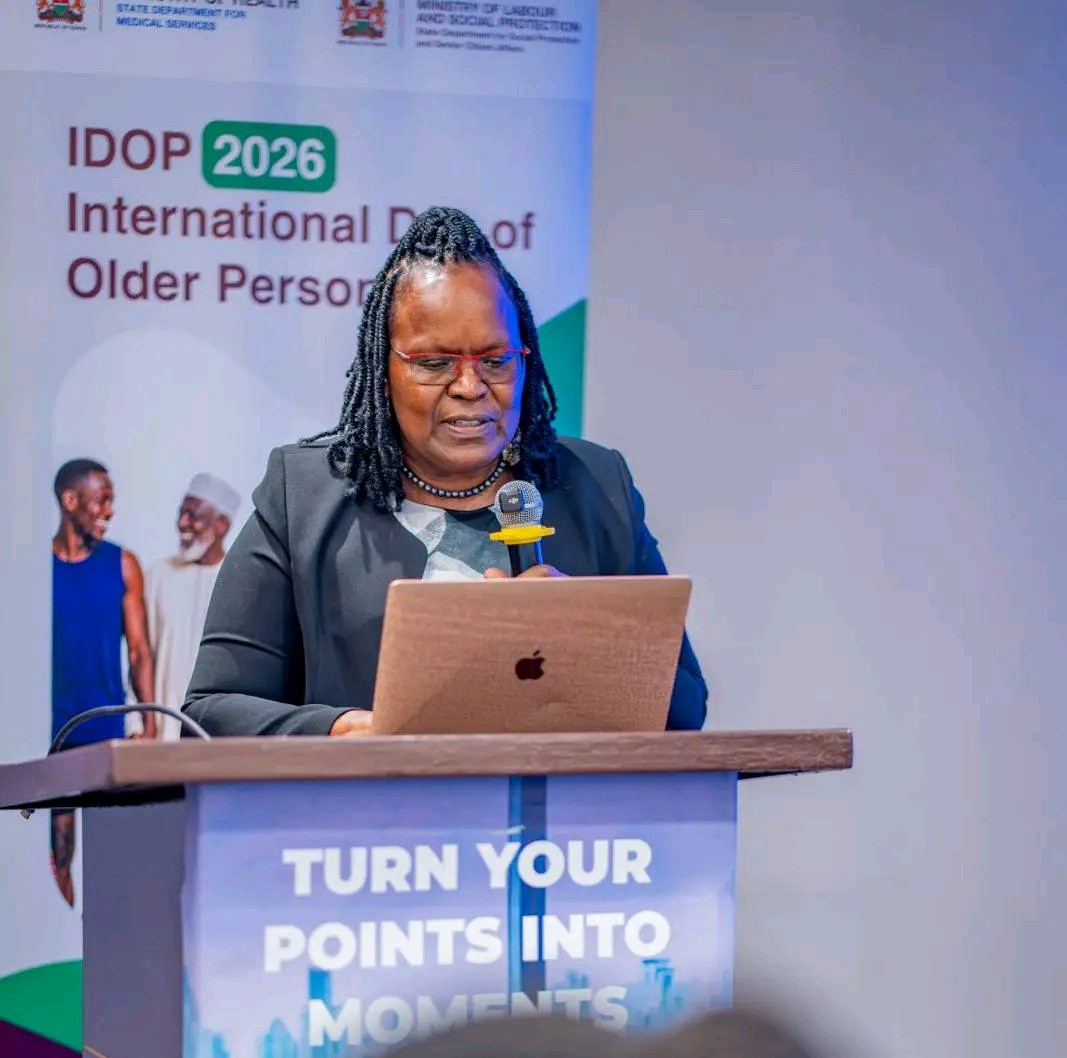
NAIROBI, Kenya, Sep 28 – Kenya is set to host its inaugural national celebration and conference on older persons this week, bringing together government officials, healthcare professionals, researchers, civil society organizations, and younger generations to address the growing demands of an ageing population.
The three-day event, held to mark the International Day of Older Persons (IDOP Kenya 2026), will run from September 30 to October 2 at the Kenya Institute of Special Education (KISE) in Nairobi.
The forum will focus on healthy ageing, human rights, healthcare access, social protection, and long-term care systems.
The national gathering comes as the country faces significant demographic changes that experts say will require structural reforms across health, economic, and social sectors.
According to statistics, Kenya’s 2019 Population and Housing Census recorded approximately 2.7 million people aged 60 and above, representing 5.7% of the total population.
The population of older persons in Kenya is projected to expand to 2.5 times its current level by 2050.
About 500 participants are expected at KISE, with the conference receiving 130 research abstracts covering geriatric medicine, long-term care and social policy.
County Rollout: More than 30 counties will conduct localized activations and medical outreach beginning October 3.
Julie Omolo, Assistant Director for Social Development at the State Department for Social Protection while speaking during the event emphasized the need for an integrated policy response.
“Social protection cannot work in isolation,” Omolo said. “Healthy aging requires coordinated action across health, social protection, communities, economic systems, and care.”
Additionally, Omolo noted that the government and partner institutions are preparing to execute Kenya’s first comprehensive national ageing assessment.
The study aims to gather baseline data on the socio-economic realities, healthcare requirements, and income-security needs of older citizens nationwide.
Following the main event in Nairobi, county-level activations will commence on October 3 Seven counties are being directly coordinated for dedicated programs, including medical screenings, social protection outreach, rehabilitation services, and wellness forums.
Dr. Peninah Ndonye, a Clinical Psychologist with the Ministry of Health’s State Department for Medical Services, stressed that managing an ageing population requires cross-ministerial cooperation involving health, labor, gender, culture, and trade.
Dr. Ndonye also highlighted the pressures facing family members providing unpaid care.
“Then the question is, who cares for the caregivers? Who cares for these caregivers?” Dr. Ndonye said, pointing to the financial and psychological strain on individuals balancing employment with elder care.
Several regions have already initiated local programs. Nandi County, for instance, recently concluded medical camps across six sub-counties alongside physical wellness activities.
Planned activities in other participating counties include: Cancer screenings and physical rehabilitation programs, Social protection registration and outreach, Intergenerational sports matches, including football and volleyball, Traditional dance performances and community choirs, Tree-planting initiatives and community recognition awards.
Organizers are using the event to challenge societal stereotypes that equate old age with dependency or cognitive decline.
Dr. Tasneem Yamani, a geriatrician and Technical Advisor at Suqoon Kenya, noted that older individuals remain active participants in agriculture, business, mentorship and community governance.”Age does not remove somebody’s voice,” Dr. Yamani said.
“Technological difference can easily be mistaken for intellectual inability. Slowness becomes incompetence.”
Dr. Yamani urged domestic researchers to generate localized, evidence-based models tailored to Kenya’s specific cultural and economic context rather than relying solely on foreign healthcare frameworks.