From 650 Grams to Thriving: How Okoa Malaika’s 92-Incubator Milestone Is Saving Kenya’s Preterm Babies
When Anne Wanjiku was rushed to the Nyeri County Referral Hospital from Mwiga, her newborn baby weighed just 650 grams.Survival depended on immediate, specialized intervention.
Placed inside a neonatal incubator that replicated the warmth of the womb and supported by Continuous Positive Airway Pressure (CPAP) therapy, the tiny infant fought for life over three grueling months.
By the time mother and child were discharged, the baby weighed 2.7 kilograms, Today, that same child is a healthy, thriving 7.2 kilograms.”I don’t know what to say. I am happy,” Anne shared emotionally during a ceremony at the hospital.
“They welcomed me, they gave me a hand, and I saw there work.I thank all the doctors and nurses”.
Anne’s story is the human heartbeat behind a major national healthcare milestone celebrated ahead of World Prematurity Day 2026.
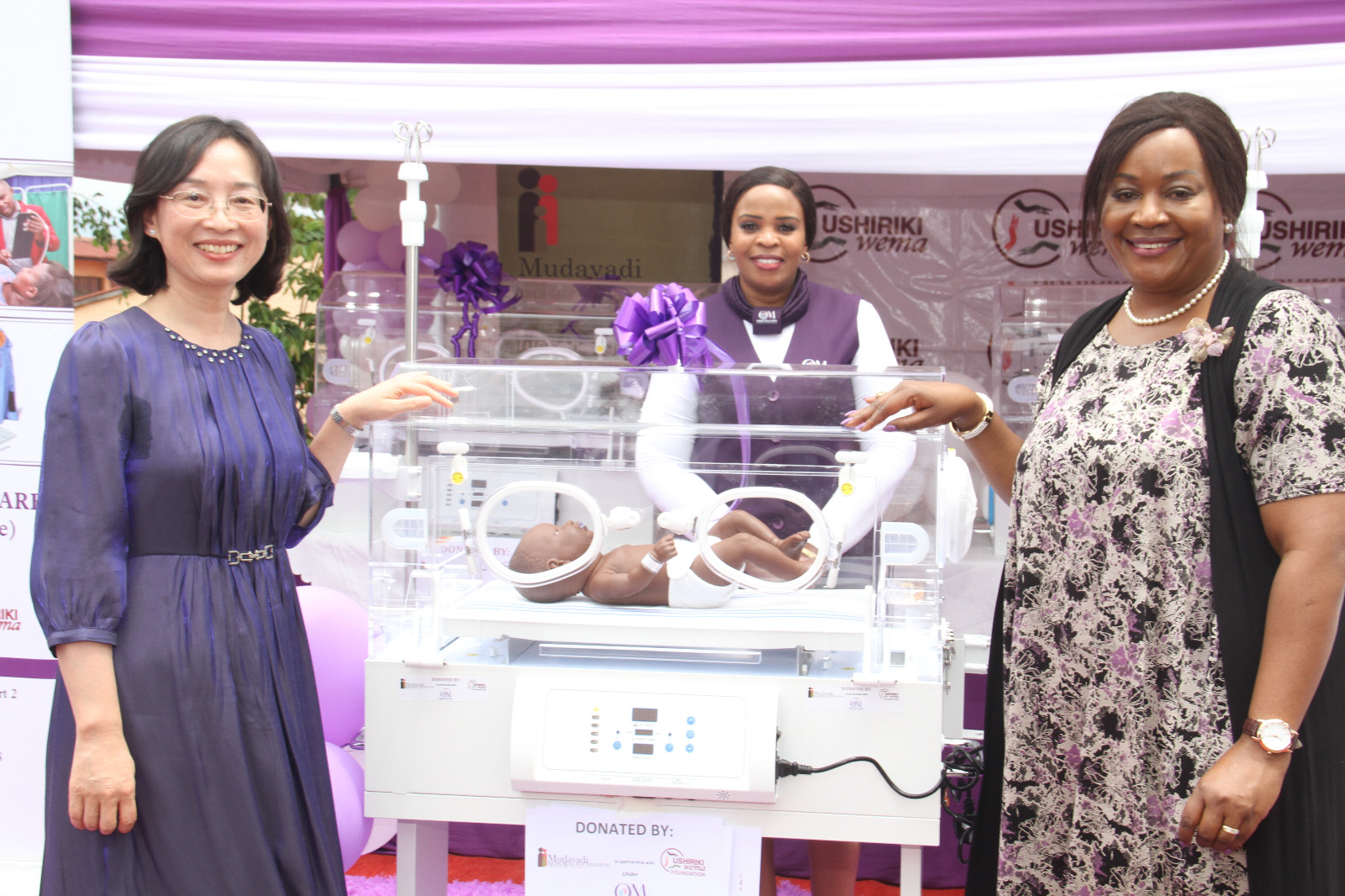
On the third anniversary of the Okoa Malaika Pre-term Mitigation Programme, the initiative officially completed Phase 10 marking the successful rollout of its Strategic Plan A by delivering 92 neonatal incubators to 49 Level 4 and Level 5 public hospitals across 44 Kenyan counties.
Closing the Gap in Central Kenya
The final phase of the distribution targeted six counties in the Mount Kenya and Central regions: Nyeri, Laikipia, Nyandarua, Kirinyaga, Kiambu, and Murang’a.
For frontline medical staff like Peris Muthee, a neonatal nurse at Nyeri County Referral Hospital’s newborn unit, the arrival of modern incubators transforms daily clinical care.
“When a baby is in the uterus, amniotic fluid protects them from the cold,” Nurse Muthee explained.
“When they are born prematurely, an incubator provides that equivalent warmth. Seeing these donations brings us immense joy because it equips us to give every premature baby a real chance at a great future.”
Turning Awareness into Action
Jointly implemented by the Mudavadi Memorial Foundation Trust Fund and the Ushiriki Wema Foundation, Okoa Malaika was launched on World Prematurity Day in November 2023 to tackle preventable neonatal deaths a critical pillar of Sustainable Development Goal 3 (Target 3.2), which aims to reduce neonatal mortality to at least 12 deaths per 1,000 live births by 2030.
Speaking at the handover, Ushiriki Wema Foundation Chairperson Madam Tessie Musalia Mudavadi emphasized that commemorating World Prematurity Day observed globally every November 17 under this year’s theme, “Small babies, big potential. Invest in follow-up care to protect their future” requires tangible commitment beyond symbolic gestures.
“Let us go beyond wearing purple and sharing messages on social media,” Madam Tessie urged. “Meaningful change requires us to turn awareness into action. Care must not end when a baby leaves the newborn unit.”
Beyond equipment delivery, the foundation has paired grassroots interventions with high-level policy advocacy from county leadership up to the Presidency.
Key milestones include: National Obstetrics Point-of-Care Ultrasound (O-POCUS) Guidelines (2024): Enhancing early detection of high-risk pregnancies.
Pre-Service Medical Training (2025–2027): Partnering with the Kenya Medical Training College (KMTC) to embed O-POCUS competencies into Nursing, Clinical Medicine, and Radiography curricula.
Kenya Every Woman, Every Newborn, Everywhere (EWENE) Acceleration Plan (2026–2028): Strengthening continuum-of-care frameworks nationwide, alongside localized blueprints such as the Bungoma County EWENE Plan (2027–2029).
Christopher Wambugu, the Senior Chief for Nyeri Central, welcomed the donation saying he understood firsthand what the machines mean to a parent.
Wambugu recalled that in 2013, his baby was born at only seven months at the same hospital and was immediately placed in an incubator.
“My baby survived because of an incubator,” Wambugu said.
“When your child is born too early, you feel helpless. You look at that small machine and you pray it keeps working. I am standing here today because that machine worked. That is why I know these incubators are not just equipment, they are life,” He added.
Partnerships Saving Tiny Lives
The three-year journey has been bolstered by international diplomacy and local advocacy. Chinese Ambassador to Kenya H.E. Guo Haiya, whose embassy has supported Okoa Malaika for three consecutive years, underscored the universal bond of parental hope.
“We can imagine a mother waiting beside an incubator, gazing at her still fragile child,” Ambassador Guo noted.
“Her deepest wish is simply that the child will safely make it through today and welcome tomorrow in good health. A single piece of medical equipment may save a life, and a child who receives timely medical treatment may change the future of an entire family.”
“China prioritises women’s and children’s health as central to public health and development,” she stated.
Okoa Malaika Brand Ambassador Njoki Mambo echoed the sentiment, paying tribute to healthcare workers and county spouses for championing maternal and child health.
“Behind every incubator is a mother waiting to hold her child, a family hoping for good news, and a healthcare worker doing everything possible when every moment matters,” she said.
“As we mark three years of Okoa Malaika, may we remember that this is not the end of our journey, but a renewed commitment to doing even more for mothers and newborns across Kenya”.
“Let us continue investing in quality newborn care, strengthening our healthcare facilities and ensuring that every premature baby gets the opportunity to fulfil their potential”, She added.
A Holistic Approach to Preterm Survival
While medical technology provides a critical lifeline, health advocates stress that reducing prematurity complications requires community-wide vigilance, including:
Early Antenatal Care: Educating expectant mothers on clinic attendance and recognizing pregnancy danger signs early.
Kangaroo Mother Care (KMC): Promoting continuous skin-to-skin contact to regulate infant body temperature and strengthen maternal bonding.
Exclusive Breastfeeding and Nutrition: Ensuring fragile newborns receive optimal nourishment for neurological and physical development.
Psychosocial Support: Supporting parents through the intense emotional and financial strain of extended neonatal intensive care.
As Okoa Malaika closes its first strategic chapter with 44 counties equipped, stakeholders affirmed that the work is far from over shifting focus toward sustained follow-up care so that every premature newborn in Kenya not only survives, but thrives.
“Together, let us build a world where being born prematurely does not limit a child’s opportunity to survive, thrive, and enjoy a healthy, fulfilling life”.