
Ushiriki Wema Foundation Advances EWENE Agenda with Phase 9 Incubator Donation under Okoa Malaika Initiative
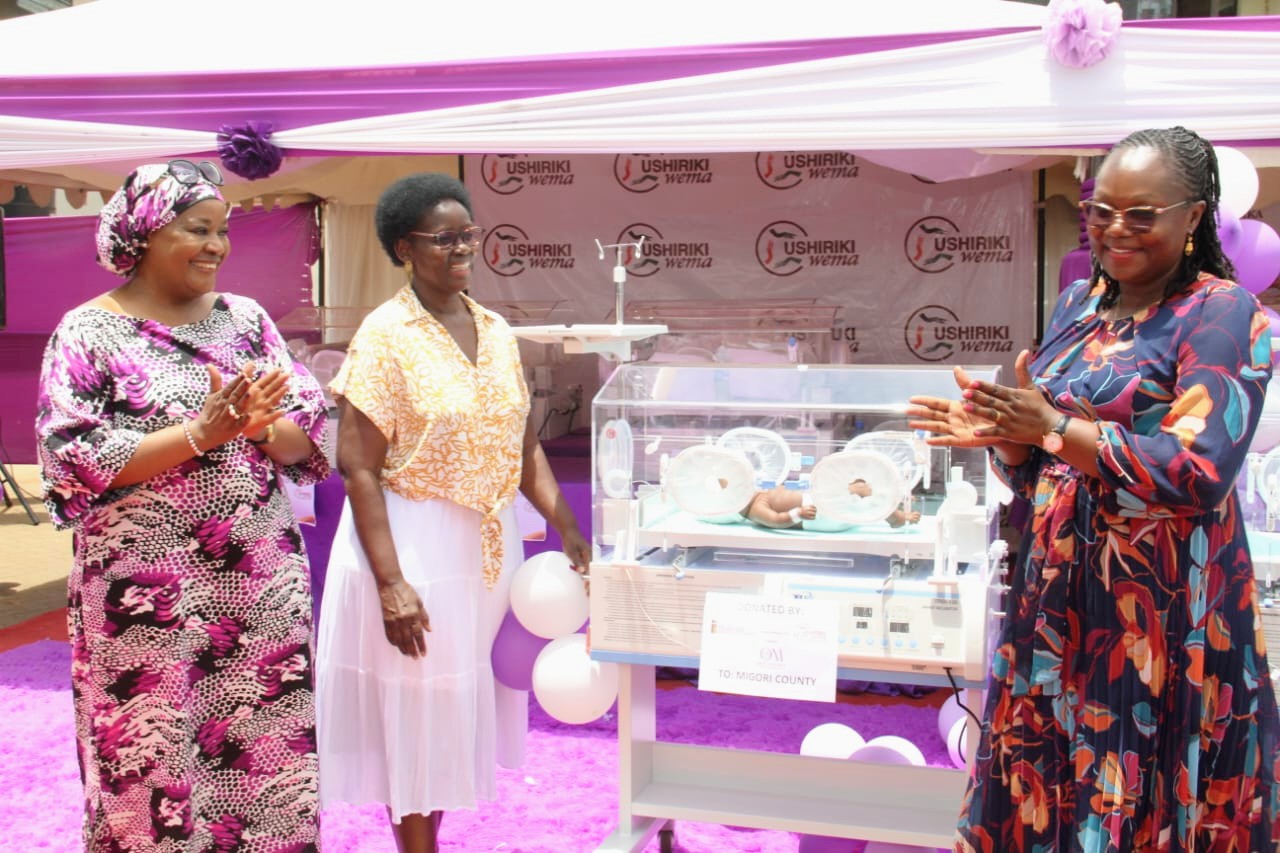
PHOTO: From L-R Tessie Musalia, Spouse to the Prime Cabinet Secretary and Chair of Ushiriki Wema Foundation, County First Ladies Dorothy Nyong’o and Agnes Ochilo (Migori) at Lumumba Sub-County in Kisumu County during the hands over 11 state-of-the-art neonatal incubators.
KISUMU, Kenya, Sep 30 – Healthcare for newborns in six counties across Nyanza region has received a significant boost following the handover of neonatal incubators under Phase Nine of the Okoa Malaika programme.
The initiative, spearheaded under Ushiriki Wema a non-profit organization run by Her Excellency Madam Tessie Musalia Mudavadi under the office of the Spouse of the Prime Cabinet Secretary aims to mitigate infant preterm mortality by equipping facilities with essential healthcare technology.
The latest donation targets health facilities in Kisumu, Siaya, Homa Bay, Kisii, Nyamira, and Migori counties, addressing critical gaps in facilities where health workers often lack the necessary tools to save premature and critically ill infants.
Speaking during the handover ceremony at Lumumba Sub-County Hospital in Kisumu, Mrs. Musalia emphasized that equipment alone is not enough, calling for collective responsibility to sustain healthcare gains.
“Behind every preterm baby fighting for life is a mother and a family waiting, praying, and hoping that their child will survive, A healthcare worker may have the knowledge, skills, and commitment to save a life, but lack the essential equipment to do so”, said Tessie Musalia, Founder and Chairperson, Ushiriki Wema Foundation.
She urged beneficiary county governments and hospital management teams to ensure the incubators are properly installed, maintained, and supported by trained healthcare staff to remain functional for years to come.
Strengthening Regional Healthcare Delivery, Kisumu First Lady Dorothy Nyong’o welcomed the donation, highlighting the broader regional impact of improving local healthcare facilities.
Cross-Border Reach: Referral facilities in the region serve families well beyond local county borders, including patients traveling from neighboring counties and neighboring countries such as Uganda and Tanzania.
Capacity Building: Local healthcare teams were encouraged to maximize the impact of the donated equipment through continuous training and clinical mentorship.
Njoki Mambo, the Okoa Malaika brand ambassador, noted that the incubators provide vital support to frontline health workers caring for vulnerable infants.
“Every baby deserves the best possible start in life, Mambo highlighted the profound human impact behind each donated incubator and expressed gratitude to Madam Tessie Musalia, county governors’ spouses, and local healthcare workers at Lumumba Sub-County Hospital”, said Ms Njoki.
She reaffirmed the programme’s commitment to equipping health teams across the five beneficiary Nyanza counties so that more premature newborns can survive, thrive, and safely return home with their families
The Okoa Malaika programme directly supports Kenya’s broader maternal and child health goals, specifically aligning with the Every Woman, Every Newborn, Everywhere (EWENE) Acceleration Plan 2026–2028.
The national EWENE agenda, launched by President William Ruto on May 28, 2026, sets a strategic framework to end preventable maternal and newborn deaths across the country.
The EWENE Acceleration Plan outlines ambitious 90-90-80-80 targets aimed at transforming healthcare delivery: 90% attendance of at least four antenatal care visits: 90% rate of skilled birth deliveries: 80% access to postnatal care within 48 hours of delivery: 80% access to emergency obstetric and newborn care within a two-hour window.
Through the Okoa Malaika initiative, the foundation is translating high-level policy into practical, facility-level intervention.
By supplying functional incubators, strengthening specialized newborn services, and building health-worker capacity, the initiative directly addresses equipment shortages in public health facilities.
”This is where the impact of high-level advocacy must ultimately be felt: in a trained healthcare worker, a properly equipped facility, and a newborn receiving timely, quality care regardless of where that child is born.”
Mrs. Musalia called on government agencies, local communities, civil society, and development partners to align their healthcare interventions with the EWENE framework.
She stressed that no single entity can solve maternal and neonatal healthcare challenges in isolation, reinforcing the need for sustained multi-sectoral investment.