
Kenya Veterinary Association asks Parliament to address veterinary doctors’ pay disparities and government-paid internships after 19 years of lobbying
NAIROBI, Kenya,Oct 6 – Kenya’s veterinary doctors are asking Parliament to intervene in what they describe as a 19-year pay and internship disparity, warning that continued neglect of the profession could undermine the country’s ability to control zoonotic diseases and protect food security.
The Kenya Veterinary Association (KVA) wants veterinary doctors to be accorded remuneration and allowances comparable to those of other health professionals, including recognition and better support for mandatory veterinary internships.
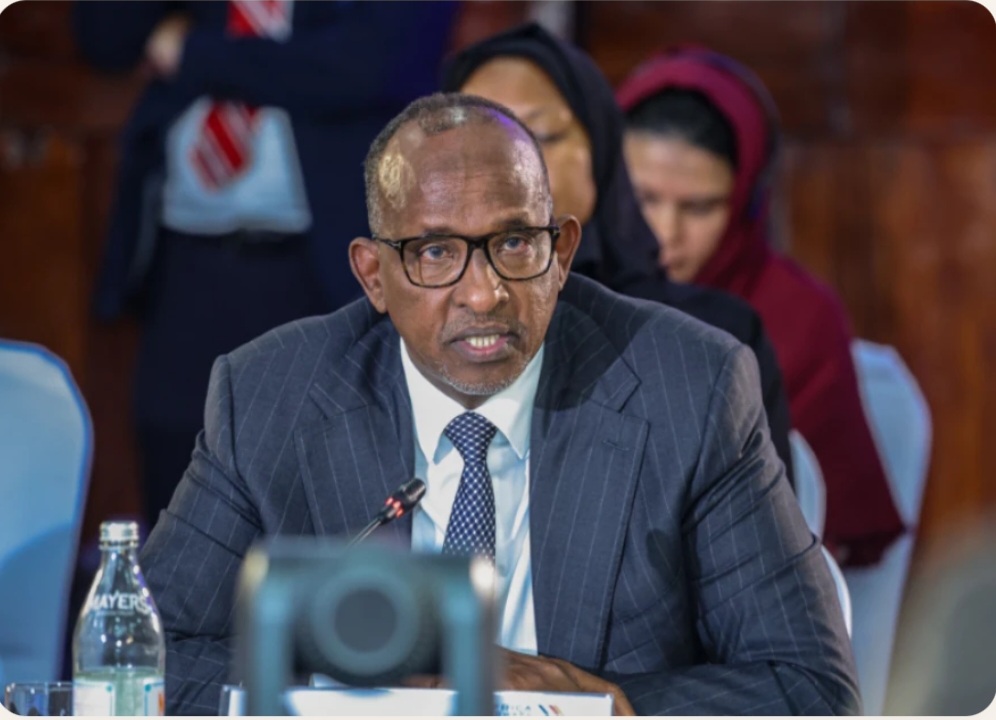
Appearing before the National Assembly Departmental Committee on Labour on Tuesday, KVA President Dr Kelvin Osore said the association had been pushing for harmonisation of veterinary salaries and allowances since 2007, with little progress.
Osore said veterinary doctors undergo five years of university training followed by a mandatory one-year internship, yet their treatment in the public service does not reflect their role within Kenya’s wider health system.“When you look at the classification of occupations in Kenya and internationally, the veterinary profession falls under the health professions, but this hasn’t really reflected in the job grids, salaries or allowances,” Osore said.
According to KVA, veterinary interns currently take home about KSh27,000, which the association says is significantly lower than what comparable health professionals receive.The association has now asked Parliament to compel the Salaries and Remuneration Commission (SRC) and other government agencies to address the disparity.
Ebola puts veterinary workforce debate in spotlight The petition comes at a time when Kenya is confronting the public-health implications of zoonotic disease threats.Osore linked the plight of veterinary professionals to the country’s capacity to detect and contain diseases that can move between animals and humans.
He cited Ebola as an example of why veterinary services should not be viewed solely through the lens of livestock production.“As we speak right now, of course we all know that we’ve had the first case of Ebola recorded in the country,” Osore said, noting that zoonotic disease prevention is part of the veterinary profession’s mandate.
He argued that a demotivated and underfunded veterinary workforce could ultimately have consequences beyond animal health.“The impact of a demotivated veterinary workforce hits home in controlling disease spreading from animals to human beings,” he said.
Veterinary professionals play roles in disease surveillance, livestock health, food safety and the prevention of infections that can cross from animals to humans.
KVA therefore wants the government to treat veterinary services as an integral part of the country’s public-health and economic infrastructure. Interns at the centre of petitionWhile the association is seeking harmonisation of several allowances for serving veterinary officers, Osore said the petition also specifically addresses the situation of veterinary interns.
Among the allowances cited by KVA are risk, extraneous, non-practice and call allowances.Osore said veterinary officers currently receive a risk allowance of about KSh5,000, compared with the KSh30,000 the association says is paid to comparable medical professionals.Some of the other allowances, he said, are currently not paid to veterinary officers.
The association argues that veterinary doctors face significant occupational risks, including exposure to infectious diseases and other hazards associated with clinical and field work.
KVA maintains that the issue is not a new demand but one that government has previously acknowledged.Osore said a government position on harmonisation was taken in 2007 and reaffirmed through a National Treasury circular in 2017. Despite this, he said, the changes have not been implemented.19 years of waitingThe prolonged dispute is now at the centre of KVA’s petition to Parliament.
Osore said the association had engaged the SRC, Public Service Commission and the State Department for Livestock Development through correspondence, technical submissions and meetings.But the association says those efforts have not produced the desired changes.“We’ve been on this journey for 19 years, since 2007,” Osore said.
KVA’s written submission to Parliament similarly argues that veterinary doctors have repeatedly sought administrative intervention without receiving what it considers a satisfactory, evidence-based explanation for the disparity.
The association has consequently turned to Parliament, hoping that the Labour Committee will break the deadlock.Threat of industrial actionThe frustration could eventually spill into industrial action if the matter remains unresolved.
Osore said veterinarians had so far opted for constitutional and administrative engagement rather than strikes, despite what the association considers years of unfair treatment.But he warned that the profession could consider other options.
“Sometimes when you don’t go to the streets, people take that calmness as timidness,” Osore said.He added that the government should address the concerns before industrial action affects public health, livestock production or international trade.
KVA later said it remained confident that Parliament would provide a solution, but reserved the right to take industrial action if the petition failed.“We have realised that the government mostly listens to industrial action more than gentleman conversations,” Osore said.
Beyond salariesFor KVA, however, the dispute is about more than what veterinary doctors earn.Osore linked the profession to Kenya’s livestock economy, food supply and disease-control systems, arguing that investment in veterinary services is necessary if the government wants to expand the livestock sector.
He challenged the government to match its political messaging on livestock development with funding for the professionals responsible for protecting the sector.The association also questioned the contradiction between promoting livestock as a pillar of economic development while leaving the veterinary workforce underfunded.
“We can’t keep talking about how livestock can transform the livelihoods of people in the ASAL areas without funding this critical profession that ensures that livestock subsector produces for the nation,” Osore said.
The petition now puts Parliament at the centre of a dispute that has outlasted several administrations.For veterinary doctors, the question is no longer simply whether they should receive higher allowances.
It is whether a profession responsible for protecting animals, food supplies and the country from zoonotic disease threats should continue operating under what they describe as an unequal public-service system.
And with KVA saying it has waited 19 years for a resolution, the committee’s response could determine whether the long-running dispute finally moves from administrative correspondence to concrete government action.