
Kenya Counts Its Seedlings. Who Counts the Forests That Vanish?
Each year Kenya reports bigger tree-planting numbers: more seedlings in the ground, more volunteers turning out, more restoration goals declared. Environmental defenders now want to know what the national tally leaves out: how much standing forest is being lost while the planting is celebrated?
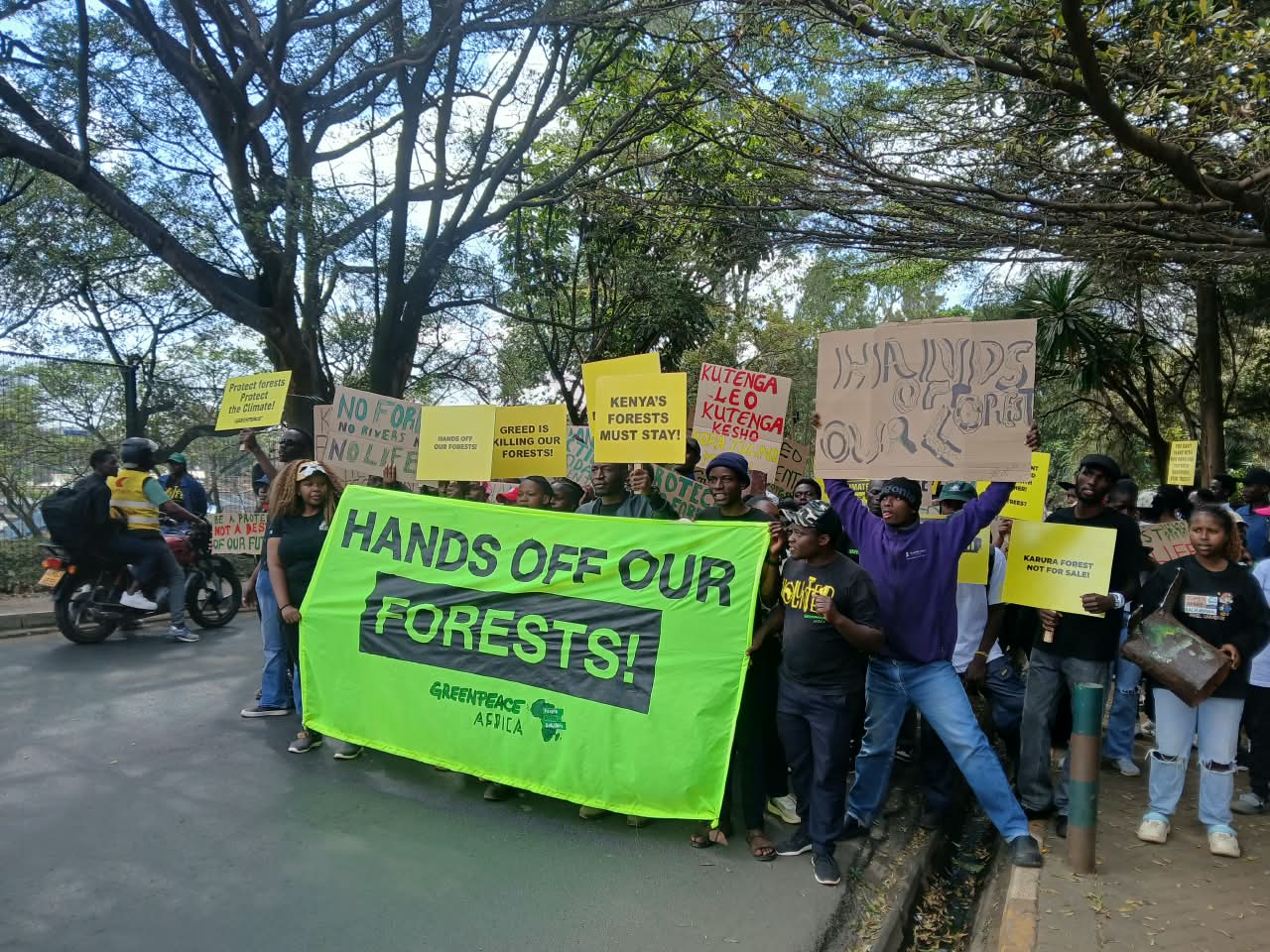
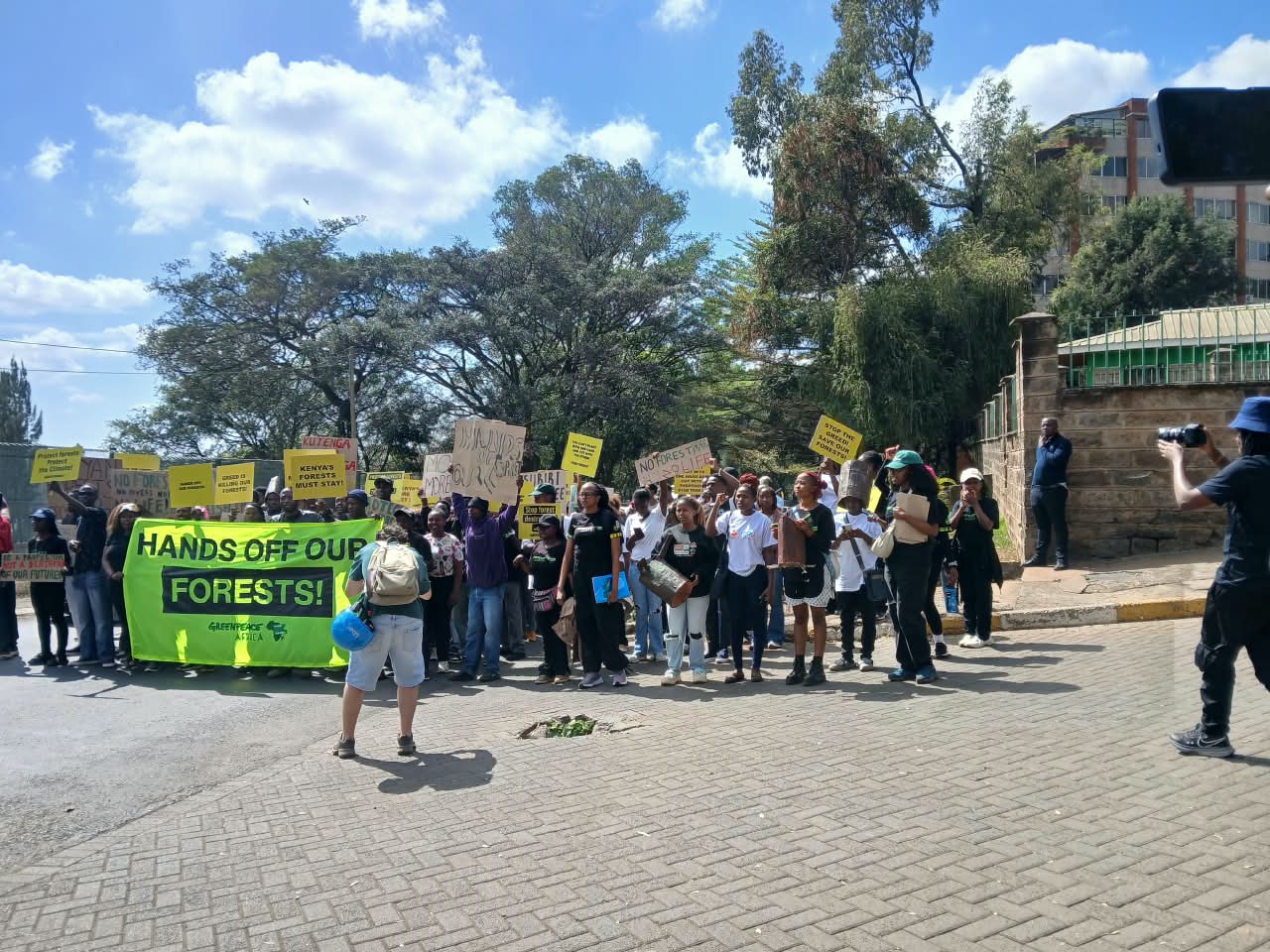
More than 200 Kenyans took that question to the Ministry of Environment, Climate Change and Forestry. They delivered a petition with over 60,000 signatures and an open letter urging government to safeguard the country’s remaining forests.
Sherie Gakii, Communications and Story Manager at Greenpeace Africa and a leader of the Kenya Forest campaign, says the demand was simple. The group wasn’t asking for more planting. It was asking for protection of forests that have already matured.
“We want something different,” Gakii said. “We’re asking for a clear road map of how they intend to protect our forest.”
The distinction is at the heart of a growing debate: planting trees and protecting forests are not the same thing.
A seedling is easy to log in an official report. A mature forest resists tidy accounting. It stores and releases water, shelters wildlife, sustains livelihoods, and becomes woven into the identity of the people who live near it. Petitioners argue that once such a forest is cleared, seedlings planted somewhere else cannot instantly make up the loss.
The open letter calls Kenya’s forests “water towers” that feed rivers, steady rainfall patterns, and support millions of people, especially those living on forest edges. It also warns that protected public forests are increasingly being opened up to development projects, a trend that worries both citizens and conservation groups.
For the campaigners, then, the signatures are not just a big number. They are meant to signal public support for a new way of measuring environmental success. The group wants the government to disclose:
- how much natural forest has been lost or degraded
- which excisions and easements have been approved
- what has been done about illegal logging and land grabbing
- how many of the trees planted under restoration programmes survived
Gakii wants these questions to become a fixture of Kenya’s yearly environmental debate.
The government’s current flagship is the 15 billion tree programme, which aims to lift national tree cover to 30 per cent by 2032. The petitioners say they aren’t against planting. Their worry is that planting and protection can pull in opposite directions when the planting is applauded while natural forests keep shrinking.
“15 billion trees that we are claiming to plant cannot replace the forests that we are cutting down,” the open letter says.
A view from the forest floor
For Joseph Ihachi, a Greenpeace volunteer and youth representative at Ngong Forest Association, the issue is personal. He has spent three years on conservation and restoration work, rallying young people around Ngong Forest.
He says the threat reaches well beyond one site. “Ngong Forest is under threat, Aberdare Forest is under threat, we have Karura Forest under threat,” he said, adding that Nairobi National Park is also under strain.
His concern extends to the people who live beside these ecosystems. He wants communities consulted before decisions are made, not after. “Public participation is the first thing,” he said.
Conservation filmmaker and Friends of Nairobi National Park advocate Sham Patel makes a similar case, arguing that communities should be involved before projects start rather than after construction is underway. In his view, Kenya doesn’t have to choose between infrastructure and nature. Cities and roads can be designed around ecosystems instead of cutting through them.
On forests, he is blunt: “You can break buildings, you can rebuild them, but you can’t rebuild forests.”
The cases on the record
The open letter cites a string of examples: Imenti, Nairobi National Park, Ngong Road Forest, Karura, Suam, Mau and Aberdare. It says they point to a wider flaw in how decisions about public forests are made.
- Imenti Forest: The letter flags the excision of 2.7 hectares and reported plans for an airstrip, a golf course and a state lodge. It also mentions reports that construction continued despite a court order against the airstrip.
- Nairobi National Park: It points to court filings over moving the Nairobi Animal Orphanage and building a 1,300-vehicle parking facility, and notes that thousands of Kenyans have gone to court to defend the park.
- Ngong Forest: Gazetted in 1932 at roughly 2,850 hectares, the forest has been cut to about 1,224 hectares through repeated excisions, the letter says. It also cites heavy machinery arriving in July 2026 for a road linking Talanta Stadium to Bomas, and refers to conservatory orders issued in a related case.
The campaigners’ point is that forests rarely disappear in a single dramatic moment. They are chipped away by a sequence of decisions until a continuous ecosystem becomes scattered fragments. The letter puts it this way: “First a road, then a way leave, then a building, then the forest shrinks.”
Law and governance
The campaign also takes issue with changes to the legal framework. Gakii singled out the 2026 amendment to Section 56(2) of the Forest Conservation and Management Act, which she says makes it easier for the Kenya Forest Service to grant easements and wayleaves across forests. The campaign wants it repealed and stronger governance put in its place.
The government’s response
The Ministry says it wants to work with the very groups raising these concerns. Kiraha Ndung’u, an under secretary in the State Department of Forestry, said government is committed to protecting and restoring forests while allowing neighbouring communities to benefit and meeting their economic and social needs.
On receiving the petition, he did not brush aside the concerns. He said technical officials would need to examine them and acknowledged that government should share the information it holds. He proposed a meeting between Ministry officials and leaders of the environmental groups, and said a meeting with Cabinet Secretary Deborah Barasa was under consideration.
What happens next
The petitioners asked for a written reply within 30 days. They also want the Ministry to use Mazingira Day on October 10 to unveil a forest protection plan, and to report publicly on protection outcomes in future years instead of reporting only on trees planted.
The clock has started. For the signatories, the question is no longer whether they were heard, but what government will do with what it heard.
Gakii says Greenpeace Africa and its partners see the march as a milestone, not an ending. They plan to keep pressing for stronger protection and to offer policy recommendations to government.
Ihachi sees the forest as more than state property. “This forest is not for the government. We are there for the forest and the forest is there for us,” he said.
His words sum up the argument behind the petition. Kenya’s environmental future will depend not only on how many seedlings go into the ground each year, but on whether the mature ecosystems already holding water, wildlife, livelihoods and communities survive.
The hardest figure to produce may not be the tally of trees planted. It may be the number of forests still standing, and for more than 60,000 Kenyans, that is the number they want government to protect.