Ministry and Partners Implement Male-Engagement Initiative to Reduce Maternal and Newborn Deaths
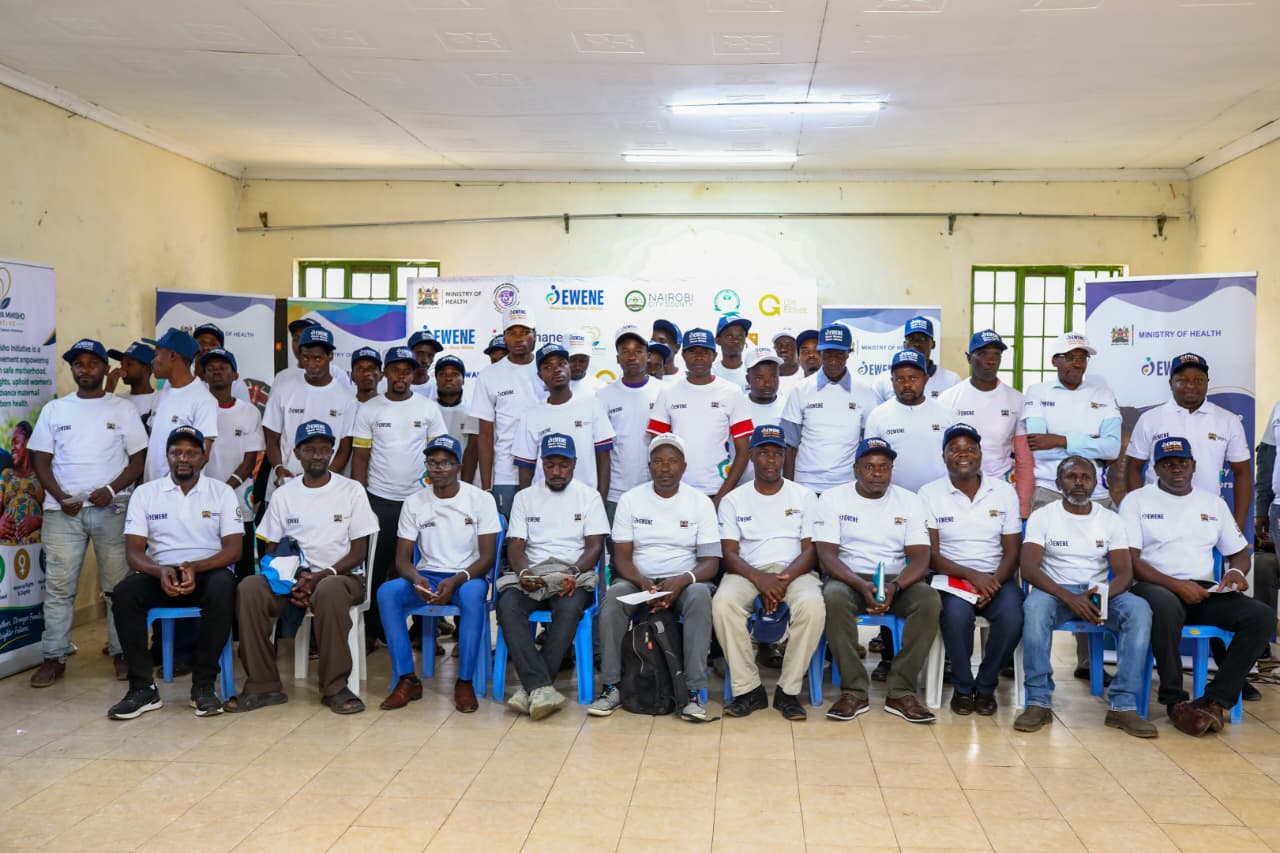
NAIROBI, Kenya, Nov 5 –The Ministry of Health has held its first male-engagement forum under the Every Woman Every Newborn Everywhere (EWENE) campaign, bringing fathers and expectant partners together in Dandora to learn how to prevent maternal and newborn deaths.
The event, a Baraza La Uzazi, was organised with Machozi Ya Mwisho and Tujulishane Kenya. Men put questions directly to doctors and nurses on antenatal care, delivery and postnatal care. Several men who had lost wives or children also shared their stories.
Mary Magubo of the ministry’s Division of Reproductive, Maternal, Newborn and Child Health, who chairs the EWENE advocacy, communication and community engagement team, said men had been overlooked for too long. “They need their own space to be able to open up,” she said. Women officials stayed outside during the session so the men could speak freely.
Ministry to issue guide for health facilities
Magubo said the ministry will develop a guide setting out an essential package for male engagement, and will align it with respectful maternity care. It is meant to guide facilities on how to receive men who accompany their partners. She said officials had learned things at the forum they had not understood before.
Fathers have complained that some health workers turn them away. Cleophas Tsuma, a Dandora logistics worker who attended his wife’s clinic visits and labour in Kilifi in 2014, said he had been told to wait outside at facilities. “You’re like, why did I come?” he said. He argued that change must begin with health workers, who share the society’s assumptions, and then reach women.
Tsuma said he was the only man in the labour ward when his wife delivered. The matron waived the hospital bill, he said, because she had never seen a father stay through the whole process.
Knowledge gap among bereaved fathers
Lawrence Omondi, co-founder of Machozi Ya Mwisho, said his organisation has spoken with nearly 100 men whose partners died in childbirth. Most could not explain what happened to their wives, including the condition or the danger signs. “We learned one gap,” he said. “The knowledge gap.”
Omondi, who lost two sons, said most men are willing to support their partners but must choose between clinic visits and earning a living. He noted that about 82 percent of Kenyans work in the informal sector. “If you don’t work, you cannot eat.”
He said culture remains a barrier. At a Dandora health facility on the Monday of the week of the forum, he counted one man among more than 30 women. Waiting areas, he said, are too small even for mothers. He said attitudes are changing, however. “It is fading away.”
His organisation also runs Darasa La Uzazi, a virtual class for expectant fathers. Omondi said men in Kibera and Karen showed equally little knowledge of maternal care. He added that the organisation provides psychosocial support through volunteers and partner groups for men affected by loss, and that “we cannot be losing 15 mothers in a day.”
Youth group cites rising turnout
Janet Otari of Tujulishane Kenya, a youth-led advocacy group working in Nairobi, Kajiado, Nyamira, Kwale and Migori counties, said turnout showed progress. “We wouldn’t have had such numbers maybe before the launch,” she said. She said the myth that men only provide and women care for children remains the main obstacle, and that education is the remedy.
Senior Chief Rufus Mwangi of Dandora A Location, which covers Phase One and Phase Two, opened the forum. He urged fathers to take responsibility for maternal and child care, and to make informed decisions and seek care early. “Men need to pull up their socks,” he said.
EWENE targets
EWENE aims for 90 percent of women to receive at least four antenatal contacts and 90 percent of births to be attended by skilled health personnel. It also targets postnatal care within two days of birth for 80 percent of women and newborns, and quality care for small and sick newborns at 80 percent of target facilities. The initiative says male involvement provides emotional, psychological and practical support, which reduces stress and improves adherence to antenatal care.
Magubo said the programme has delivered commodities and equipment, and that about 5,000 midwives have been employed. She also urged fathers to use paternity leave to support mothers.
Mortality falling
The 2025/2026 Kenya Mini Demographic and Health Survey from the Kenya National Bureau of Statistics shows under-five mortality at 37 deaths per 1,000 live births, down from 41 in 2022. Infant mortality fell from 32 to 30, and neonatal mortality from 21 to 19. Preventable deaths remain a concern.