
Kenya Calls for Increased Investment in Coastal Forests and Drylands to Boost Restoration and Eco-Jobs
NAIROBI, Kenya, July 23 – In a bid to turn ecological recovery into an engine for economic growth, Kenya is calling for increased investment and stronger partnerships to accelerate the restoration of Kenya’s dryland and coastal ecosystems noting that the initiative will create green jobs, strengthen climate resilience and unlock sustainable economic opportunities.
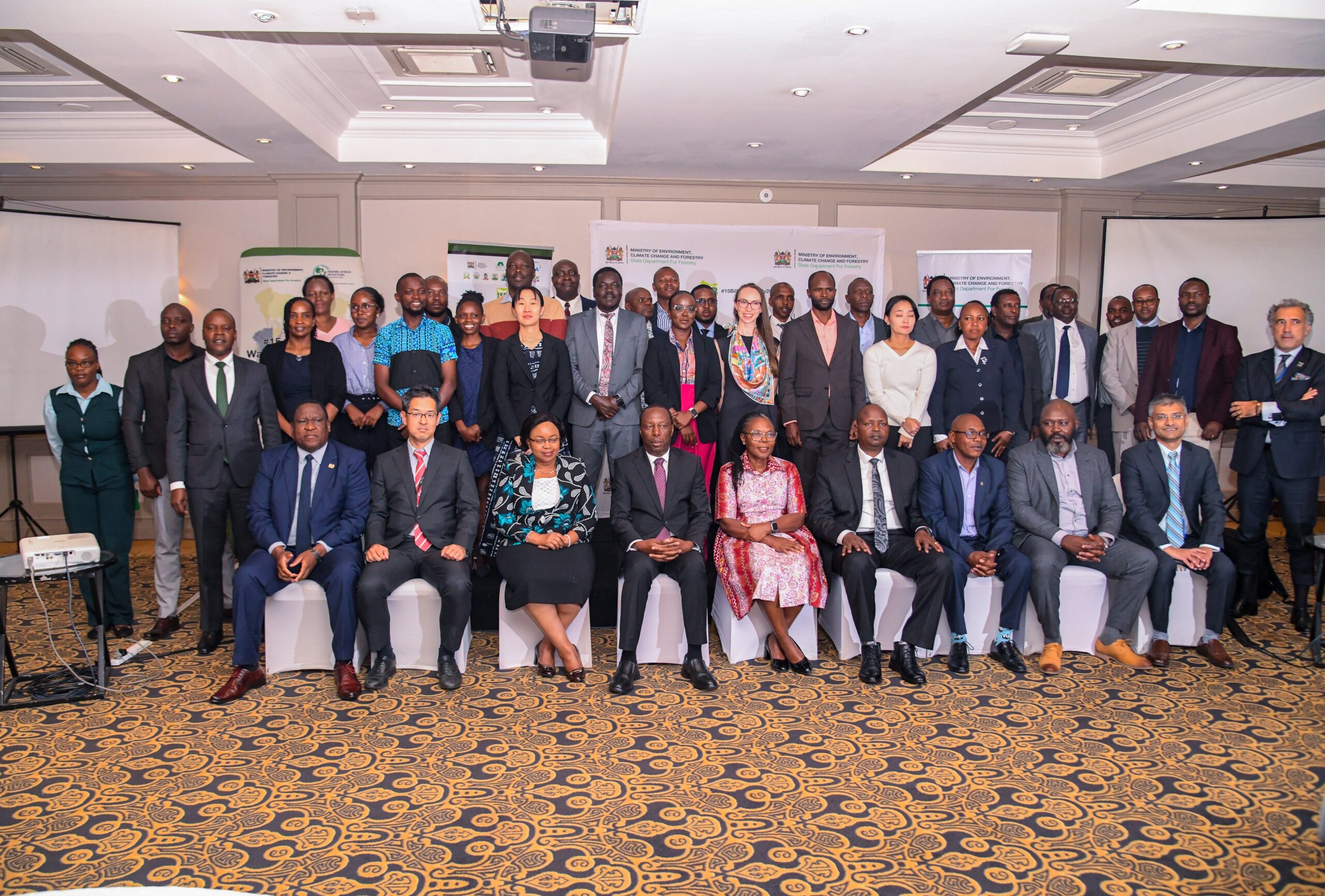
Forestry Principal Secretary Gitonga Mugambi while speaking during a breakfast forum that brought together development partners, research institutions, private sector actors and other key stakeholders to strengthen collaboration and mobilize strategic investments for sustainable forestry, landscape restoration and climate resilience in Kenya.
The high-level forum served as a platform for advancing dialogue on innovative financing mechanisms, strategic partnerships and coordinated interventions aimed at accelerating the implementation of the Presidential 15 Billion Tree Growing Programme and Kenya’s broader forest landscape restoration agenda.
PS Mugambi underscored the critical role of multi-stakeholder partnerships in delivering sustainable forest management outcomes and achieving Kenya’s national climate and development priorities.
“Today’s forum presents a unique opportunity for us to collectively share and reflect on the untapped opportunities found in our dryland and coastal ecosystems. Most critical is to forge a common path to understand these vital landscapes for the benefit of current and future generations,” said Mugambi.
The PS noted that Kenya’s ASALs account for about 89 percent of the country’s landmass and are endowed with unique biodiversity and natural resources that can support sustainable economic growth under the Bottom-Up Economic Transformation Agenda.
Discussions focused on strategic investment opportunities in climate-resilient restoration of ASAL ecosystems, mangrove conservation and rehabilitation, agroforestry expansion, commercial forestry value chains, sustainable forest based enterprises, and the integrated management of invasive alien species, with particular emphasis on Prosopis.
PS Mugambi reiterated government’s commitment to reversing environmental degradation through the National Landscape and Ecosystem Restoration Strategy 2023–2032, which seeks to restore 10.6 million hectares of degraded landscapes while contributing to the national target of achieving 30 percent tree cover by 2030.
“We have developed a visionary roadmap aimed at restoring 10.6 million hectares of degraded landscapes while contributing significantly to achieving the national target of 30 percent tree cover. This strategy has its foundation in science not only to restore ecosystems but also to spur economic growth, create green jobs, improve food security and strengthen community resilience,” he added.
Further, He emphasized that government efforts alone would not be sufficient to achieve the ambitious restoration targets, calling for closer collaboration between national and county governments, local communities, development partners, researchers, civil society and the private sector.
“The success of this restoration agenda cannot be achieved by government alone. It requires a whole-of-society approach founded on partnership, collaboration, innovation and shared responsibility”.
He urged partners to expand investments in forestry restoration, saying such investments would create employment opportunities for youth and women while enhancing biodiversity conservation and sustainable livelihoods.
“The restoration of drylands and mangrove ecosystems is not merely an environmental undertaking. It is an investment in climate action, economic growth, poverty reduction, biodiversity conservation, peacebuilding and sustainable development,” Mugambi added.
Kenya Forest Service Chief Conservator of Forests Alex Lemarkoko said the country has made notable progress in managing forest resources, with forestry increasingly becoming central to national development.
“This country has made significant progress with regard to the management of our environmental resources, and more specifically, our forest resources,” he said.
Larmakoko observed that while participatory forest management has been in place for years, experience has shown that involving local leadership is critical to the success of conservation programmes.
“Leadership has now proved to play a critical role in ensuring that Participatory Forest Management Plans succeed. Where leaders have taken an active role in our programmes, we have seen success,” he said.
He called for greater recognition of community leaders as key stakeholders in mobilizing local communities and strengthening forest conservation initiatives.
Lemarkoko noted that forestry should no longer be viewed solely as an environmental sector but as a key contributor to agriculture, livestock production, economic growth and even national security.
“We have demonstrated that even national security challenges can be addressed through good forestry practices, and we have witnessed this in several parts of the country,” he said.
He also urged policymakers to allocate more financial resources to forestry, arguing that the sector’s contribution to the economy has often been overlooked during national planning.
The Chief Conservator further identified forest fencing as one of the most effective interventions for protecting critical water towers and supporting natural regeneration.
“It not only helps protect the country’s water towers but also supports natural regeneration by safeguarding forest ecosystems. We need our forests to remain intact and protected,” Lemarkoko said.
The forum also showcased a portfolio of investment ready projects developed under the Project for Strengthening Forest Sector Development and Community Resilience to Climate Change through Sustainable Forest Management and Landscape Restoration (SFS-CORECC), which is being implemented in partnership with the Japan International Cooperation Agency (JICA).
A clarion call was made to dvelopment partners, the private sector and other stakeholders to deepen collaboration, leverage technical expertise and mobilize investments that will accelerate forest and landscape restoration while enhancing ecosystem resilience, biodiversity conservation and sustainable livelihoods.