

PropelA Dual Apprenticeships Yield 30% Return on Investment for Businesses in Kenya, Study Reveals
NAIROBI, Kenya, July 21 – As Kenya grapples with persistent youth unemployment and a growing industrial skills gap, a landmark business case study released today provides compelling evidence that investing in industry-led skills development delivers measurable economic returns.
The independent Return on Investment (ROI) study on Kenya’s PropelA Dual Apprenticeship Programme conducted by Orange and Teal on behalf of Swisscontact found that participating businesses achieve an average 30% Return on Training Investment (ROTI), With Companies fully recovering their investment within three years while generating roughly KES 2 million in net value per business.
Unveiled at the PropelA Business Impact and Investment Insights Breakfast in Nairobi, convened by Swisscontact it brought together private sector leaders, development partners, government representatives, industry associations and workforce development stakeholders.
According to the study, nearly 87% of the financial value created stems directly from apprentice productivity gains, highlighting the direct link between skills, productivity, and business performance.
Swisscontact Kenya Country Director, Sharon Mosin while speaking during the event said the findings challenge conventional thinking on skills development.
“The findings challenge us to rethink how we view skills development, Skills are not simply a social investment they are economic infrastructure”, said Mosin.
“Just as roads connect markets and energy powers industry, skilled people drive productivity, competitiveness and growth, When businesses invest in skills, they are investing in their own future”,added Mosin.
As the country pursues industrialisation, infrastructure expansion, affordable housing, manufacturing growth, and job creation under the Bottom-Up Economic Transformation Agenda (BETA), demand for skilled technical talent continues to outpace supply.
At the same time, youth unemployment remains a major challenge. According to ILO modelled estimates, youth unemployment among 15–24-year-olds in Kenya stood at approximately 15.2% in 2025, highlighting ongoing difficulties for young people transitioning into productive employment.
“The challenge is not simply a lack of jobs. It is a disconnect between the skills employers’ need and the skills many young people possess when entering the labour market”.
According to Swisscontact, these are not separate challenges, they are symptoms of a larger disconnect between skills development, enterprise needs and employment opportunities.
PropelA was established to bridge this gap by placing employers at the center of workforce development.
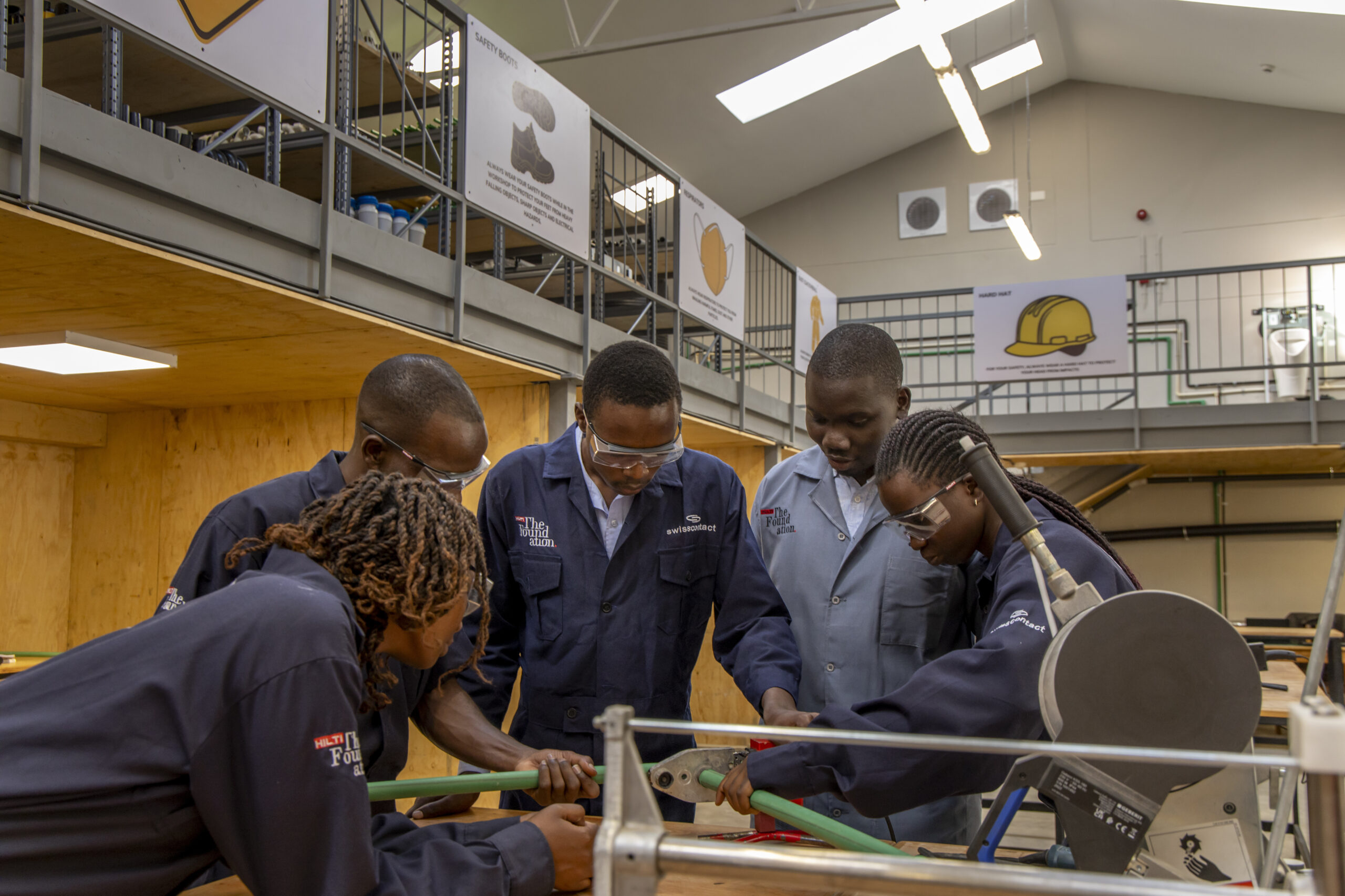
The dual apprenticeship model combines 75% structured workplace learning with 25% classroom instruction, ensuring young people acquire practical experience, industry-relevant competencies, and nationally recognised certification while contributing productively to businesses.
Since its launch in 2022, initially piloted in partnership with Don Bosco Boys Town Technical Institute PropelA has partnered with over 70 companies, trained more than 400 young people, and achieved an employment rate exceeding 80% demonstrating its potential to address both skills shortages and youth unemployment.
The study also highlighted that small and medium-sized enterprises (SMEs) stand to benefit significantly from apprenticeships as a practical tool for boosting enterprise competitiveness.
Initially focused on electrical installation and plumbing, PropelA has expanded its Phase 2 rollout into welding, elevator and escalator maintenance, hospitality and general facility services.
The model is also expanding regionally into Mombasa and Kilifi counties, as well as cross-border into Tanzania, While presenting significant opportunities for adaptation across manufacturing, energy, transport, agribusiness, and other high-growth sectors.
Further, the findings demonstrate that industry-led apprenticeships can simultaneously strengthen SME productivity, improve employment outcomes, and develop the skilled workforce required to achieve Kenya’s Bottom-Up Economic Transformation Agenda (BETA).
Addressing delegates during the FINAS 2026 Summit in Nairobi, Swisscontact Country Director Sharon Mosin emphasized that technical skills training must be reclassified as essential financial infrastructure.
She noted that enhancing operational and technical capabilities across enterprises directly de-risks private investments, improves workforce productivity and positions local businesses to secure commercial capital.
“Skills are not just social investment they are financial infrastructure. Every skilled entrepreneur reduces investment risk, every competent technician improves productivity and every well-managed enterprise becomes more attractive to lenders”.
With proven returns for companies, strong employment outcomes for young people, and a model anchored in both industry demand and national systems, PropelA presents a scalable workforce development solution for stakeholders seeking sustainable, market-driven impact.
“For years, we have discussed youth unemployment as one challenge and skills shortages as another the evidence shows they are two sides of the same coin,” Mosin added.
“PropelA demonstrates that when employers become co-investors in skills, businesses gain productivity, young people gain opportunity, and the economy gains a stronger workforce”.