
Swisscontact: Human Capital Key to Transforming Africa’s Agri-Food Systems
NAIROBI, Kenya, July 3 – As policymakers and investors across the continent increasingly focus on financing African agri-food systems, a critical piece of the continent’s farming transformation is being left out of the blueprint.
Swisscontact is sounding an alarm, warning that injecting capital into agriculture will fail to yield long-term results without an equal, urgent focus on building human capital-the skills, knowledge and capabilities of the people driving the sector.
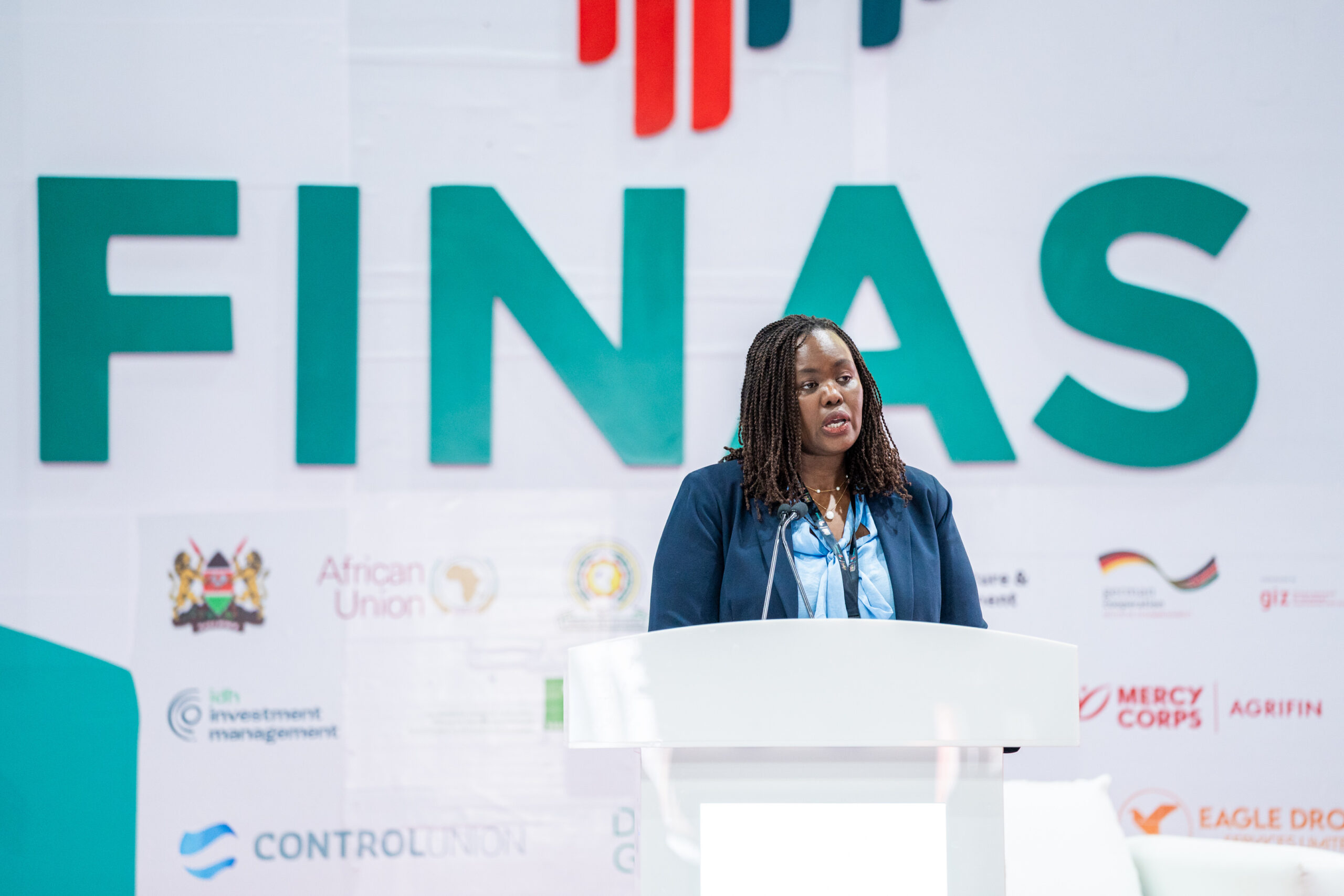
Sharon Mosin, Swisscontact Kenya Country Director while speaking at the Financing Agri-food Systems Sustainably in Africa (FINAS 2026) Conference in Nairobi challenged stakeholders to look beyond finance as the primary driver of agricultural growth and instead focus on the capabilities, systems and partnerships that enable investment to deliver lasting impact.
Addressing policymakers, financial institutions, private sector leaders, development partners and youth representatives, Mosin issued a stark reminder that Africa cannot achieve true agricultural transformation without a synchronized approach to Skills, Systems and Capital.
She argued that the three pillars are entirely co-dependent, warning stakeholders that letting one pillar fail will inevitably trigger the collapse of the continent’s emerging agribusiness ecosystem.
“For years, we have focused on increasing finance for agriculture these conversations are necessary. But perhaps we have overlooked the most important investment of all: investment in people,” said Mosin.
“Agriculture cannot transform without skilled people to drive it”.
Additionally, Mosin highlighted a growing paradox across Africa’s agri-food systems as employers struggle to find skilled workers, graduates struggle to find jobs, financial institutions struggle to identify investment-ready businesses, and young entrepreneurs struggle to access finance.
According to Swisscontact, these challenges are not isolated problems, but symptoms of disconnected systems linking education, enterprise and finance.
She stressed that agriculture has evolved into a sophisticated knowledge industry encompassing logistics, data science, biotechnology, food processing, renewable energy, climate adaptation, digital finance and entrepreneurship.
Yet many training systems continue preparing young people for the agriculture of the past rather than the opportunities of the future.
Drawing on Swisscontact’s market systems development approach, Mosin emphasized that skills should not be viewed merely as a social investment but as economic infrastructure.
“Capital follows confidence. Confidence follows capability. Capability comes from skills, every skilled entrepreneur reduces investment risk, while every competent technician improves productivity and competitiveness”, she noted.
The keynote also highlighted the importance of employer-led skills development, apprenticeships, stronger industry partnerships and closer collaboration between governments, training institutions, businesses and development partners.
“Such collaboration is essential for creating integrated systems that connect learning to earning and support long-term market development”.
As climate change continues to reshape agriculture, Mosin underscored the growing demand for competencies in regenerative agriculture, carbon markets, nature-based enterprises, climate adaptation, renewable energy, and circular economy approaches.
Swisscontact’s participation at FINAS 2026 also reflected these themes through discussions on youth employment, enterprise competitiveness, and financing nature-based, climate-smart agriculture enterprises.
Across these engagements, a common message emerged: sustainable agricultural transformation depends not only on mobilising capital but on strengthening the capabilities, incentives, and market systems that allow individuals and enterprises to use that capital productively.
“The future of African agriculture will not be determined by how much land we cultivate, It will be determined by how many capable young people we cultivate.”
Further, she stressed that Governments have an important responsibility as they must create enabling policies by modernising TVET systems, Invest in agricultural colleges, Reward innovation, Strengthen partnerships with industry.
“Governments cannot do this alone The private sector must become a co-investor in skills”.
Mosin noted that Businesses cannot continue saying they cannot find skilled workers while remaining absent from the training process.
She stated that Industry must help shape curricula, Provide apprenticeships, Offer mentors and open workplaces for experiential learning highlighting that business invests in skills, business invests in its own competitiveness.
“Let us stop viewing youth skills development as a social programme, something to add onto a program Let us begin viewing it as economic infrastructure”.
“We invest billions in roads because roads connect markets, electricity because energy powers industry irrigation because water improves productivity Yet the most important infrastructure of all is human capability.Without skilled people, every other investment underperforms”.
She challenged stakeholders to build skills that markets actually demand, not qualifications that employers struggle to use.
Systems that connect education, enterprise and finance, so that young people experience a seamless pathway from learning to earning.
Recognise that capital becomes more effective when it is paired with capability.
“If we succeed in doing these three things, we will not simply create jobs. We will create entrepreneurs, build competitive agribusinesses, strengthen food systems, improve resilience to climate change and unlock the full potential of Africa’s greatest asset its young people”.
“The future of African agriculture will not be determined by how much land we cultivate, It will be determined by how many capable young people we cultivate.Because when we invest in skills strengthen systems and unlock capital we do more than transform agriculture”.