The Women Who Hold East Africa’s Food Future in Their Hands
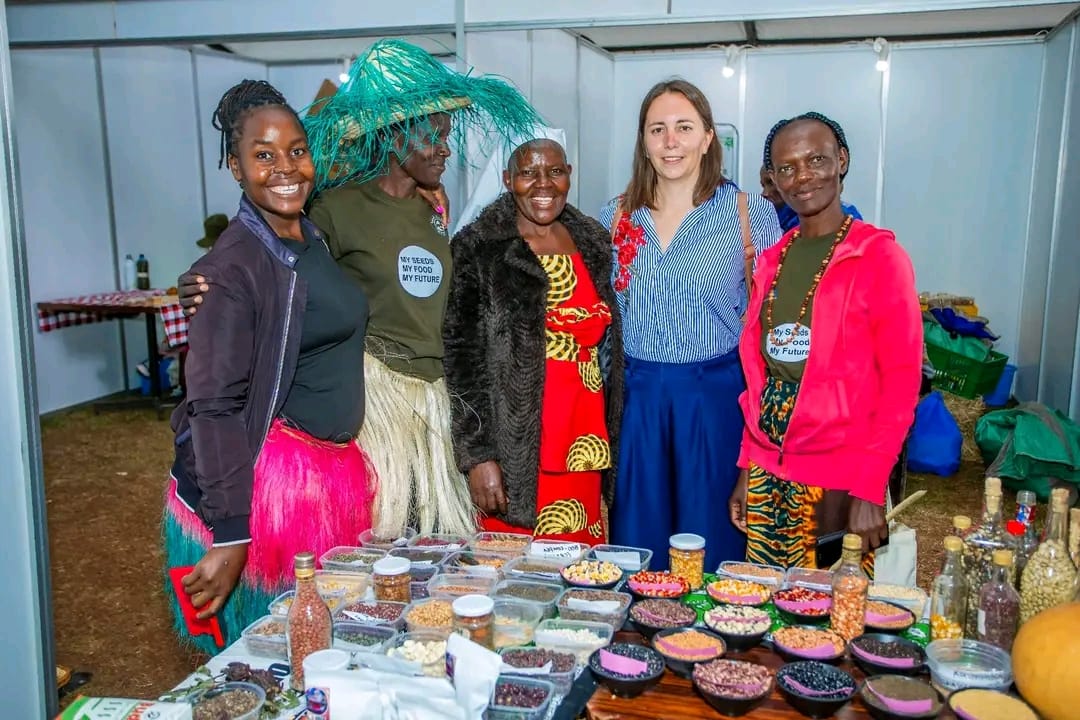
For generations, the future of East Africa’s harvest has been preserved in places that rarely feature in agricultural policy discussions: household granaries, small farms, community exchanges and the hands of women who know which seeds to keep for the next planting season.
Long before agricultural institutions began discussing climate resilience, women farmers were selecting, storing and exchanging indigenous seeds, preserving varieties that had adapted to local soils, changing rainfall patterns and generations of farming experience.
Yet the women sustaining this agricultural heritage have not enjoyed the same recognition in the systems that determine who owns land, accesses agricultural financing, controls markets or decides which seeds farmers can legally plant, exchange and sell.
This contradiction is increasingly becoming a question of food security and economic justice across East Africa.
At the first Eastern Africa Indigenous Seeds Conference, taking place in Nairobi from November 17 to 20, 2026, farmers, researchers, policymakers and civil society organisations are confronting a question that goes beyond conserving traditional crop varieties: who controls the future of the region’s food systems?
For women who have historically managed household seed stocks and sustained community farming knowledge, the answer could determine whether indigenous agriculture remains a viable livelihood or gradually disappears under policies that prioritise commercial seed systems.
During a side event organised by the Institute for Social Accountability (TISA) and partners, Dr Sheila Rao, a Gender and Social Inclusion Analyst with SeedChange, challenged the tendency to celebrate women’s resilience without addressing the structures that make their agricultural work difficult.
“We have spent decades praising the resilience of the woman farmer while maintaining the exact policy frameworks that exploit her labor,” she said.Her criticism exposes a persistent problem in agricultural development.
Women are frequently presented as the backbone of food production, particularly during climate emergencies, but their contribution does not automatically translate into ownership, financial independence or influence over agricultural decisions.
Rebecca Wanjiru, an Agrifood System Specialist with the Food and Agriculture Organization (FAO-Kenya), similarly questioned the meaning of celebrating women farmers when access to land, financing and markets remains unequal.
For many women, the challenge is not simply producing food. It is having the resources and legal recognition to determine what happens to what they produce.
The consequences extend beyond individual households. When women who manage indigenous seeds lack the means to preserve, multiply and distribute them, entire communities risk losing agricultural knowledge and crop varieties developed over generations.
For Judy Nyokabi, a community leader with the Happy Family Champion initiative, preserving indigenous seeds is not an abstract conservation exercise. It is about protecting the practical knowledge that allows farming communities to remain connected to their food sources.
Through community mobilisation, Nyokabi and other farmers established a Community-Based Organisation to revive traditional seed exchange and establish a community seed bank.
The initiative is helping farmers recover a practice that commercial agricultural systems have increasingly pushed to the margins: keeping seeds from one harvest and sharing them with neighbours for subsequent planting seasons.
Traditional maize varieties, for instance, are valued by farmers for their suitability to local conditions, storage qualities and multiple household uses, including food and livestock feed.
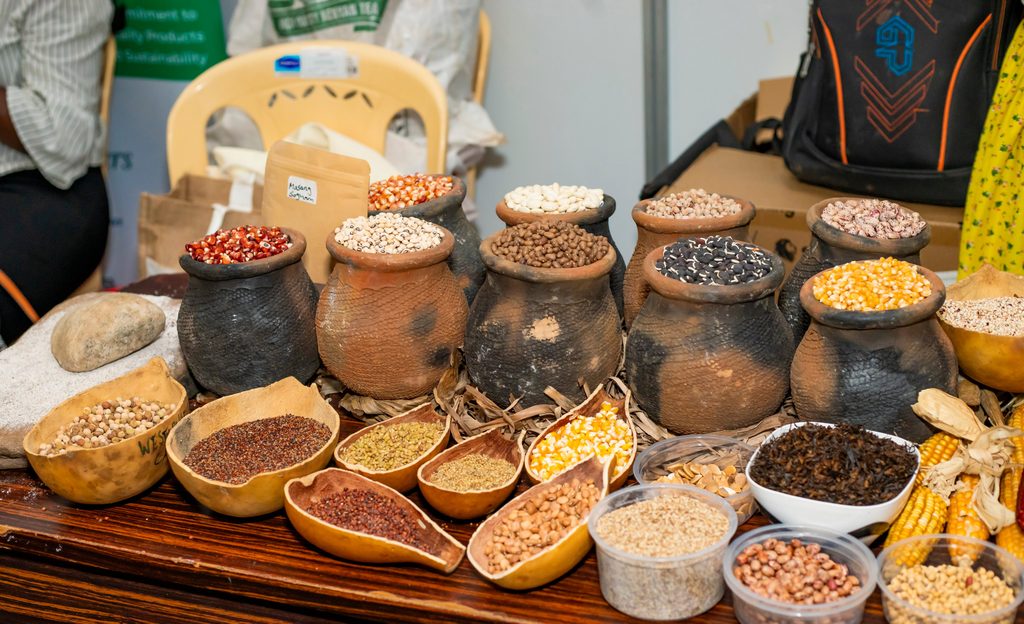
Unlike seed systems that can require farmers to purchase new commercial varieties and associated inputs, community-managed seeds allow farmers to maintain a degree of control over their planting materials.
Nyokabi says the community has embraced the seed exchange initiative, with farmers recognising the importance of collectively preserving varieties and passing agricultural knowledge to younger generations.
Her experience reflects a broader movement supported by the Seed Savers Network, which has reached more than 120,000 farmers and established 125 community seed banks across the region.These banks are more than storage facilities.
They provide spaces where farmers preserve indigenous varieties, exchange planting materials and maintain knowledge that might otherwise disappear as agricultural practices change.
But the survival of these community initiatives depends on more than farmers’ willingness to participate. It also depends on whether the law recognises their right to manage their own seeds.
When agricultural laws determine who can plant
Across East Africa, the debate over indigenous seeds is increasingly moving from farms and community meetings into courtrooms and legislative institutions.
In Kenya, a significant development came in November 2025, when the High Court ruled in Wathome & 14 Others v. Kenya Plant Health Inspectorate Service (KEPHIS), striking down punitive provisions of the Seed and Plant Varieties Act that restricted the sharing and selling of uncertified seeds.
The ruling was important for farmers and organisations defending indigenous seed systems because it challenged legal restrictions that had threatened traditional practices of exchanging and distributing farmer-managed seeds.
However, the Kenyan legal victory has opened another front in the struggle.The proposed East African Community Seed and Plant Varieties Bill, 2025, seeks to harmonise seed laws across the region.
Although regional harmonisation could improve agricultural trade and cooperation, its implications for smallholder farmers have become a source of concern among civil society organisations.
The concern is whether regional legislation will recognise farmers’ rights to save, exchange and use indigenous seeds or reproduce restrictive regulatory systems that favour commercial seed industries. For women who depend on community seed networks, the distinction is particularly important.
A legal framework that makes traditional seed exchange difficult could undermine the very networks through which women have preserved agricultural diversity for generations.It could also create additional barriers for farmers who cannot afford the costs associated with accessing certified commercial planting materials.
The debate, therefore, is not simply about choosing between traditional and modern agriculture. It is about ensuring that agricultural modernisation does not eliminate the knowledge, rights and practices that have sustained farming communities.
The economics behind the seed debate
The question of seed ownership is also an economic question. For a smallholder farmer, the ability to retain seeds from a previous harvest can influence household production costs and determine how much money remains available for other essential needs.
Community seed banks can reduce dependence on external seed markets while strengthening local exchange networks.
They also preserve varieties that may have particular value under changing environmental conditions.However, the women managing these systems cannot sustainably carry the responsibility without access to land, financing, agricultural extension services and markets.
Recognising them as seed custodians while excluding them from agricultural investment decisions risks maintaining the same inequalities that have historically weakened their economic position.
This is why the conference discussion on indigenous seeds must be understood alongside the wider conversation about women’s rights in agriculture.The issue is not whether women are capable of preserving seeds.
Their contribution across generations already demonstrates that.It is whether governments and agricultural institutions are prepared to recognise them as decision-makers, innovators and legitimate participants in the region’s agricultural economy.
Who gets to decide the future of food?
As East African governments consider new approaches to seed regulation, climate adaptation and agricultural trade, the future of indigenous seeds will increasingly depend on the choices made beyond the farm.
The region needs agricultural policies that protect seed quality and support innovation without criminalising legitimate community seed systems.
This means recognising community seed banks, strengthening women-led farmer organisations, expanding access to affordable financing and ensuring that farmers participate meaningfully in decisions about seed legislation.
It also requires regional policymakers to examine whether proposed harmonisation frameworks protect farmers’ rights alongside commercial interests.
For Nyokabi and the farmers working to revive indigenous seed exchange, the objective is straightforward: ensure that future generations inherit not only the seeds but also the knowledge required to grow them.
Their work challenges the assumption that agricultural innovation must always come from laboratories, commercial breeders or large institutions.
Sometimes, innovation is already happening in communities where farmers are recovering old varieties, exchanging knowledge and adapting their farming practices to changing conditions.
The uncomfortable question confronting East Africa is whether its agricultural policies will support these women or continue celebrating their contribution while limiting their ability to exercise control over it.
Because when the women who preserve the region’s seeds lack the rights and resources to continue doing so, what is threatened is not simply an agricultural tradition.
It is the future of the region’s food diversity, farming livelihoods and food security.