LSK Sounds Alarm Over Institutional Independence, Public Accountability and Cabinet Legality

NAIROBI, Kenya, Oct 31 – The Law Society of Kenya (LSK) has issued a stern warning over what it terms as the steady erosion of institutional independence, growing executive impunity, and a collapse of accountability in public office ahead of Kenya’s next General Elections.
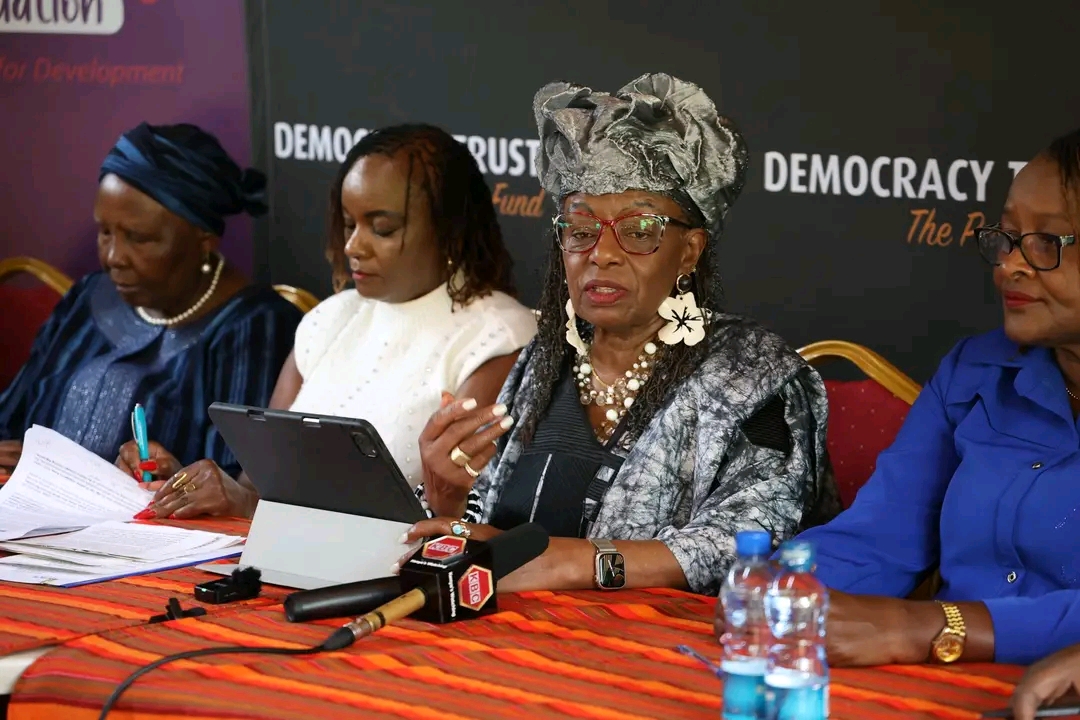
While addressing the media on October 30, 2026 in Nairobi the legal body highlighted systemic threats across the country’s governance framework ranging from electoral transparency and police reforms to active non-compliance with court orders by the Executive.
They highlighted the legal status of the Cabinet, which LSK asserts is now operating unconstitutionally following the expiry of a four-month stay granted by the High Court to comply with the two-thirds gender principle.
With the deadline having lapsed without compliance, revision, or reversal of the court order, the LSK warned that the Executive is operating in active violation of Article 2(4) of the Constitution of Kenya 2010, which renders any non-compliant act or omission invalid.
“The President and the Cabinet are now in active violation of the Constitution,” the LSK stated. “The Cabinet of Kenya is unconstitutional, and its actions and decisions are susceptible to being deemed null and void.”
The society has called on the Attorney General to urgently advise the President to reconstitute the Cabinet, warning that failing to act within a week signals unacceptable Executive impunity.
Additionally, LSK expressed deep concern over the recent High Court judgment in Civil Appeal No. 971 of 2025 (National Police Service Commission v Harun Mwau and Others), which restricted the National Police Service Commission’s (NPSC) authority over recruitment, promotions, transfers, and discipline solely to civilian staff, excluding uniformed officers.
According to the Society, the decision hollows out the NPSC’s constitutional mandate under Article 246 and marks a dangerous claw-back of authority away from independent commissions back to the Executive.
NPSC Role: Intended to provide independent, merit-based personnel oversight. Inspector General Role: Intended to direct operational matters.
They confirmed it has filed a notice of appeal to the Supreme Court to restore the constitutional safeguards designed to keep police administration free from political interference.
Addressing election preparedness, LSK emphasized that an election is a continuous process rather than a single event. Highlighting the ongoing legislative debate around the Elections (Amendment) (No. 2) Bill, 2024, the society urged Parliament to publish the exact text passed to eliminate conflicting public narratives.
LSK clarified that while electronic transmission sends polling station results to the Independent Electoral and Boundaries Commission (IEBC) systems, public livestreaming provides a critical real-time safeguard for citizens, media and observers to verify figures against physical polling station forms (Form 34A).
Referencing past judicial rulings in Katiba Institute v AG, the LSK noted that the courts never banned livestreaming, but rather demanded a legally sound framework.
The society pledged to file a court challenge against any legislation or policy that seeks to weaken public scrutiny and verification of election results.
On accountability in public office, the LSK raised raised concerns regarding the involvement of state officers in partisan politics:
Communications Authority (CA) Chair: The LSK reiterated its demand for the suspension and investigation of CA Chairperson Charles Karondo over alleged participation in the Ol Kalou by-election campaigns, insisting that regulatory leadership must remain strictly neutral.
“We have called for his suspension and an investigation into the allegations, We expect a substantive response and action from the responsible authorities.This matter must not be quietly buried now that the by-election is over”, they said
The Communications Authority regulates a sector through which Kenyans receive news, debate public affairs and follow elections they said Its leadership must command public confidence in the Authority’s impartiality.
“We expect the institutions responsible for enforcing integrity, electoral and criminal law to act consistently. Political connections must never determine whether a complaint is investigated or a public officer is held accountable”.
As the country approaches another election, LSK noted that public officers must distinguish their official responsibilities from their political preferences. “Public institutions belong to all Kenyans. Their staff, funds, vehicles and powers must be used for lawful public purposes”.
Abduction of Journalist Alex Kiprotich: The LSK issued a 7-day ultimatum to the Director of Criminal Investigations (DCI) to arrest and charge officers linked to the September 1 abduction of Standard Group Associate Editor Alex Kiprotich, warning that it will pursue legal action under command responsibility if no action is taken.
“We express our serious concern that substantial action has not been taken two months after the said abduction”.
Addressing its own membership, LSK confirmed ongoing internal disciplinary procedures against advocate-politicians specifically Hon. Peter Kaluna, Adv., and Hon. John Kaguchia, Adv. for alleged professional misconduct.
“Our position is the same regardless of party affiliation. An advocate’s political standing will neither shield them from scrutiny nor determine the outcome of a disciplinary process.We call upon all advocates participating in politics to exercise the judgment expected of members of the legal profession”.
“Political competition must never become an excuse to threaten citizens or encourage hostility against those who hold different views”.
Further, LSK criticized restrictions on public agencies hiring external legal counsel stemming from Nakuru High Court Petition No. E001 of 2026.
While supporting scrutiny over public legal expenditures, the LSK argued that state agencies must retain the autonomy to procure specialized external legal services alongside in-house counsel, provided standard procurement laws are followed.
“LSK will continue to defend the lawful engagement of external advocates by public sector agencies and to affirm the right of in-house and external counsel to effectively collaborate in discharge of legal services to their clients”.