
Kenya’s Unequal Childhood: New Survey Reveals 45-Point Development Gap Between Counties
NAIROBI, Kenya,Nov 5 -While 85 per cent of children aged 3–23 months are developmentally on track nationally, county disparities reveal unequal opportunities for Kenya’s youngest children.
A child’s first years are often measured through survival: whether they receive immunisation, have enough food, grow properly and reach their fifth birthday.But Kenya’s latest health survey is introducing another important measure of childhood wellbeing: whether children are developing the skills they need to learn, communicate, interact and navigate the world around them.
The findings expose a significant divide in the developmental opportunities available to Kenya’s youngest children, with the proportion of children aged 3–23 months who are developmentally on track ranging from 52 per cent in West Pokot to 97 per cent in Kakamega.
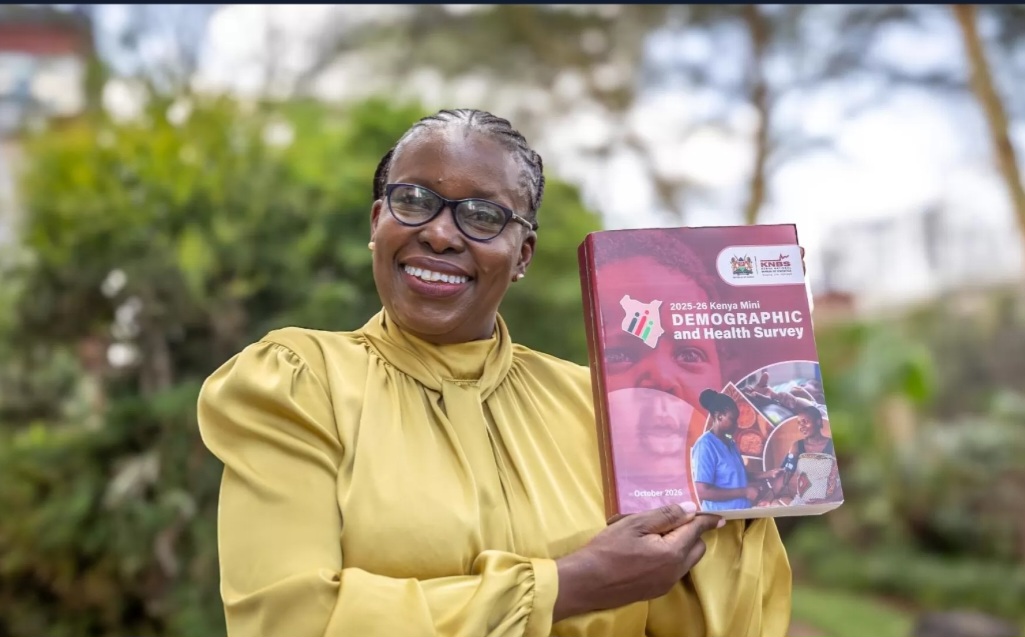
The 45-percentage-point difference raises questions about the conditions shaping early childhood development and whether children across the country are receiving the nurturing care and stimulation they need during their formative years.The findings are contained in the 2025–26 Kenya Mini Demographic and Health Survey, launched in Nairobi on 3 November 2026.
For the first time, Kenya’s national demographic and health survey has assessed developmental milestones among children as young as three months.Using the World Health Organization’s Global Scales for Early Development, the survey examined whether children aged 3–23 months were progressing in movement, language and thinking, and social skills.
Nationally, 85 per cent of children in this age group were found to be developmentally on track. Among children aged 24–59 months, the proportion stood at 83 per cent, assessed using UNICEF’s Early Childhood Development Index 2030.While the national figures suggest that most young children are progressing as expected, the county differences reveal why national averages can conceal inequalities within the same country.
For policymakers, the findings provide an opportunity to identify where early childhood interventions are needed most rather than relying on national statistics that may mask local challenges.Prof. Amina Abubakar of Aga Khan University’s Institute for Human Development said the survey represents a significant shift in how Kenya measures childhood wellbeing.
Previously, national surveys largely concentrated on survival and physical growth indicators, including mortality, immunisation, height and weight.The inclusion of developmental measurements provides another dimension of evidence, allowing policymakers to examine whether children are acquiring essential skills during their earliest years.“Counties can see where their children are falling behind so that they can target nurturing care, early stimulation, and parenting support where it’s needed most,” she said.
Dr Makeba Shiroya, National Programme Officer for Child and Adolescent Health at WHO Kenya, said the county-level findings could help policymakers identify gaps and direct early childhood support to communities that need it.The differences also bring attention to the circumstances in which children grow up, including access to appropriate nutrition, responsive caregiving, early learning opportunities and supportive family environments.
The survey further found that children whose mothers have more education are more likely to be developmentally on track, highlighting the relationship between maternal education and children’s early development.
This makes early childhood development an issue that extends beyond the health sector. Education, nutrition, social protection and family support all influence the environment in which young children grow.The survey also provides an updated picture of broader maternal and child health indicators.
Under-five mortality declined to 37 deaths per 1,000 live births, compared with 41 in 2022. Facility-based deliveries increased from 88 per cent in 2022 to 91 per cent in 2025, while the proportion of women who attended at least four antenatal care visits during their most recent pregnancy rose from 66 per cent to 72 per cent.
These improvements indicate progress in maternal and child healthcare, but the developmental findings suggest that survival and physical growth alone cannot provide a complete picture of children’s wellbeing.A child may survive infancy and receive routine healthcare, yet still face barriers to acquiring developmental skills if the environment around them does not provide adequate stimulation, nutrition and responsive care.
Speaking during the launch, Principal Secretary for the State Department for Medical Services Dr Ouma Oluga said the value of the survey should ultimately be measured by whether its findings translate into better lives.“Data is not just for the purposes of show, but for the purpose of improving the lives of the people that depend on our actions,” he said.
The survey was led by the Kenya National Bureau of Statistics in collaboration with the Ministry of Health and other stakeholders. Data collection took place between 5 November 2025 and 10 February 2026, covering a nationally representative sample of 29,935 households.
However, the challenge will be translating the figures into targeted interventions, particularly in counties where developmental progress remains low.For Kenya, the significance of measuring development from as early as three months is that childhood wellbeing can now be assessed beyond whether children are alive and physically growing.
It is Kenya’s eighth demographic and health survey since 1989 and the first mini survey, designed to provide an update between the country’s full demographic and health surveys.The findings offer county governments an evidence base for examining early childhood development within their jurisdictions and determining whether existing maternal, child health and early learning programmes are reaching the children who need them.
The next test is whether the data will influence how resources are allocated, how parents are supported and how county health and education systems respond to the needs of their youngest populations.Because the difference between a child being born into one county and another should not determine the opportunities available during the most formative years of their life.